· 4 min read
Nouveau Standard 1976: the lacquered design chair that turns heads (grandmother approved)
By Alexis Grimaud
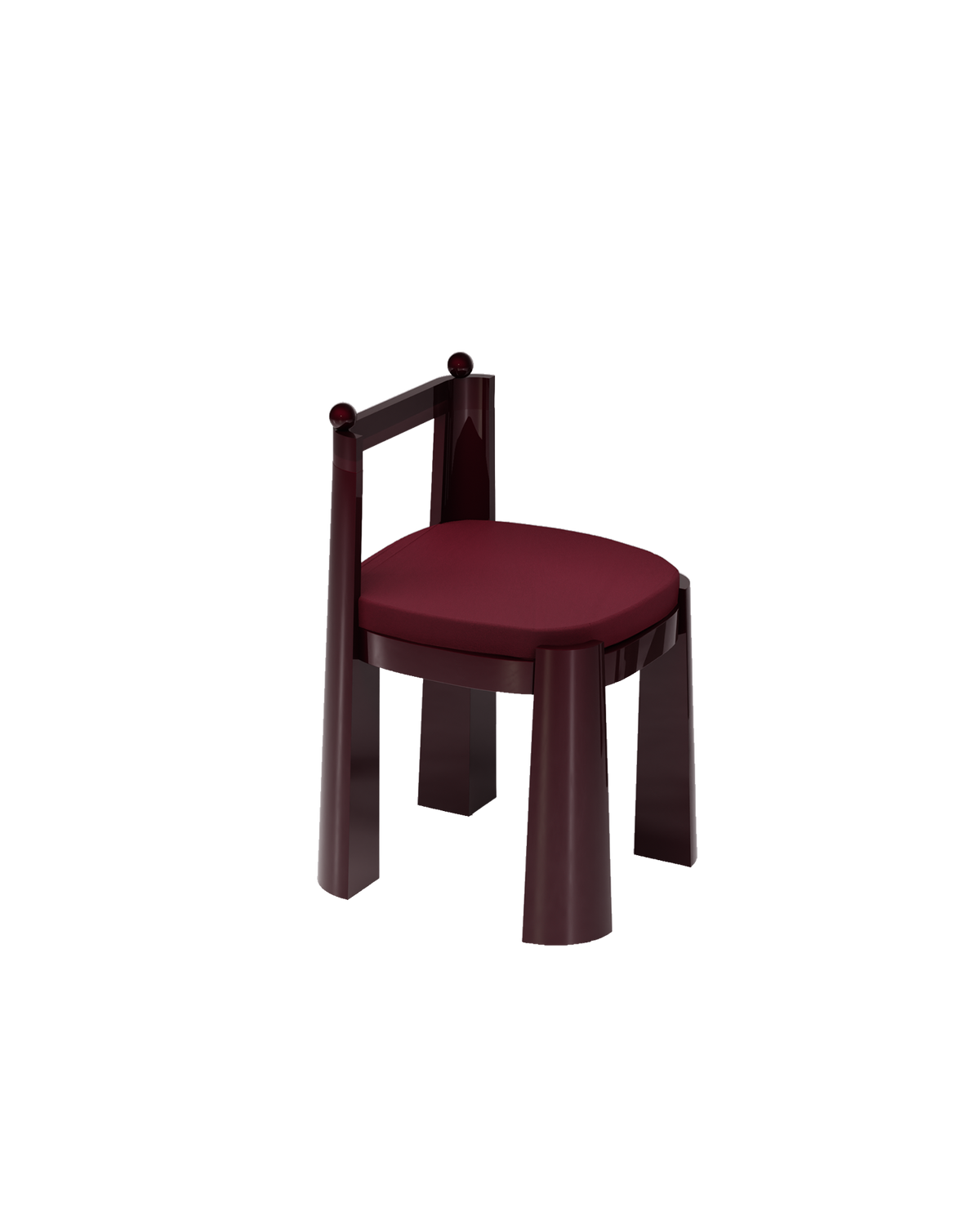
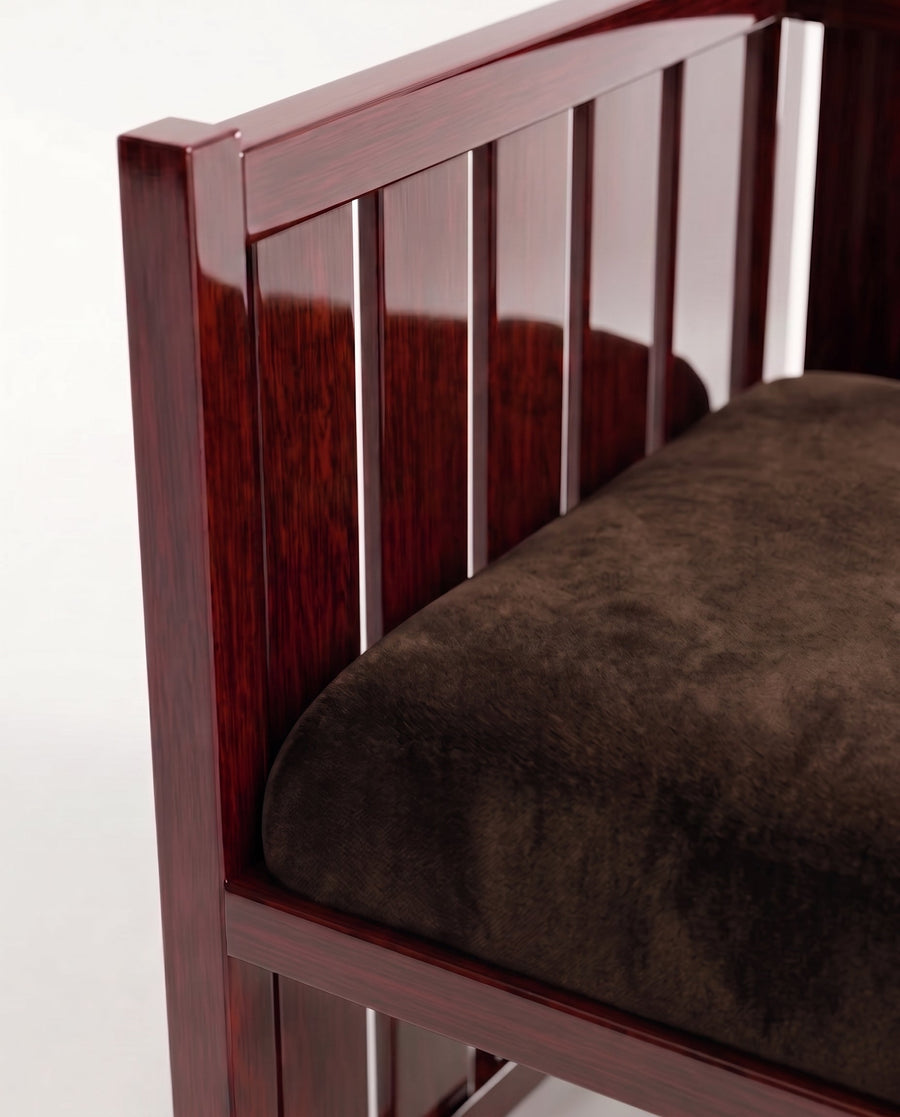
Some chairs ask permission to enter a room. The Chaise 1976 does not. It arrives in lacquer, sits on wooden spheres, and makes every beige sofa around it look like it is apologising.
Our view: this is one of the rare contemporary collections that is genuinely funny without being a joke. Here is what it is, what it is made of, and how to use it without turning your home into a set.
Who is Nouveau Standard?
Nouveau Standard is a French design studio founded in 2024 by architect Jonathan Fleurance and interior designer Simon Brandeau. Before furniture, the two worked together in architecture, at Atelier Standard in Nantes.
1976 is their first collection, and it is one of our Created for Monde Singulier collections. The studio has since followed it with a second, 1989.
1976, or grandmother's living room with a new haircut
The starting point is memory. The duo looked at the rustic, rural interiors of the 1970s, the ones full of pattern and heavy pieces planted on the floor, the kind many of us met at our grandparents'.
From that world they kept two shapes: the cone, which gives the pieces their imposing presence, and the ball, which softens the whole and suggests movement. Everything else was stripped back.
Jonathan Fleurance put it this way: "the overloaded pattern is a nod to the 70's and plays on contrasts with the more primary forms of furniture." That contrast is the whole collection: decoration where you expect structure, structure where you expect decoration.
What it is actually made of
Under the colour, the recipe is the same across the seating: lacquered beech veneer, with spheres or half-spheres in solid lacquered beech. The lacquer colour is a choice, not a fixed finish.
- Seats in velvet. The chair, the armchair and the lounge chair take a Casamance velvet seat.
- A seat in mirror. The 1976 Chaise Miroir swaps the velvet for mirrored glass. It is a unique piece and it is in stock.
- A screen with two faces. The Paravent 1976 has mirrors on one side and upholstery on the other, and both its lacquer colour and its dimensions can be adapted.
When the collection launched in 2024, Design Milk reported that it was made by Kermadeleine, a workshop in Brittany. For a collection about memory, a French workshop and solid wood feel like the right answer.
For more on how lacquer behaves next to stone, burl or pewter, our guide to luxury furniture materials goes through each one.
The whole family, with prices
- Chaise 1976, around €4,500. The one in the photos, the one that started it.
- 1976 Chaise Miroir, around €4,500. Same chair, mirrored seat, one of one.
- Banc 1976, around €4,500. For an entrance or the foot of a bed.
- Chauffeuse 1976, around €6,100. The low lounge chair, for a corner by the fire.
- Fauteuil 1976, around €13,600. The armchair, and the piece with the most presence in the collection.
- Table 1976, around €12,900. A dining table with a sphere or hemisphere in solid lacquered beech.
- Paravent 1976, around €17,800. Mirror on one side, fabric on the other, made to your size.
Prices shown on the site including VAT, November 2026.
Choosing the colour (red is not compulsory, just recommended)
The lacquer colour is chosen at order, which means the most important decision about this chair happens before it exists. Decide with the room in front of you, not with a screen.
Three questions help. What is on the floor (a red chair on terracotta is a different object from a red chair on pale oak)? Where does the light come from, and at what time of day will you mostly see it? And is the piece meant to disappear or to be the first thing a guest mentions?
If the answer to the last one is "the first thing", you already know the colour.
How to live with red lacquer (without living in a set)
Our rule is one statement per sightline. A single red chair at a desk or a pair at the end of a dining table reads as confidence. Eight around a red table reads as a theme restaurant.
Lacquer loves calm neighbours: plaster walls, natural linen, pale stone, raw oak. Put it next to more gloss and the room starts to shout.
Think of the pieces as accents rather than a suite. The bench in an entrance, the Chaise Miroir as the single odd chair in a library, the screen to hide a desk in a living room: each one does a job and still makes people smile.
Who should buy it
Collectors who already own good mid-century pieces and want something that answers back. Architects who need a recognisable chair for a restaurant, a hotel lobby or a boutique, and who like that colours and some dimensions can be discussed with the studio.
And anyone who has kept, somewhere in a family attic, a heavy carved chair they never dared to throw away. This is that chair, after therapy.
If you are buying your first piece of this kind, our guide on how to buy collectible design covers the questions to ask before ordering a made-to-order piece.
See it in lacquer, not in pixels
Lacquer is a finish you judge with your eyes and your hand, under real light. Browse the full 1976 collection, then book a visit to the Rivoli showroom in Paris, opposite the Tuileries, by appointment, to talk colours and finishes with an advisor.
The pieces we mention


A piece on your mind?
Prices, lead times, finishes: an advisor answers you personally.