Ebur Editions - Otto Nightstand - L
by Studio Ebur
In stock
Are you a professional? Join our Trade Program now
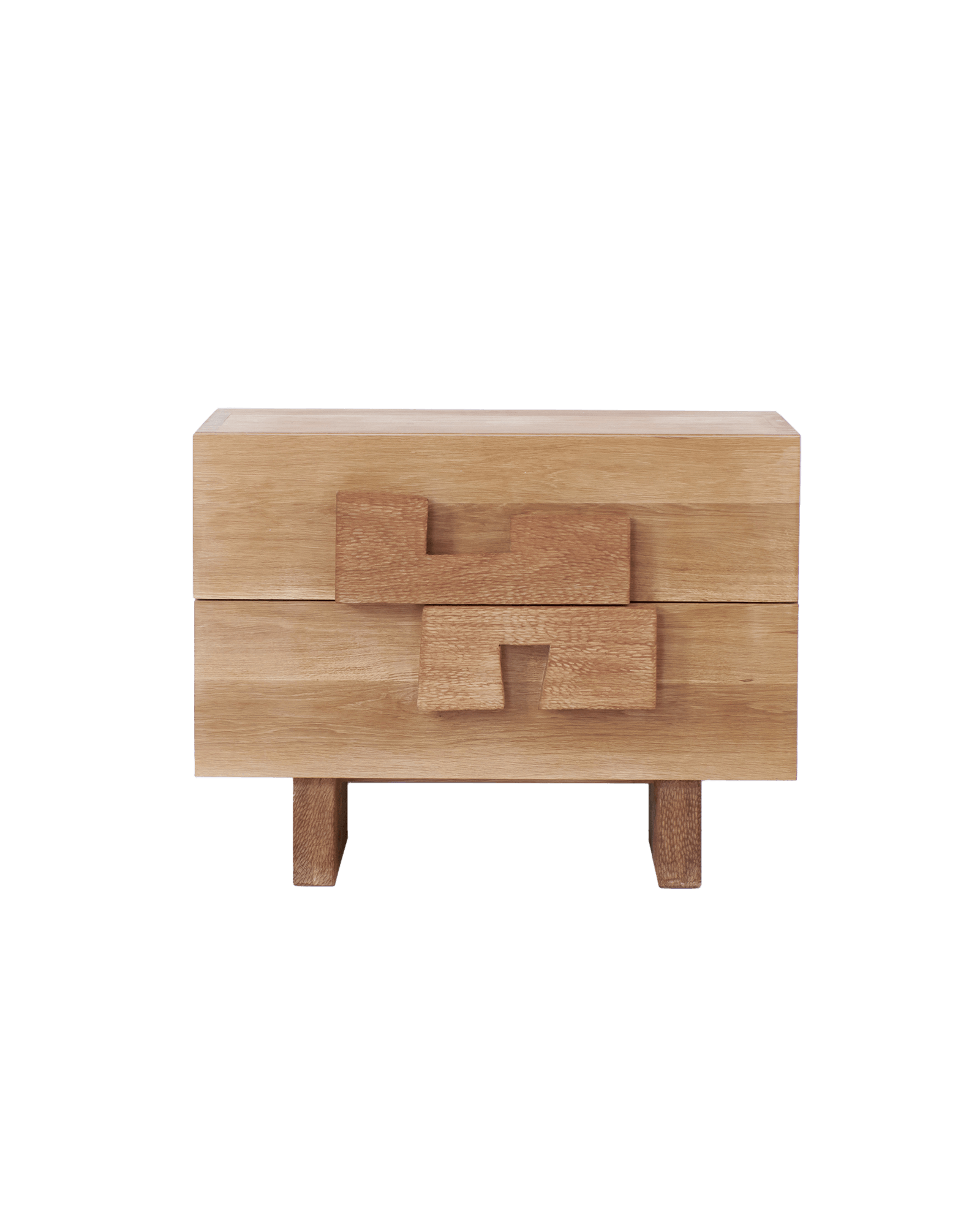
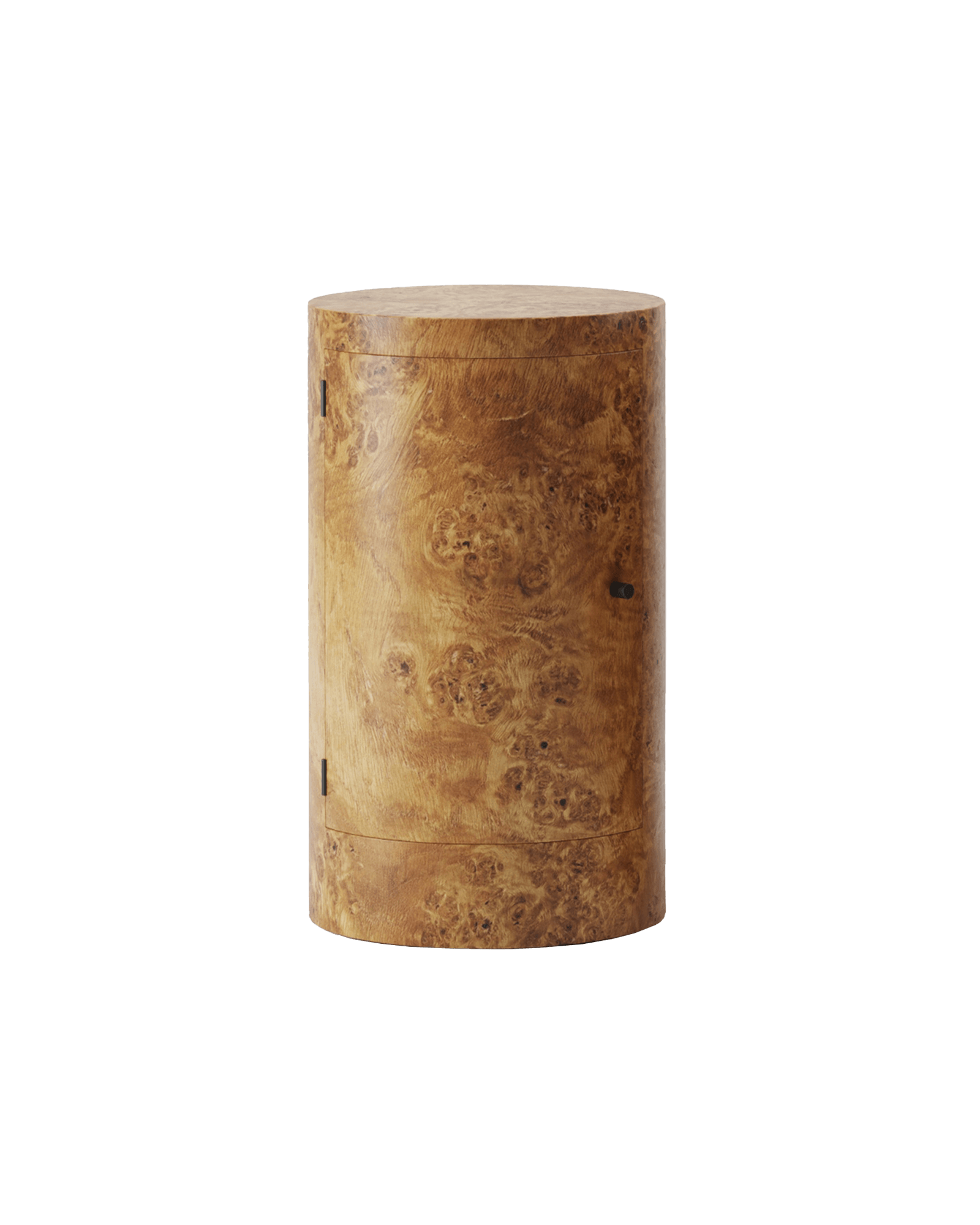
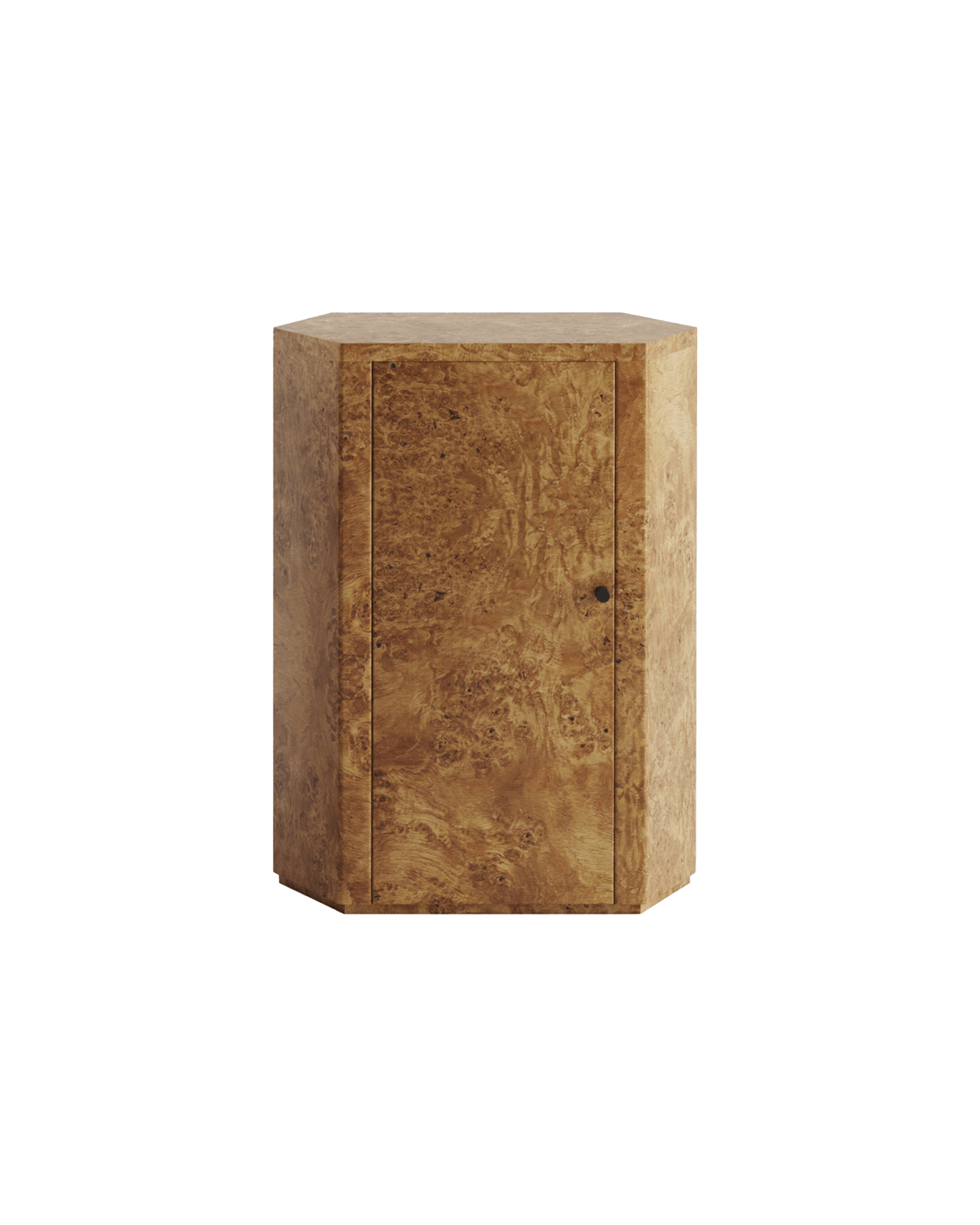
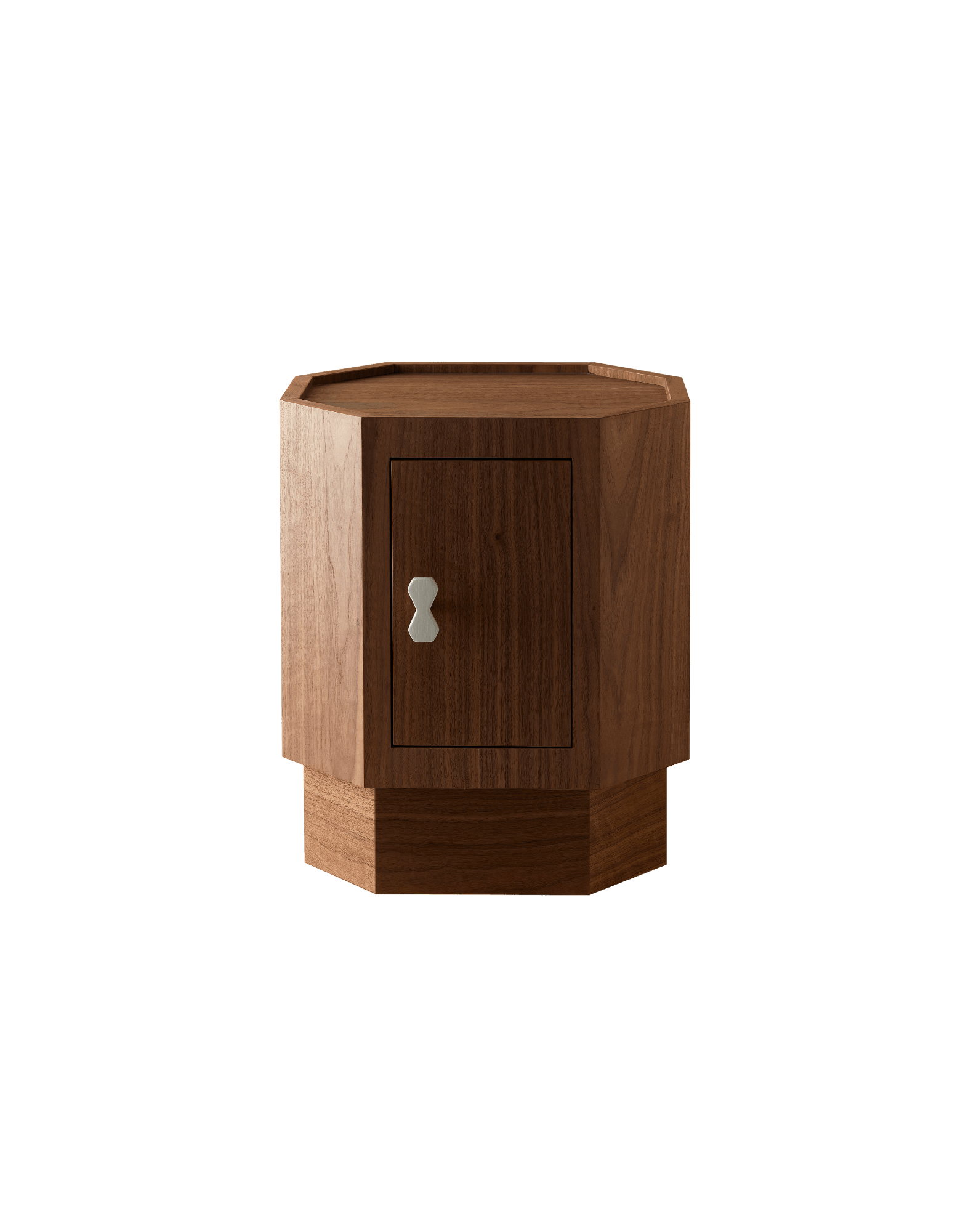
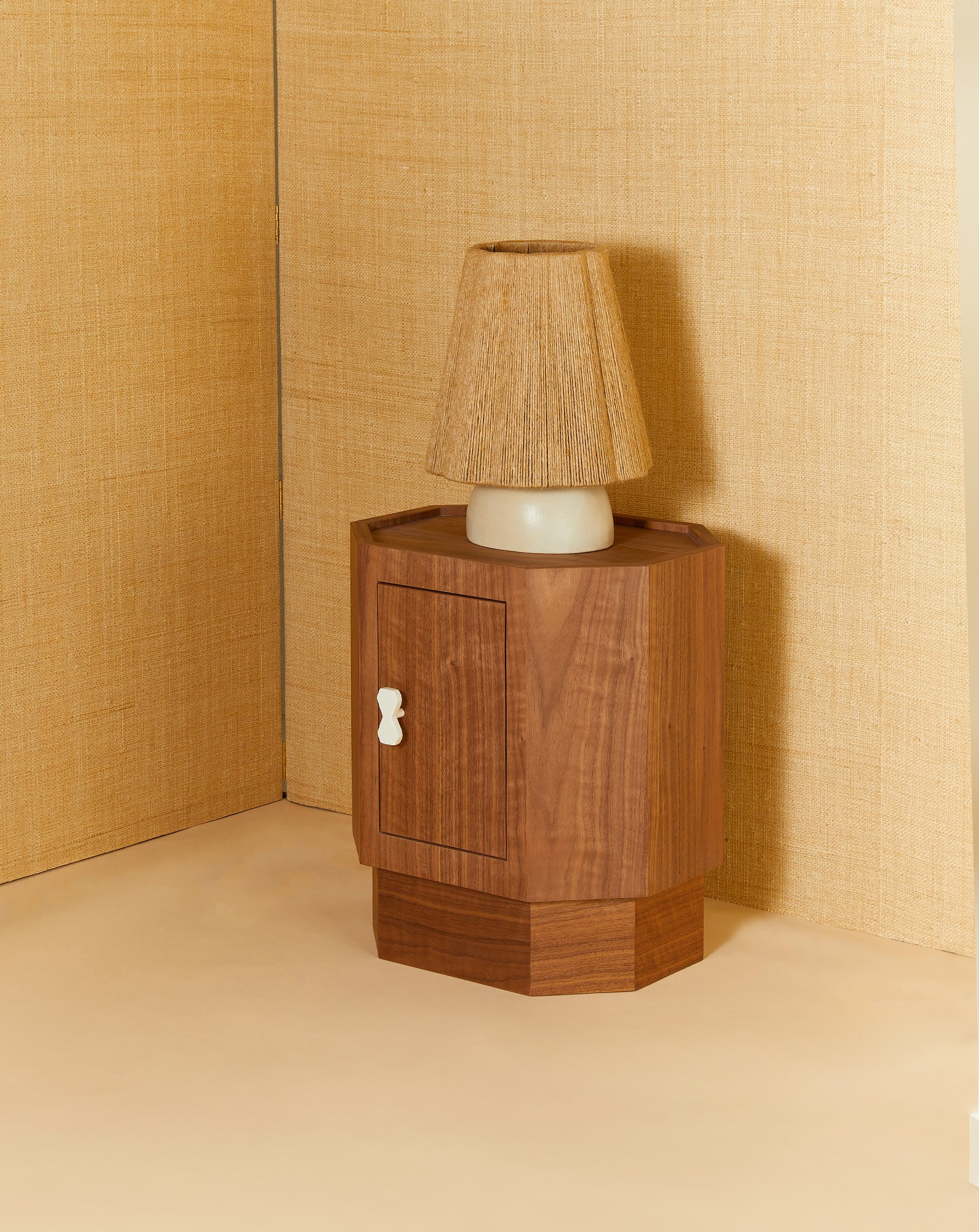
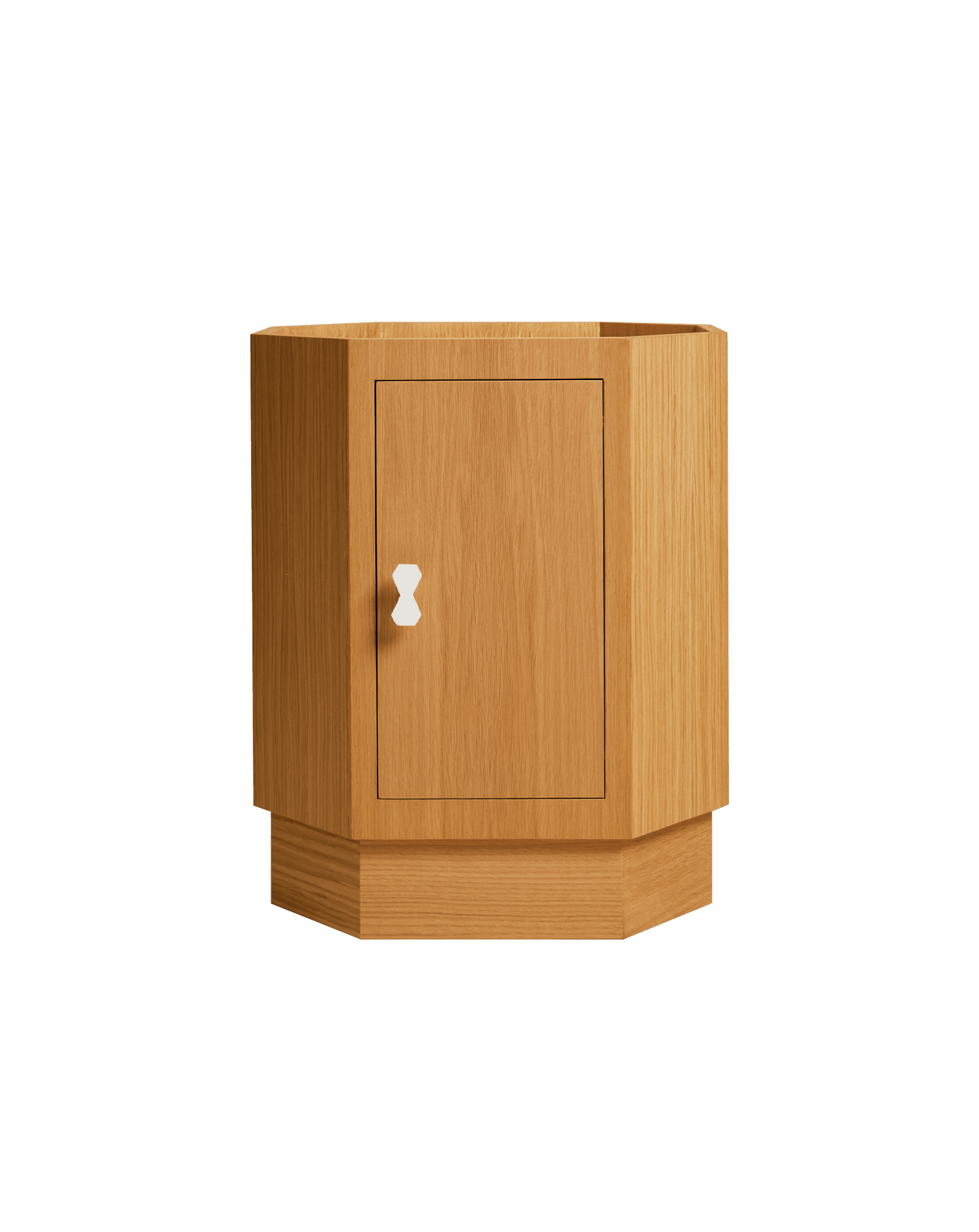
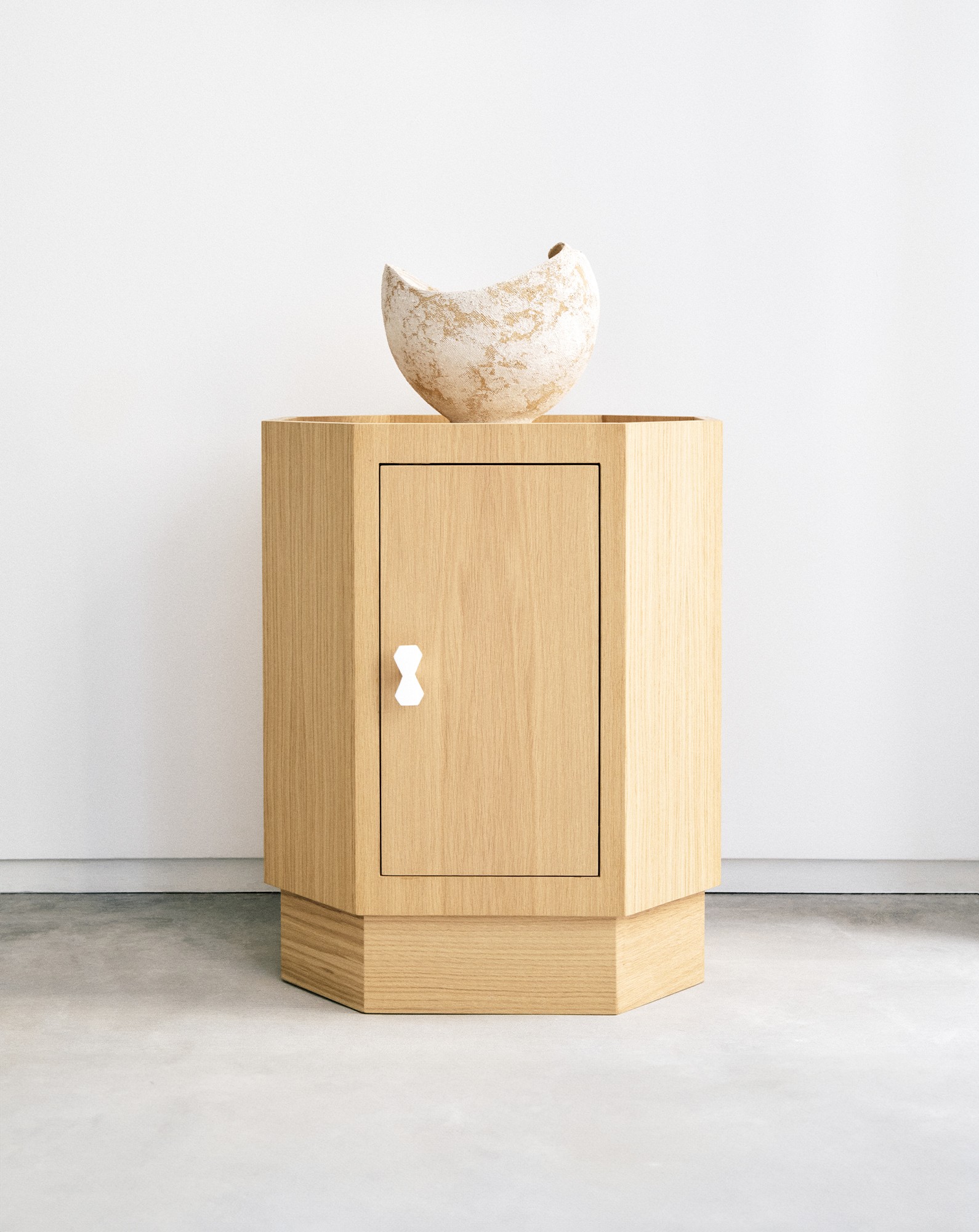
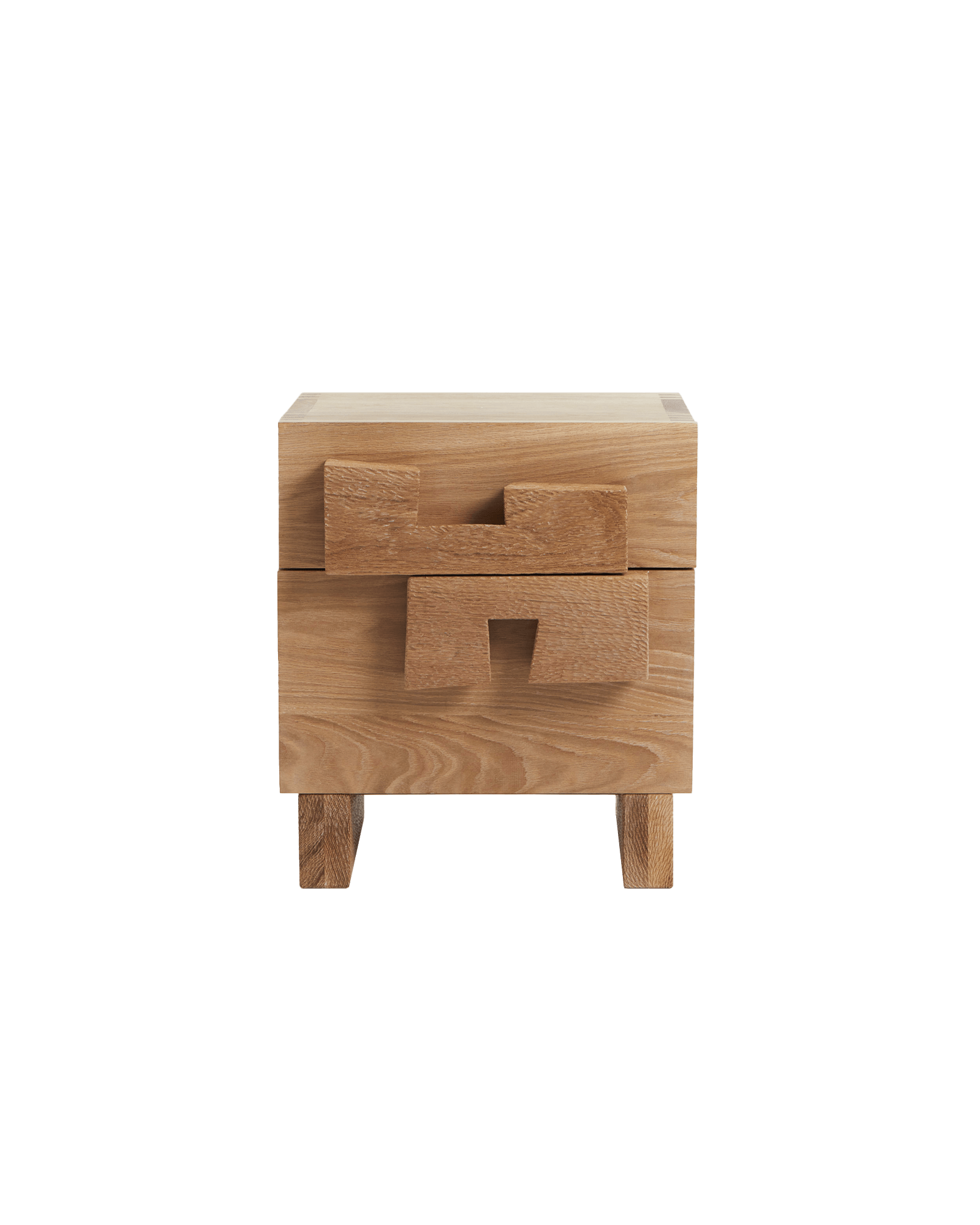
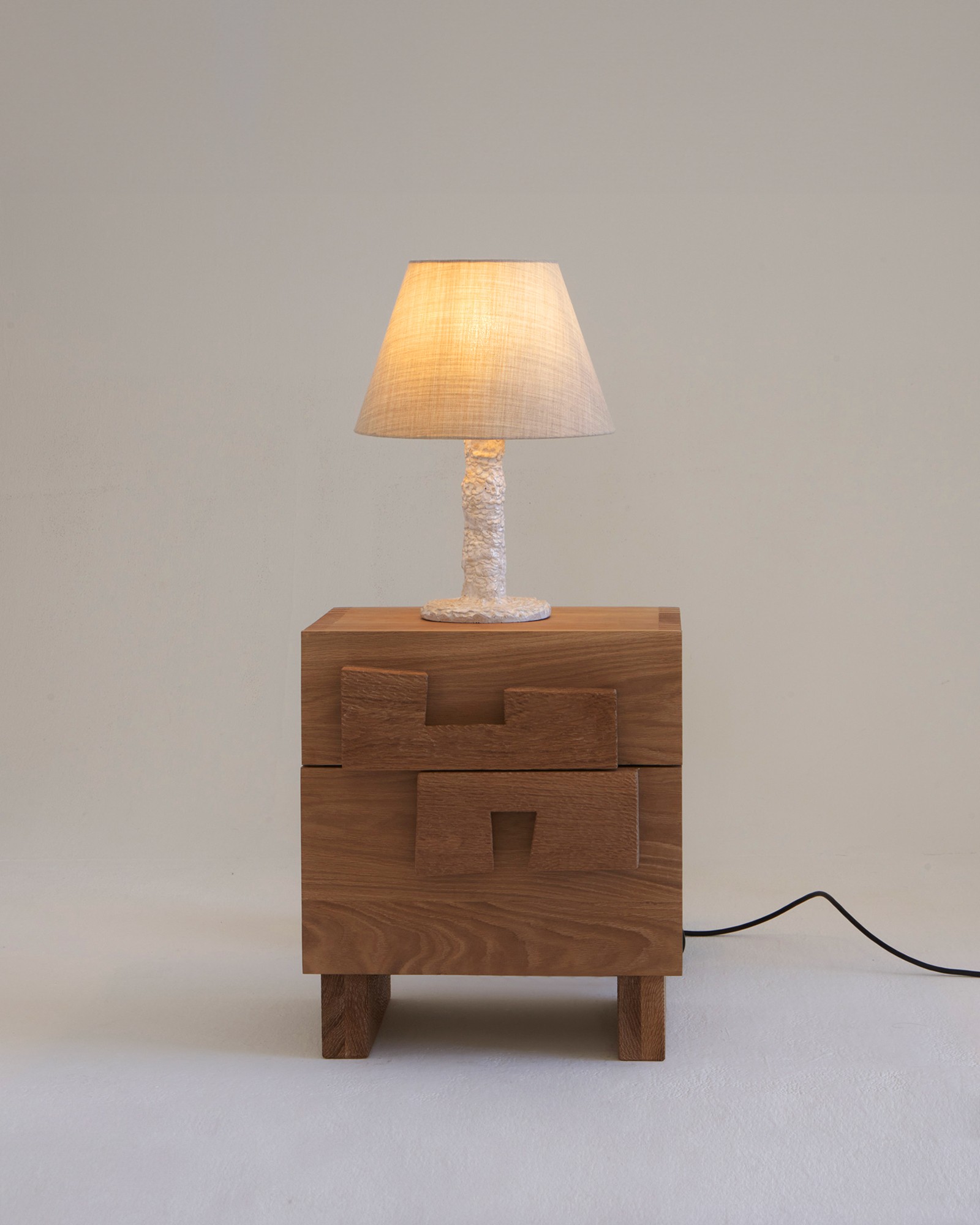
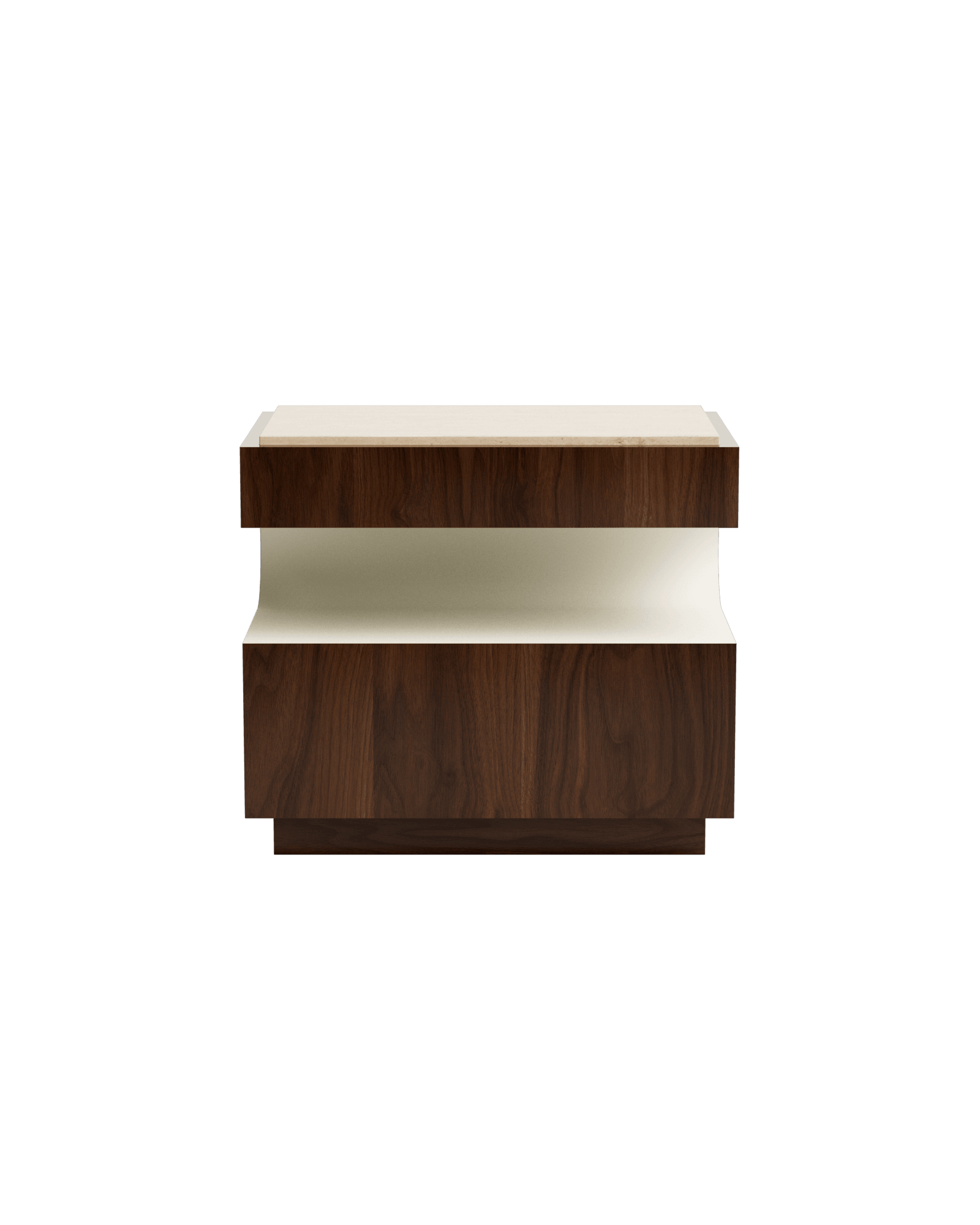
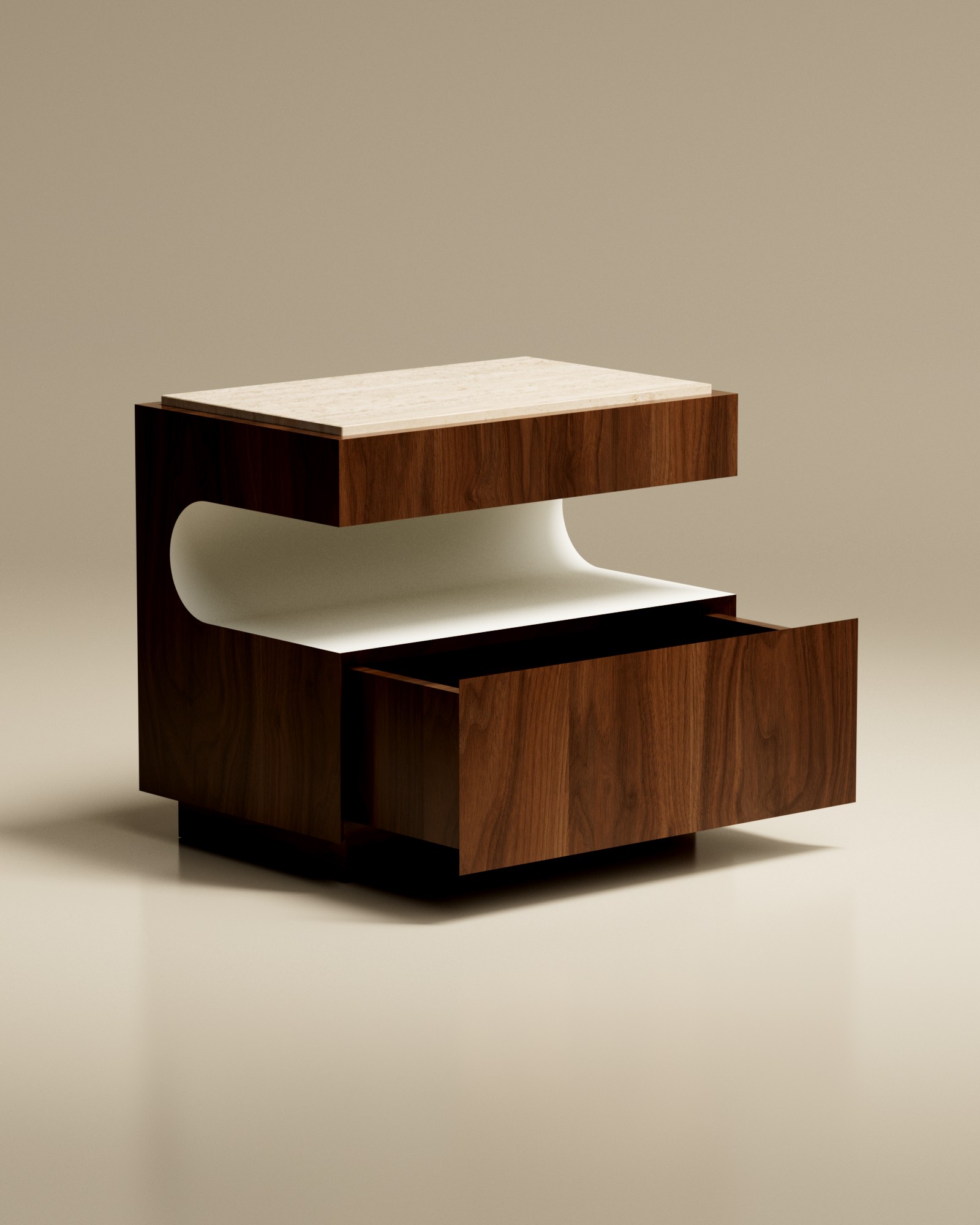
The Otto Nightstand L is a bedside cabinet from Studio Ebur's Ebur Editions collection, a large-format companion to the Otto Nightstand S in the same hexagonal oak form.
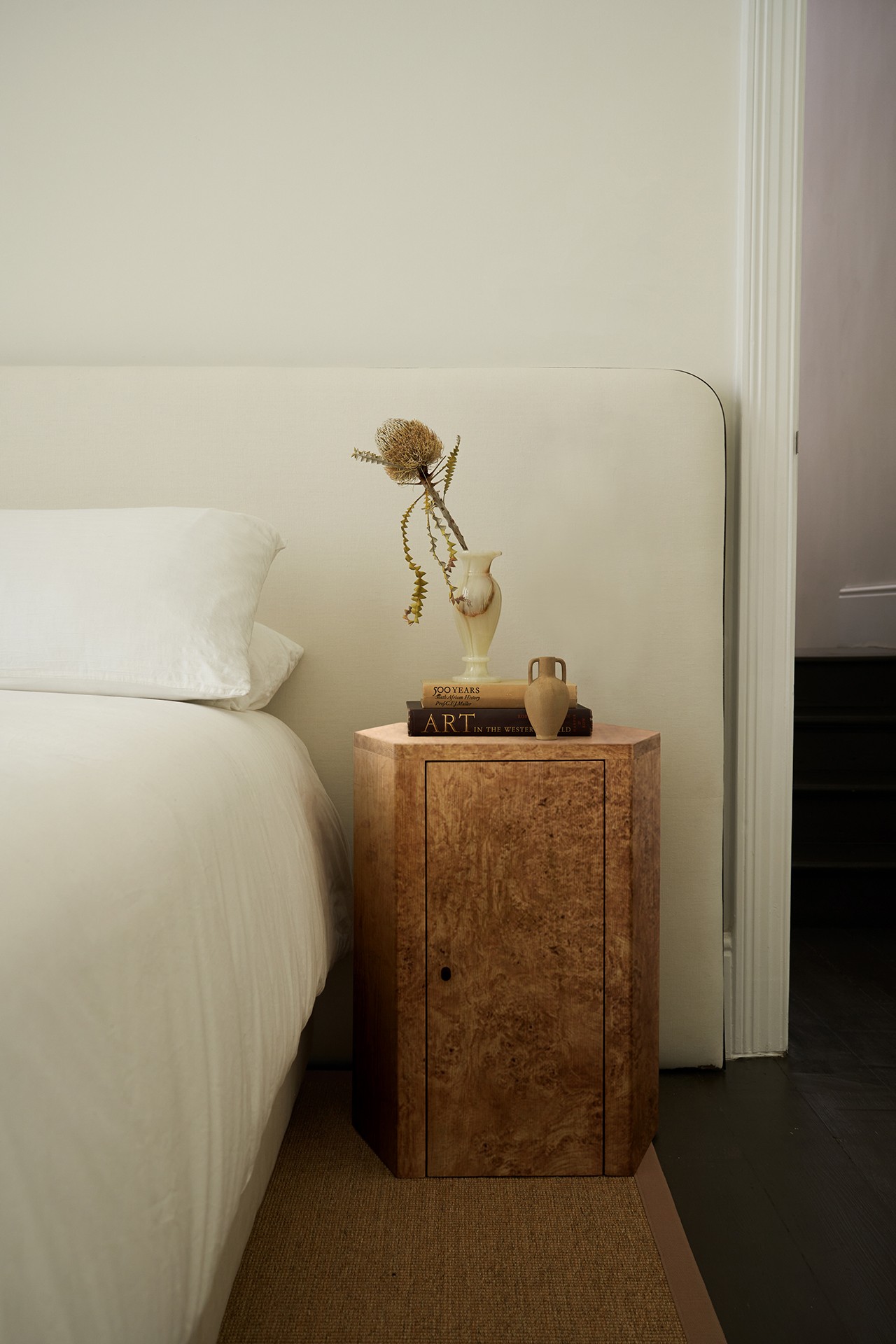
The cabinet takes a hexagonal outline, all six faces in equal proportion, with a flat top and a matching plinth base that gives the piece a stable, grounded presence. A single rectangular door occupies one face, fitted with an elongated octagonal handle in white-lacquered wood. Wood grain is visible through a matte finish, the natural oak tone kept consistent across the body and the base. The plinth profile, a simple stepped ledge, connects the Otto to a tradition of architectural furniture from the early twentieth century that Racha Gutierrez and Dahlia Hojeij Deleuze cite among their references.
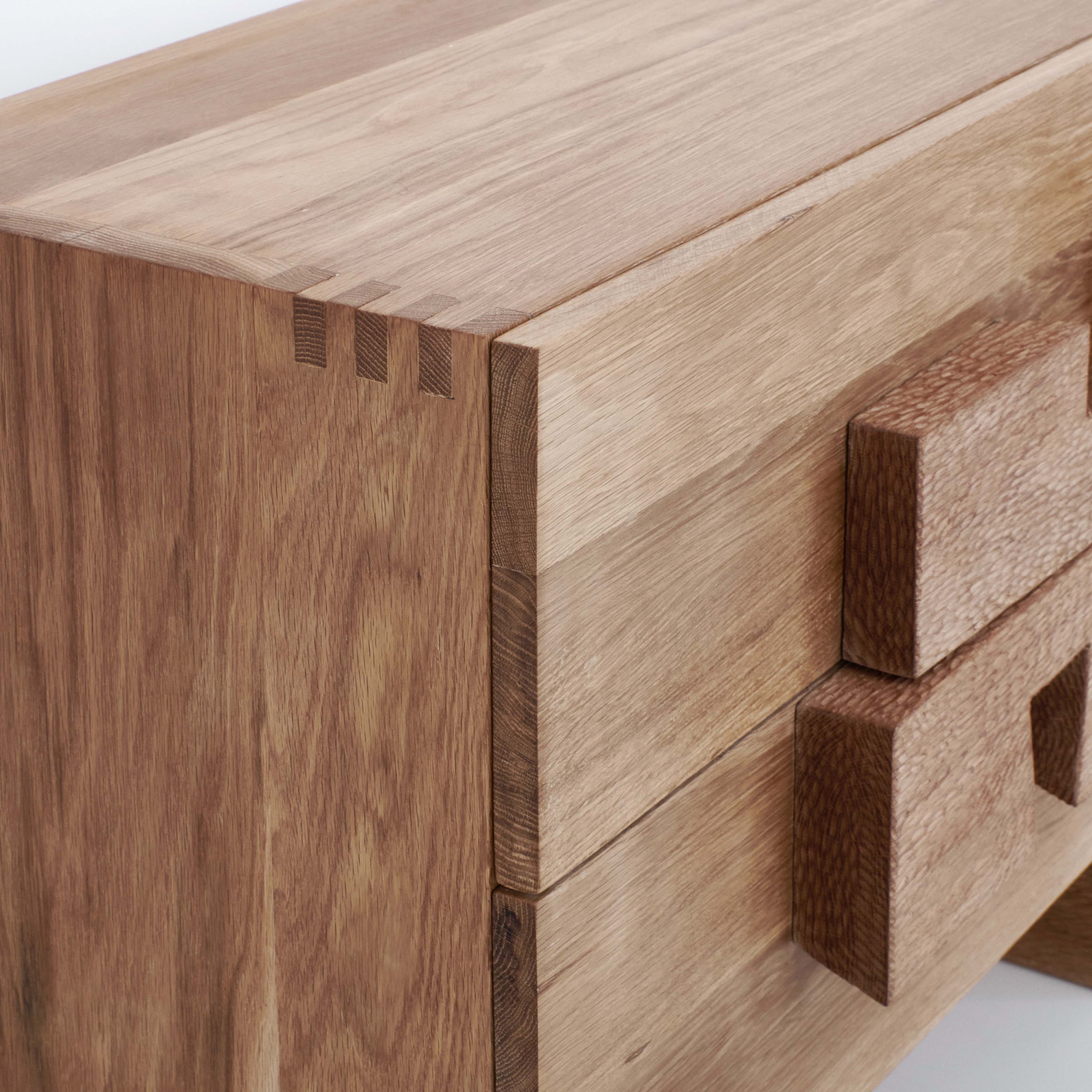
Studio Ebur fabricates the Otto series in workshops specializing in precise joinery with solid wood. Hexagonal geometry requires accurate cutting and fitting at each angular face, with no room for error at the six-way junctions. The handle is produced separately in lacquered wood before fitting.
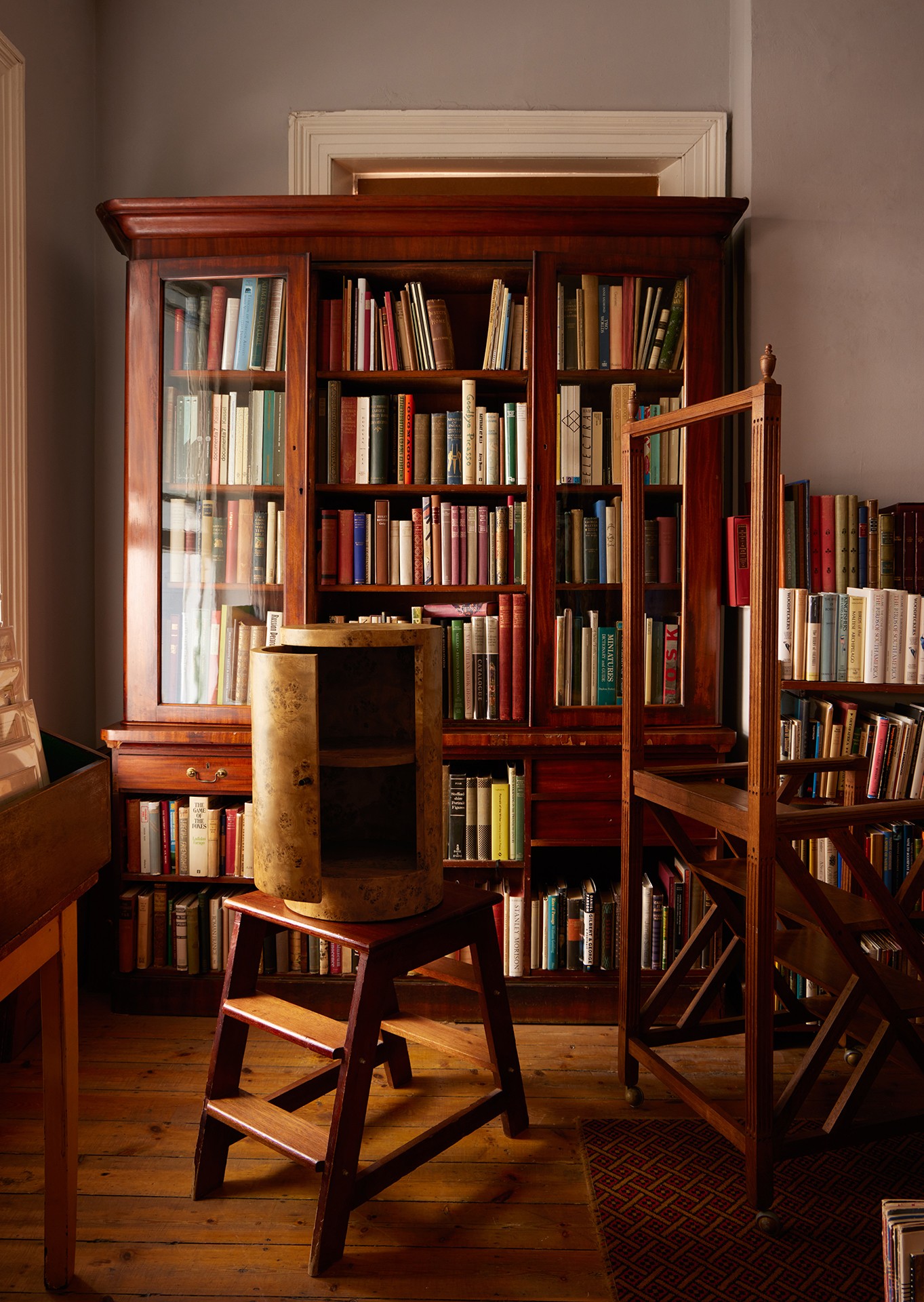
Within Ebur Editions, the Otto L stands alongside the Otto S as two scales of the same design resolution. The larger cabinet works as a bedside table but its proportions allow it to function equally as a standalone side table or console-height piece in other settings.
W 50 x D 44 x H 62 cm
W 19.69 x D 17.32 x H 24.41 in
Materials: Oak, white lacquer.
About
Studio Ebur
Studio Ebur is a Paris design studio founded in 2020 by Racha Gutierrez and Dahlia Hojeij Deleuze. The name carries its own etymology: Ebur is Latin for ivory, a reference to the Ivory Coast where both founders grew up before studying architecture together in Paris.
Their practice covers furniture, lighting, objects, and spatial design. The aesthetic builds on West African craft, Mediterranean light and form, and the French and Italian decorative arts of the early twentieth century. References span Jacques-Emile Ruhlmann, Jean Dunand, Carlo Bugatti, and the Wiener Werkstätte. The studio describes this layering as a palimpsest, cultures accumulated across time that give each piece depth without fixing it to a single origin.
Production is distributed across workshops in France, Portugal, Italy, and Lebanon, each chosen for a specific technique: forged iron, stoneware, raw silk, or the Lebanese marquetry tradition that the studio weaves into contemporary furniture forms.
The debut furniture collection, Le bruit de la mer (2023), drew its title from a shared childhood memory: the sound of the sea on weekends in Ivory Coast and along the Mediterranean. The collection set the studio's formal vocabulary: curved silhouettes, textured surfaces, a tension between raw and refined that carries through their work. Signature pieces such as the Visconti armchair and the Dante mirror translate that vocabulary into domestic scale. Studio Ebur holds AD 100 recognition.
Their furniture and objects are available on Monde Singulier.

Collection
Discover more Nightstands
Created for MS