Ebur Editions - Camel Coffee Table
by Studio Ebur
Are you a professional? Join our Trade Program now
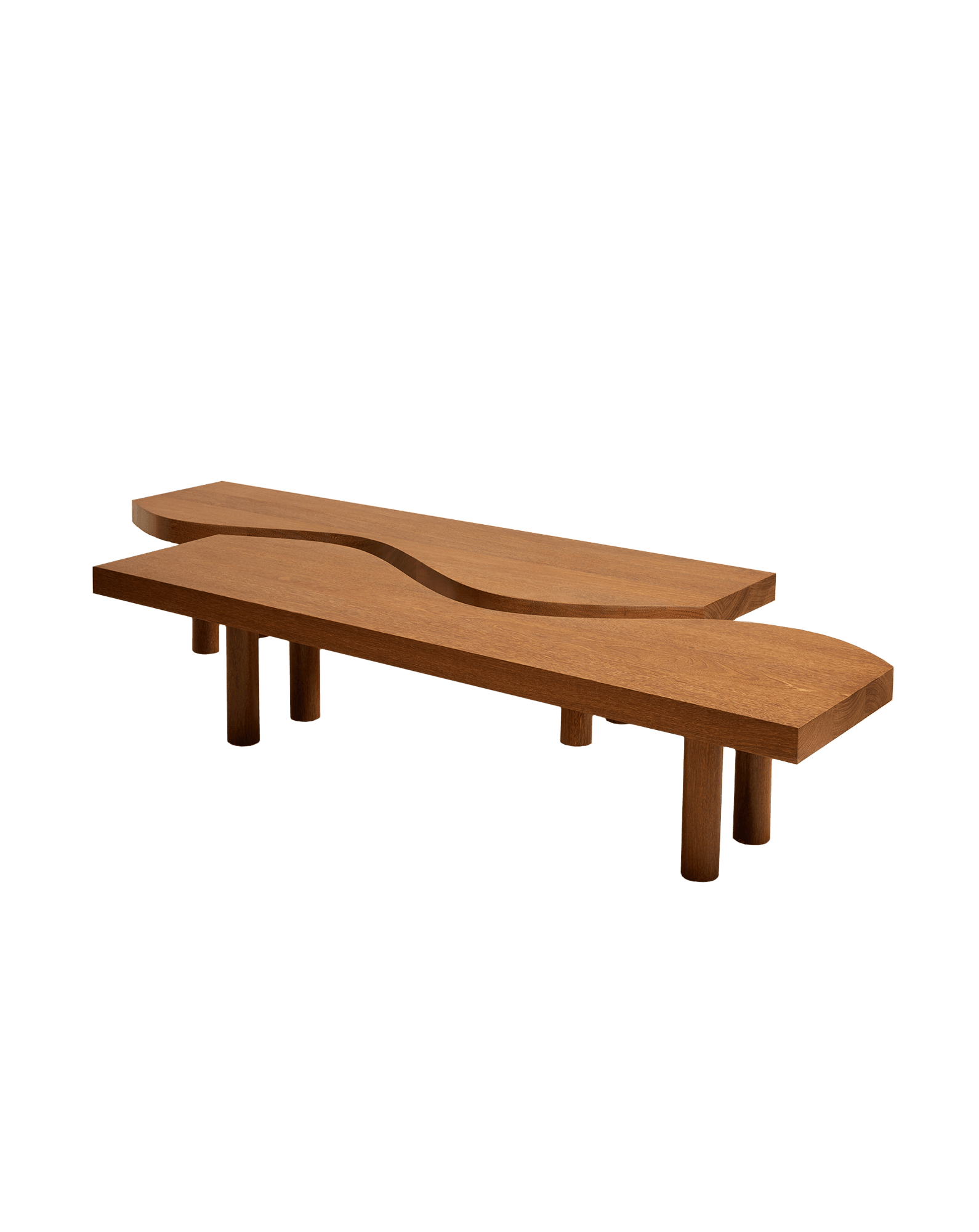
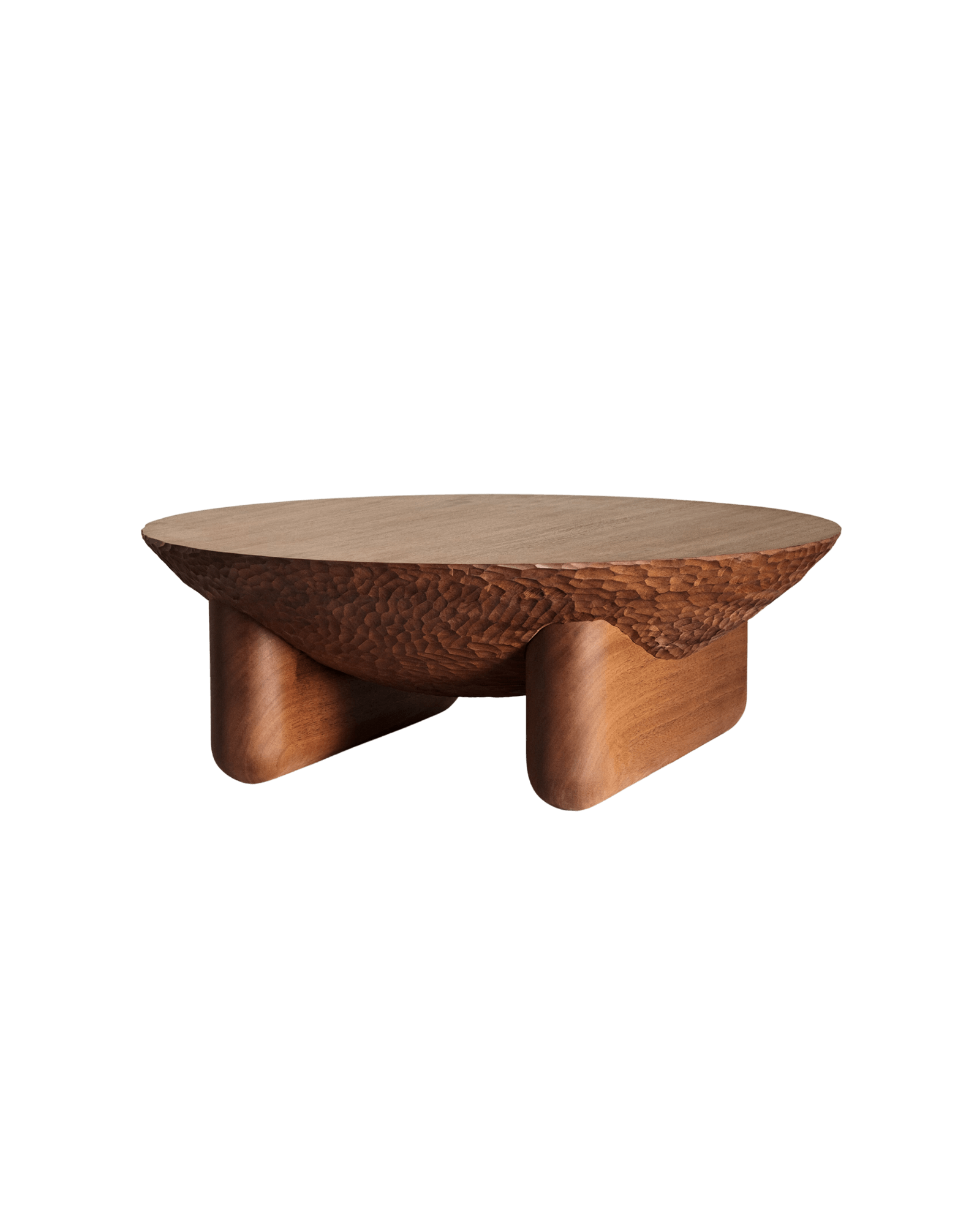
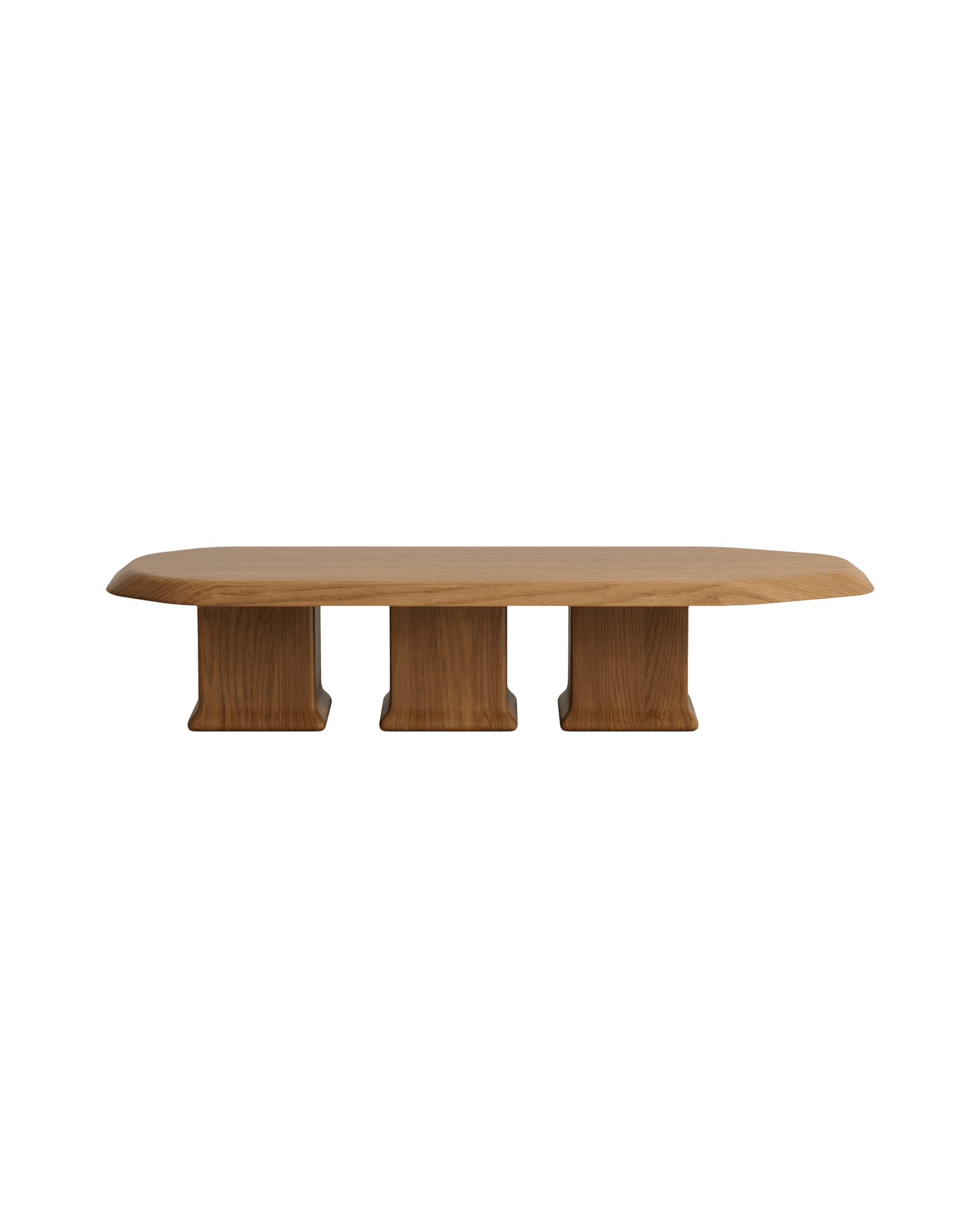
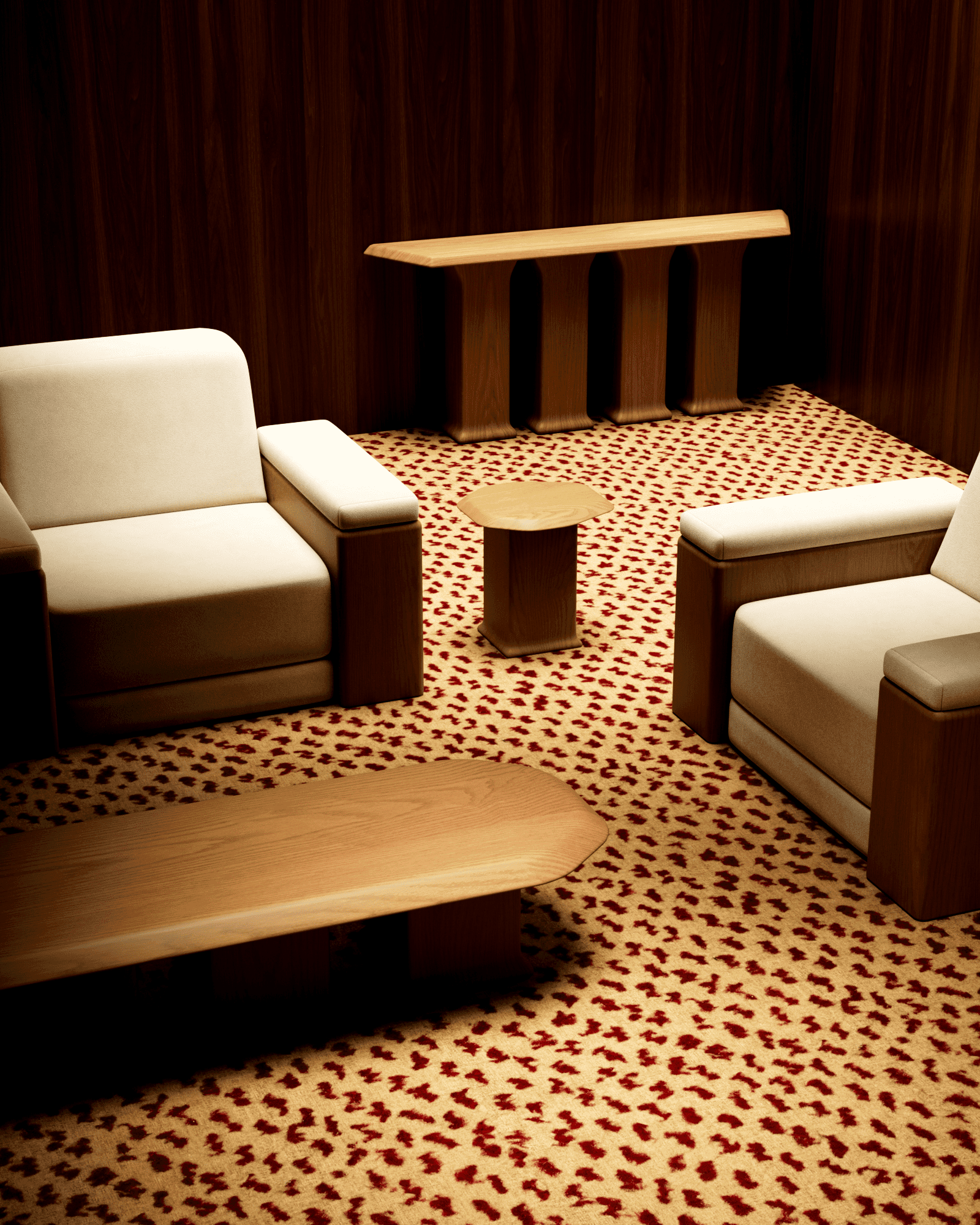
The Camel coffee table is a low table from Studio Ebur's Ebur Editions collection, its form built from two sucupira wood planks whose edges are shaped to nest against each other.
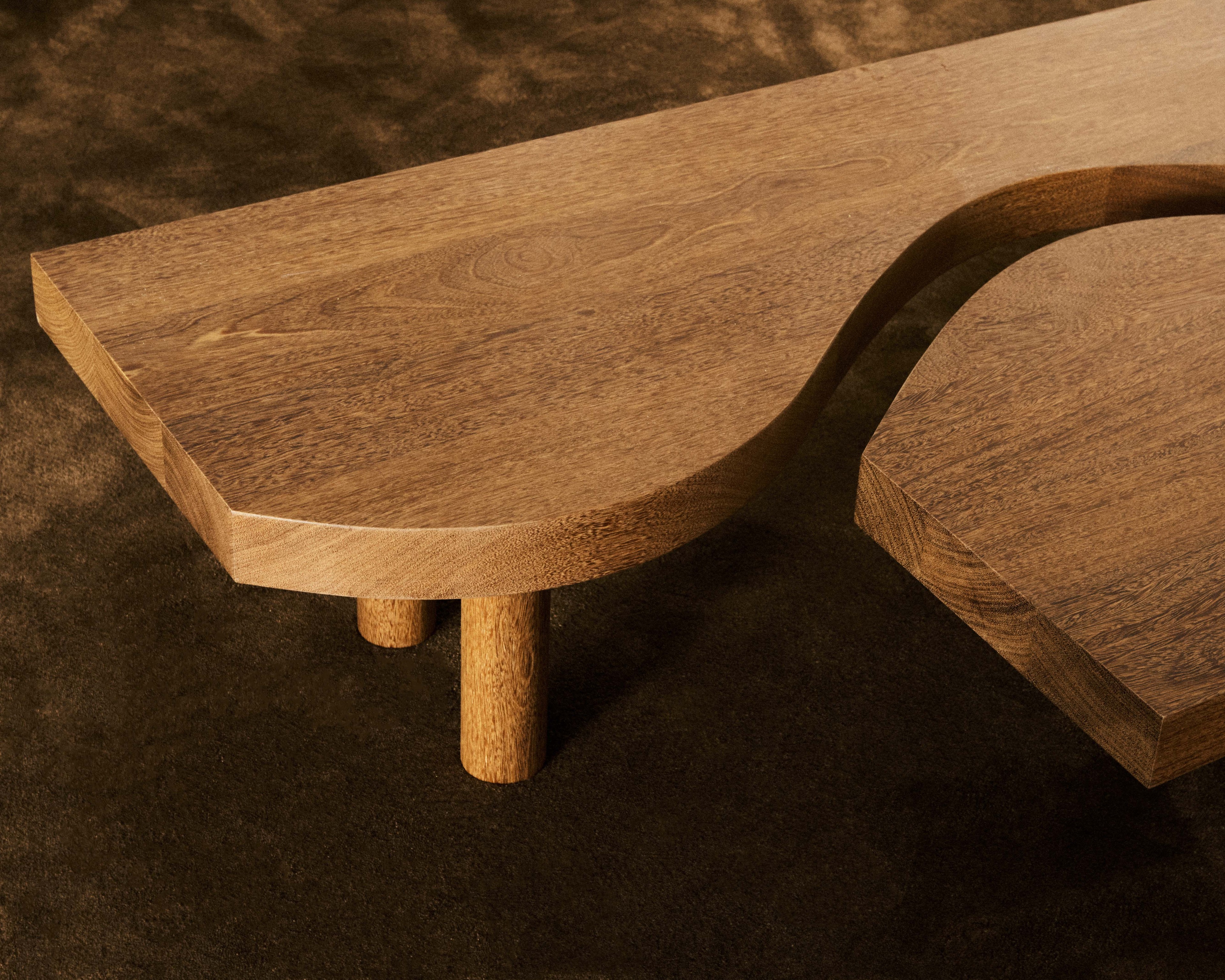
The top plank carries a curved cutout along its length, which drops precisely into the S-shaped edge of the lower plank beneath. The two pieces overlap and interlock without fasteners at that joint, creating a flowing silhouette that reads as a single sculptural form. Multiple cylindrical legs in matching sucupira support the structure at regular intervals. The name references the undulating profile: viewed from the side, the overlapping planks suggest the curved back of a camel in motion.
Sucupira is a dense Brazilian hardwood selected for its warm brown tone and tight grain, well suited to pieces where the wood surface carries the composition. Workshop fabrication requires precise cutting followed by hand-finishing of the curved edges, where the two planks meet without visible gap.
Part of Ebur Editions, the Camel coffee table shows Studio Ebur's interest in forms that carry movement within otherwise static furniture.
W 200 x D 90 x H 36 cm
W 78.74 x D 35.43 x H 14.17 in
Materials: Solid Sucupira Wood.
About
Studio Ebur
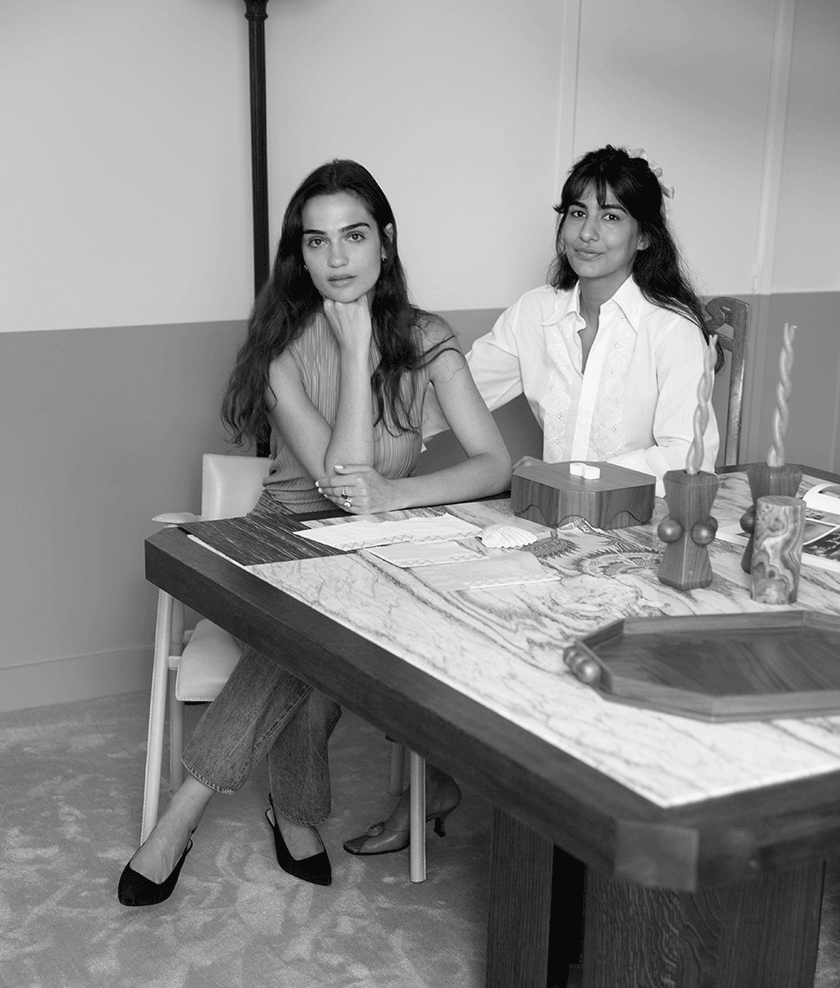
Studio Ebur is a Paris design studio founded in 2020 by Racha Gutierrez and Dahlia Hojeij Deleuze. The name carries its own etymology: Ebur is Latin for ivory, a reference to the Ivory Coast where both founders grew up before studying architecture together in Paris.
Their practice covers furniture, lighting, objects, and spatial design. The aesthetic builds on West African craft, Mediterranean light and form, and the French and Italian decorative arts of the early twentieth century. References span Jacques-Emile Ruhlmann, Jean Dunand, Carlo Bugatti, and the Wiener Werkstätte. The studio describes this layering as a palimpsest, cultures accumulated across time that give each piece depth without fixing it to a single origin.
Production is distributed across workshops in France, Portugal, Italy, and Lebanon, each chosen for a specific technique: forged iron, stoneware, raw silk, or the Lebanese marquetry tradition that the studio weaves into contemporary furniture forms.
The debut furniture collection, Le bruit de la mer (2023), drew its title from a shared childhood memory: the sound of the sea on weekends in Ivory Coast and along the Mediterranean. The collection set the studio's formal vocabulary: curved silhouettes, textured surfaces, a tension between raw and refined that carries through their work. Signature pieces such as the Visconti armchair and the Dante mirror translate that vocabulary into domestic scale. Studio Ebur holds AD 100 recognition.
Their furniture and objects are available on Monde Singulier.
Collection
Discover more Coffee Tables
Created for MS
Created for MS
Created for MS