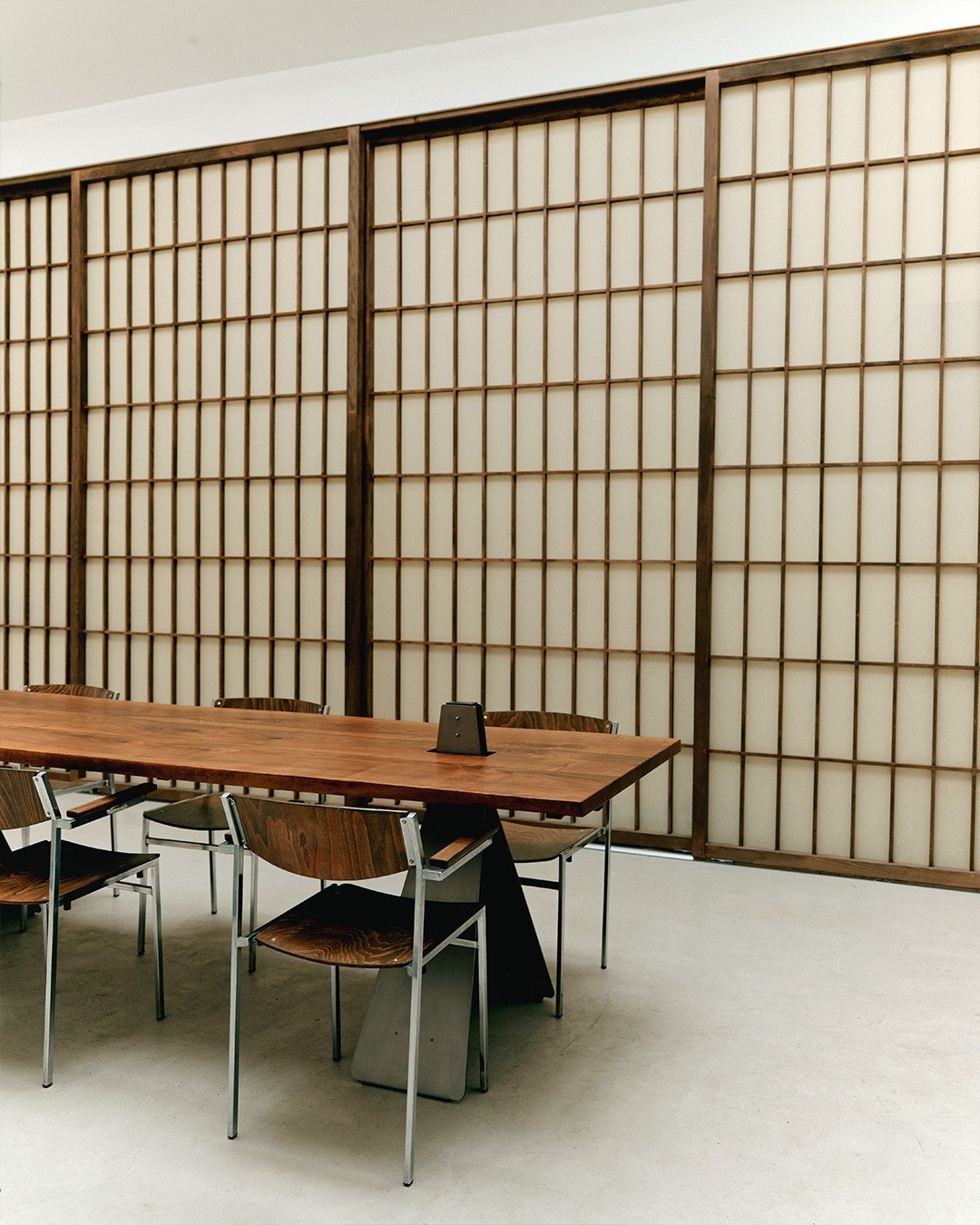
Kami - Kami 10 Dining Table
by Le Cann
Are you a professional? Join our Trade Program now
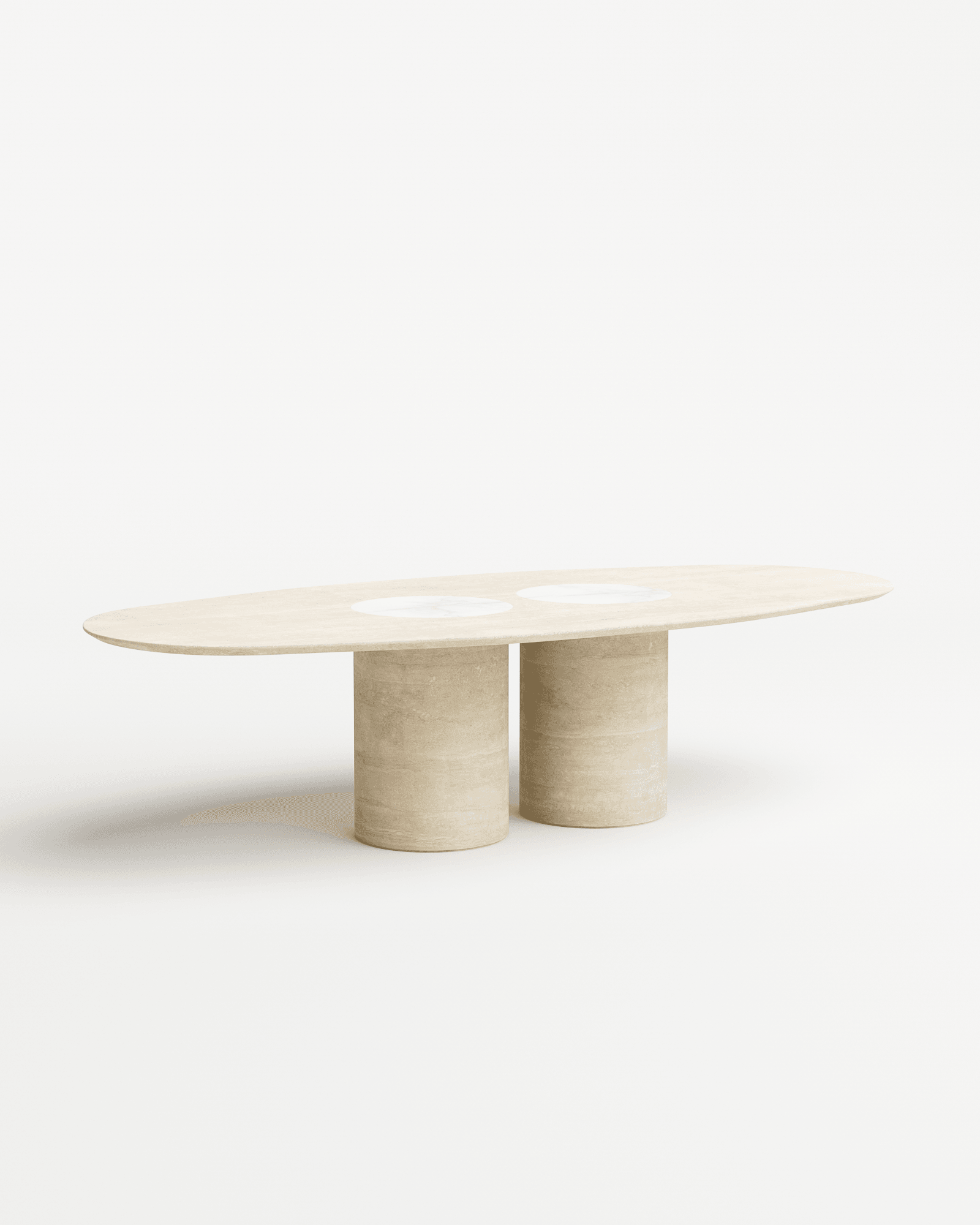
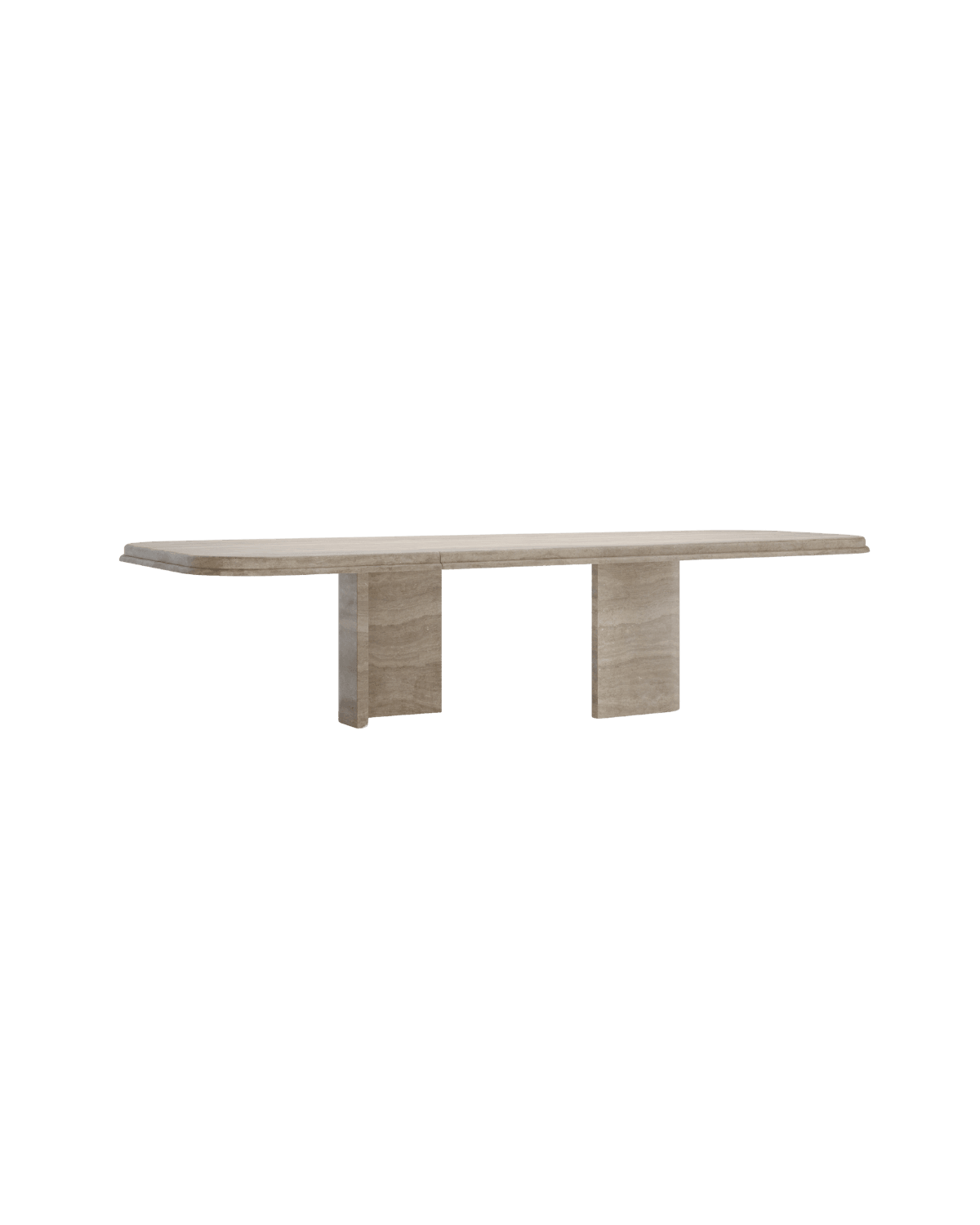
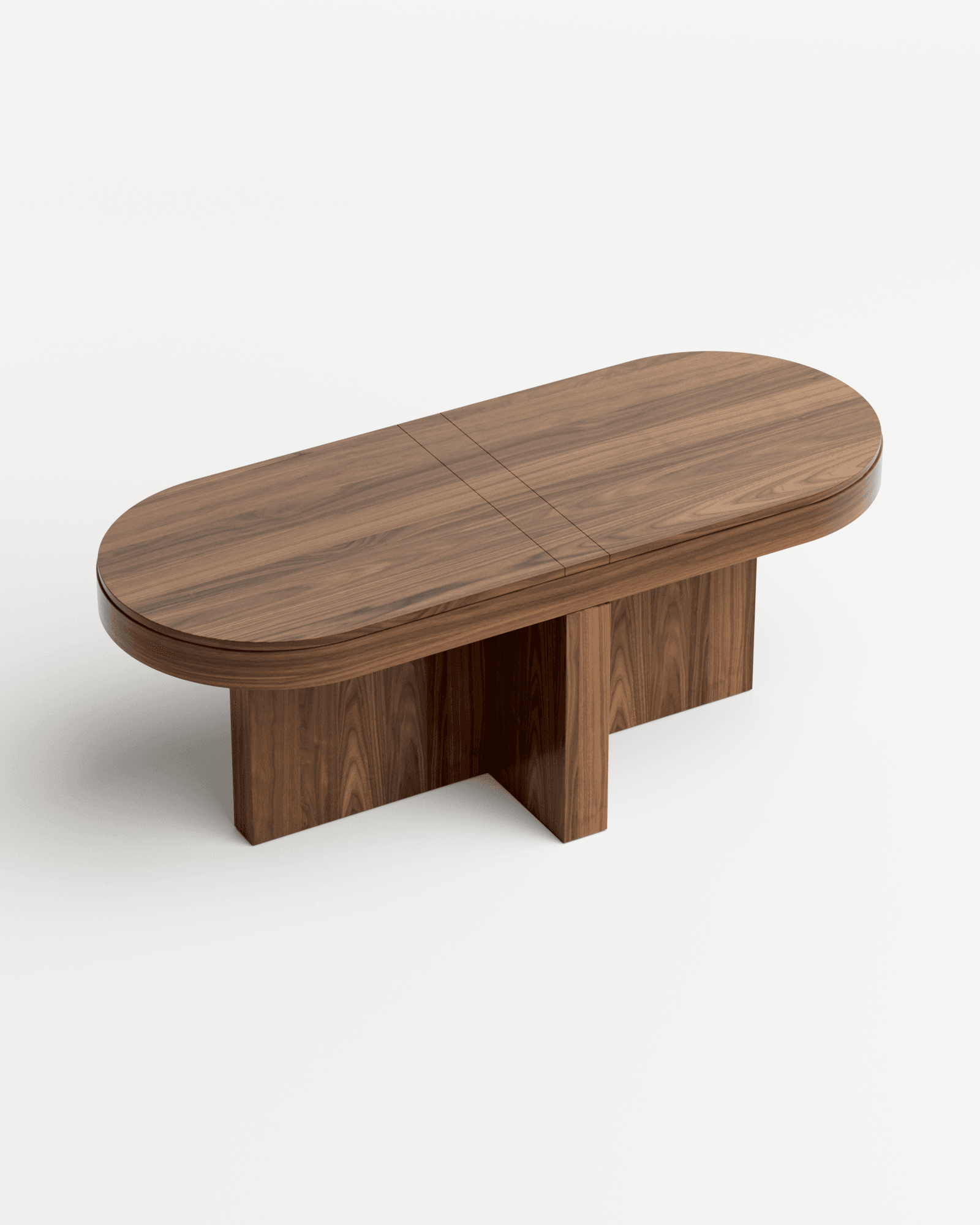
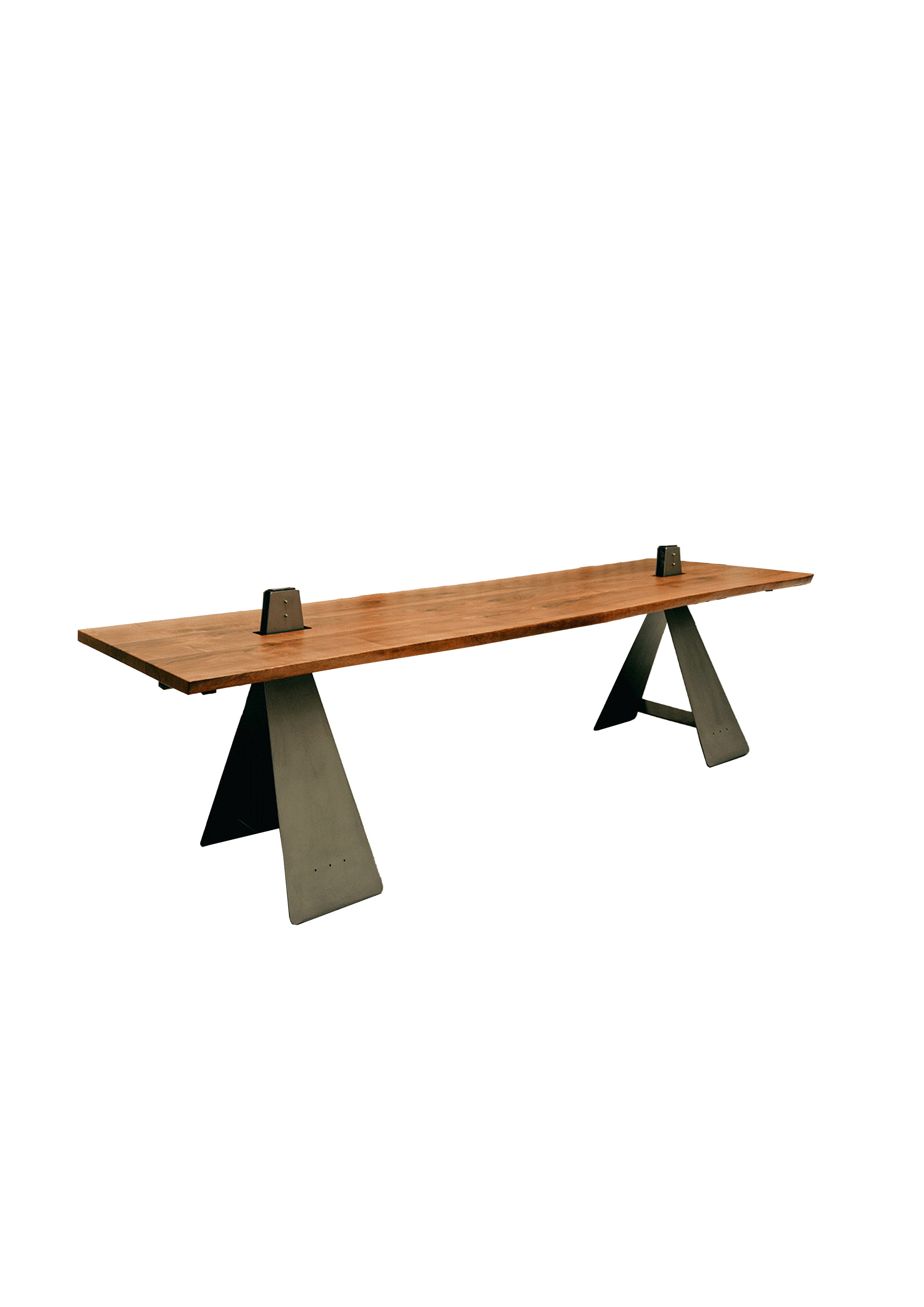
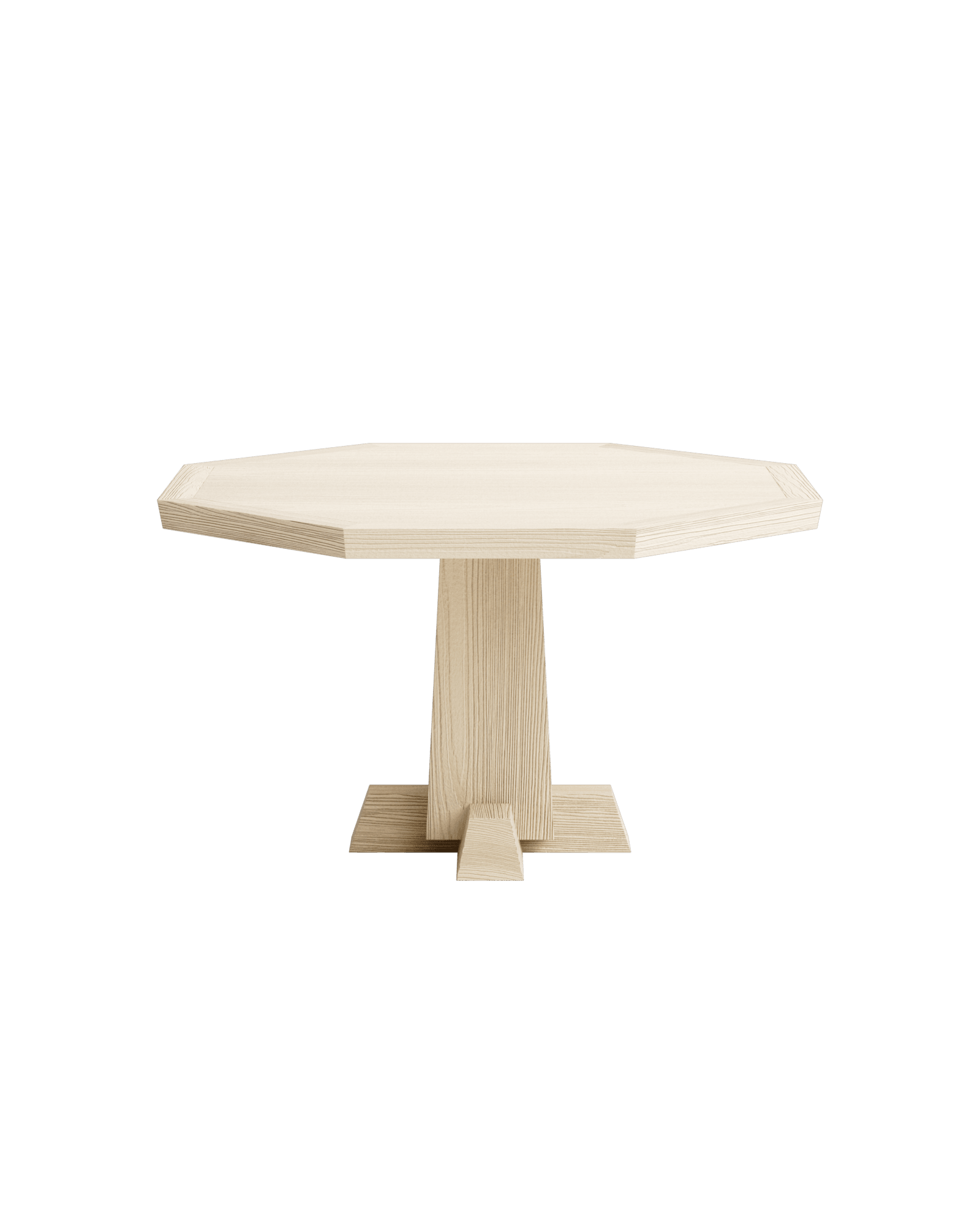
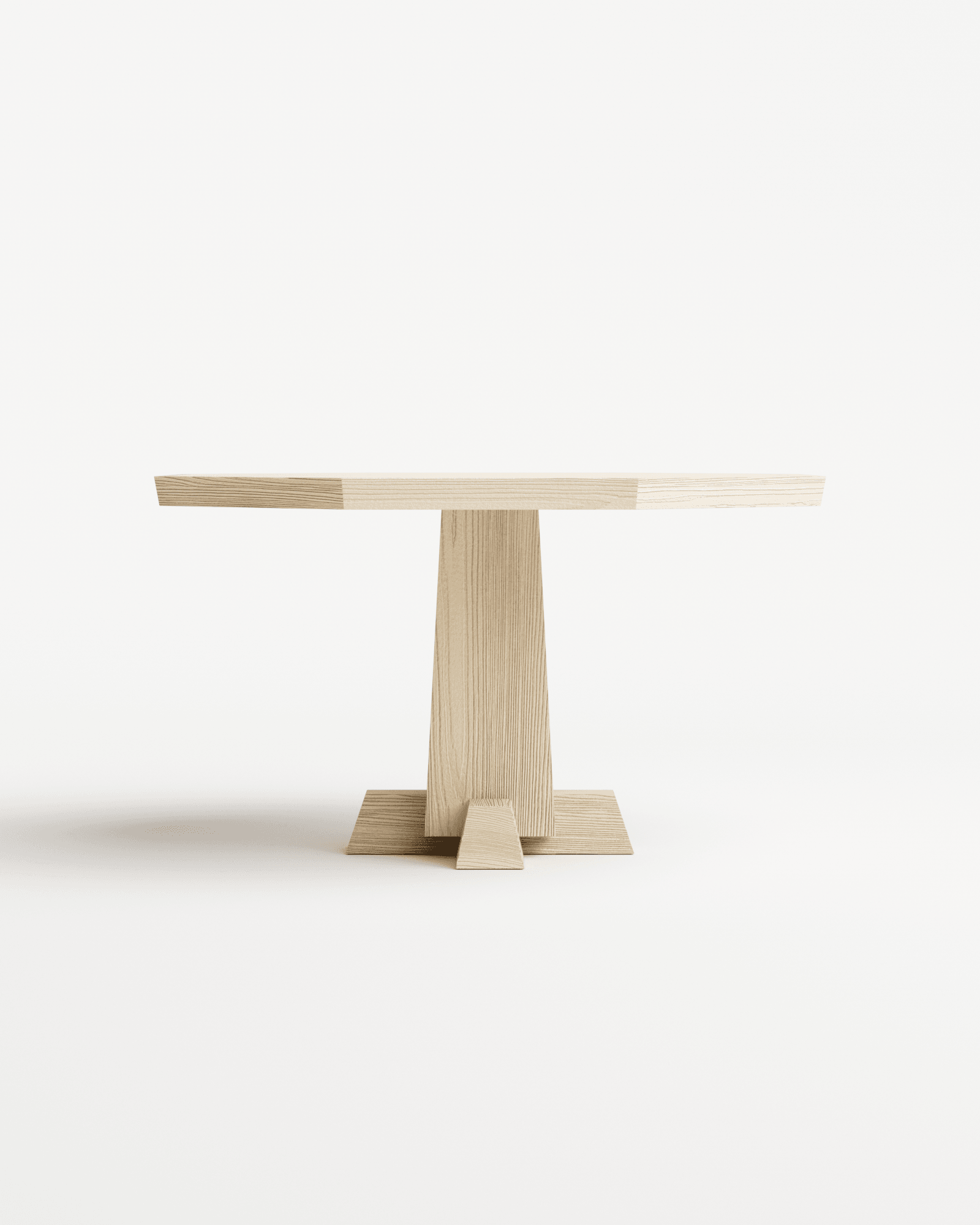
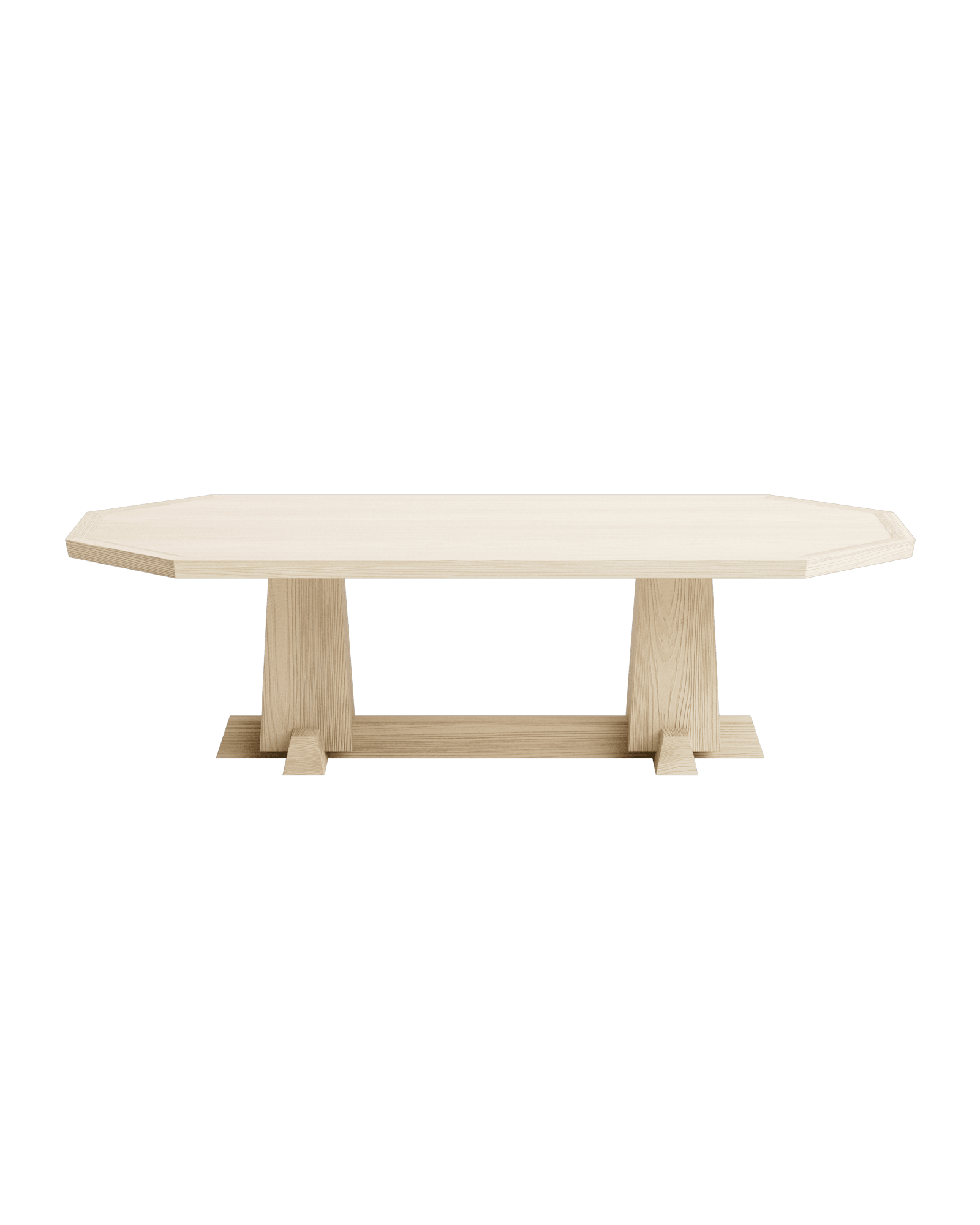
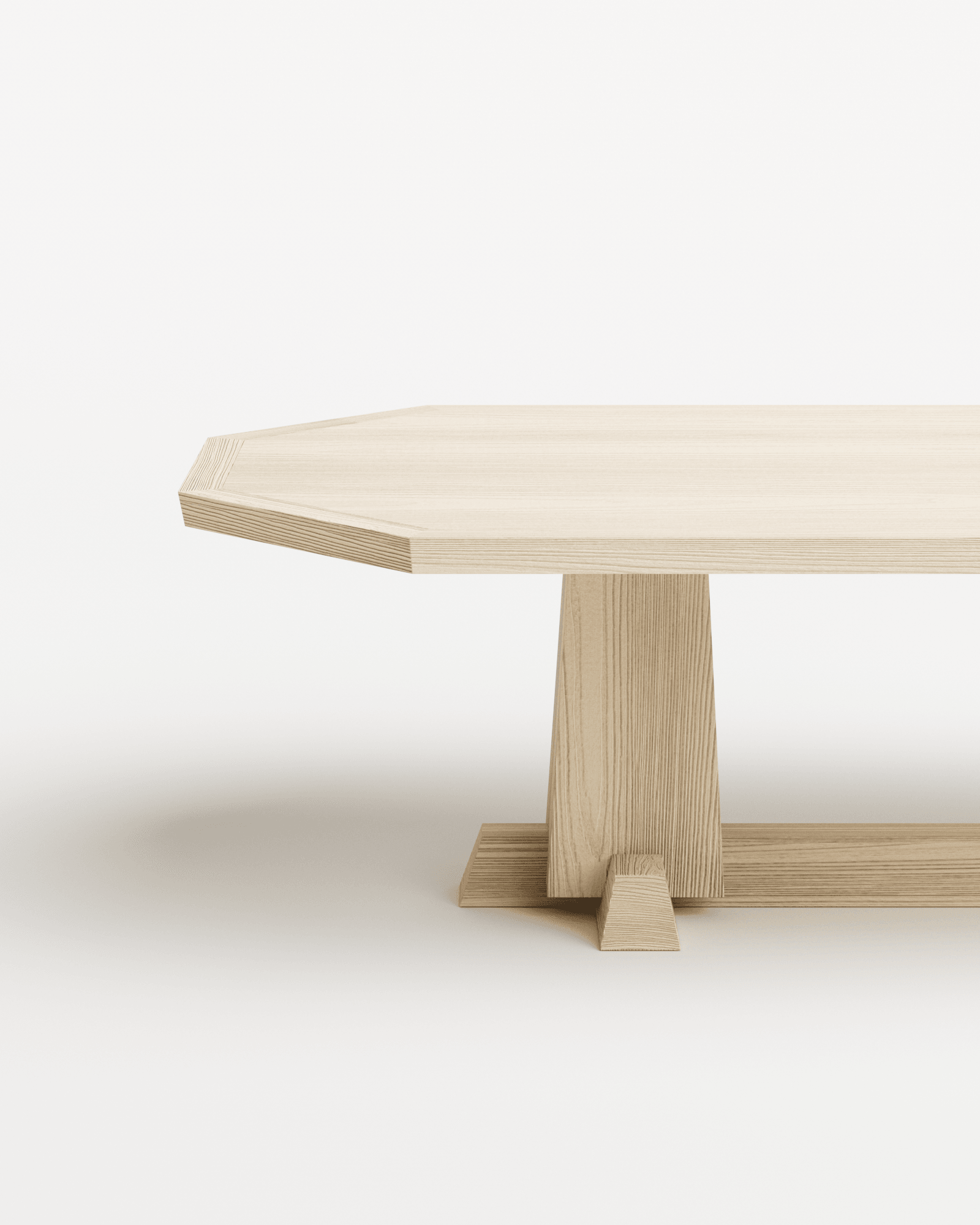
The Kami 10 is the large-format dining table in Le Cann's Kami collection, an octagonal form in sandblasted pine designed for generous dining spaces.
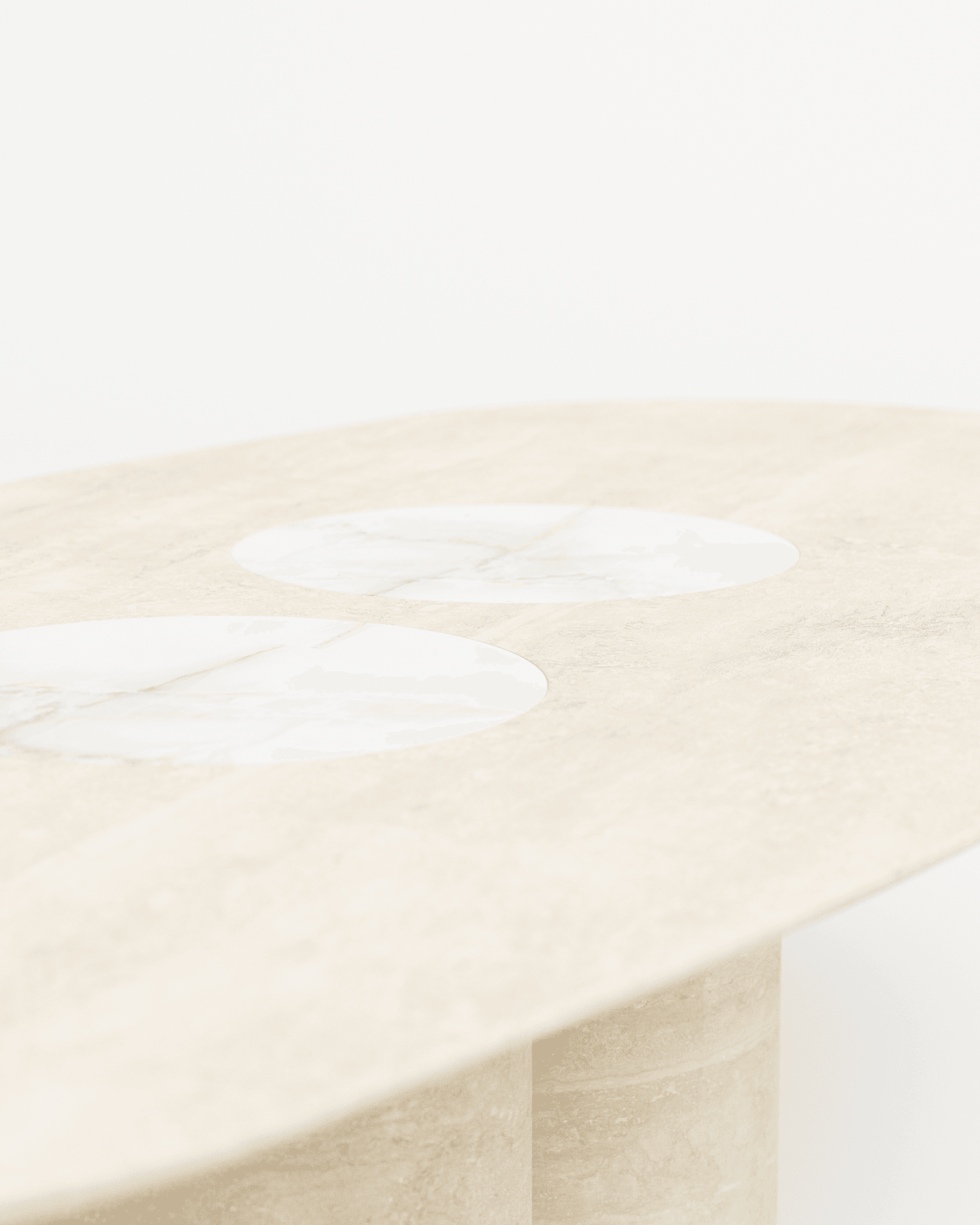
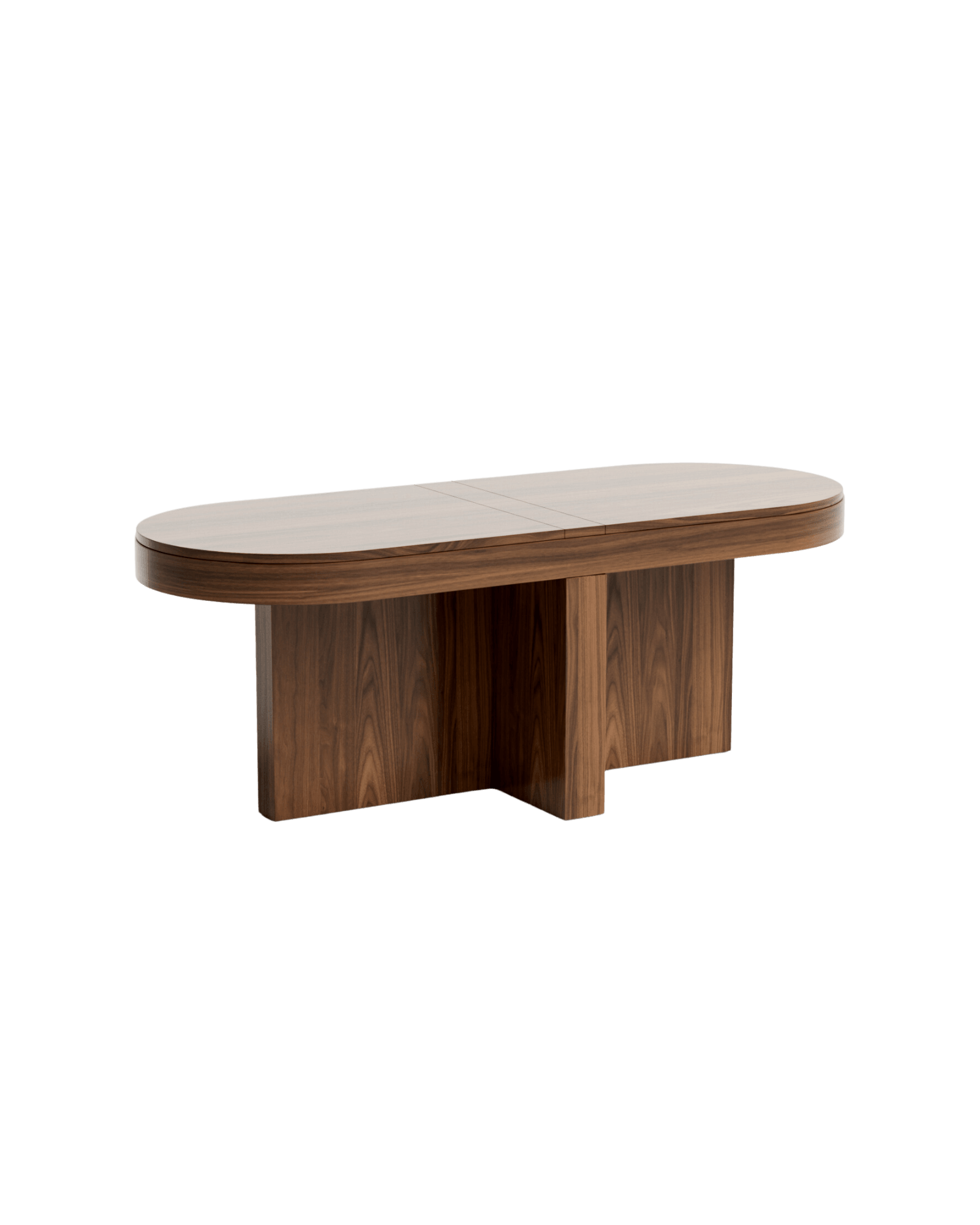
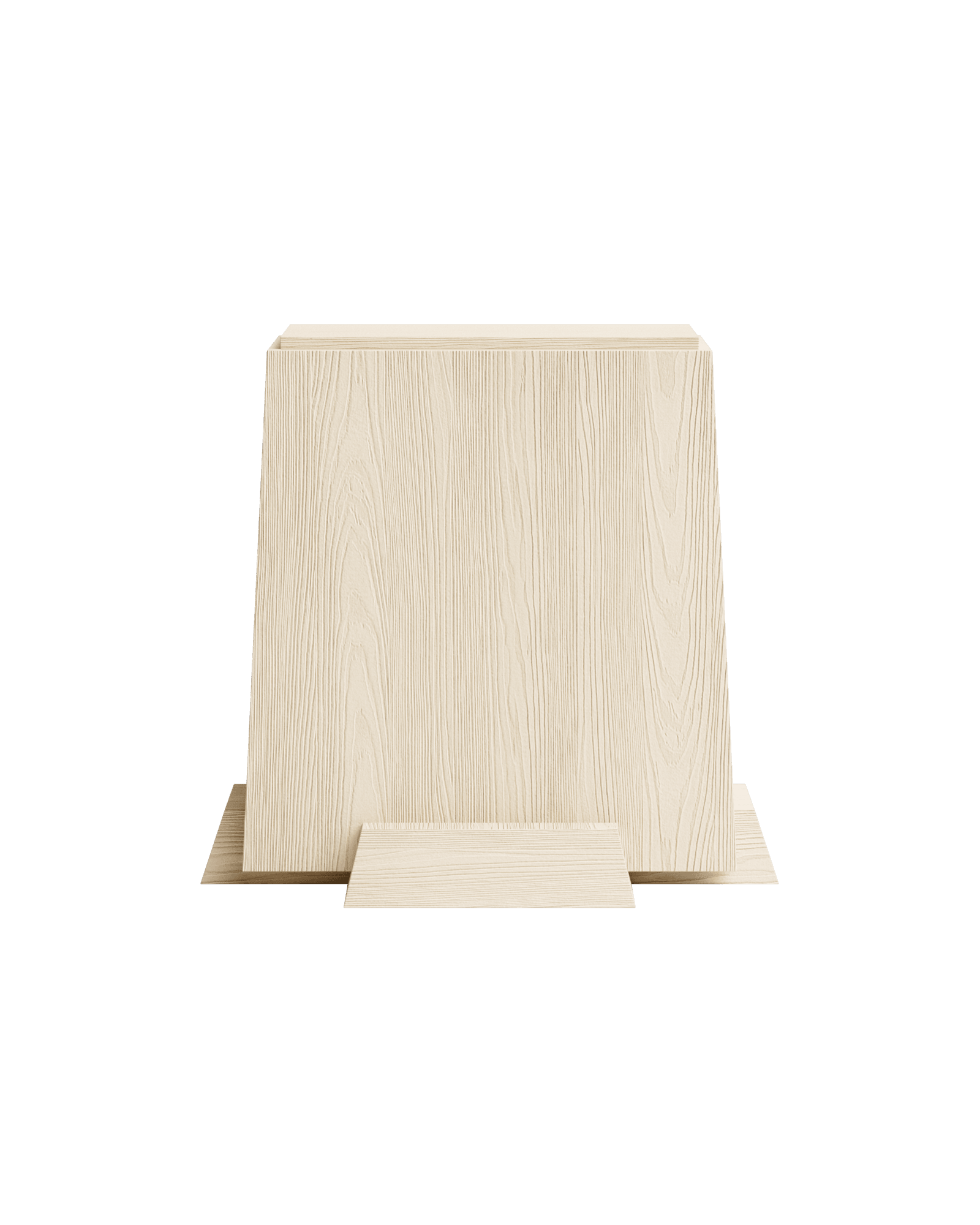
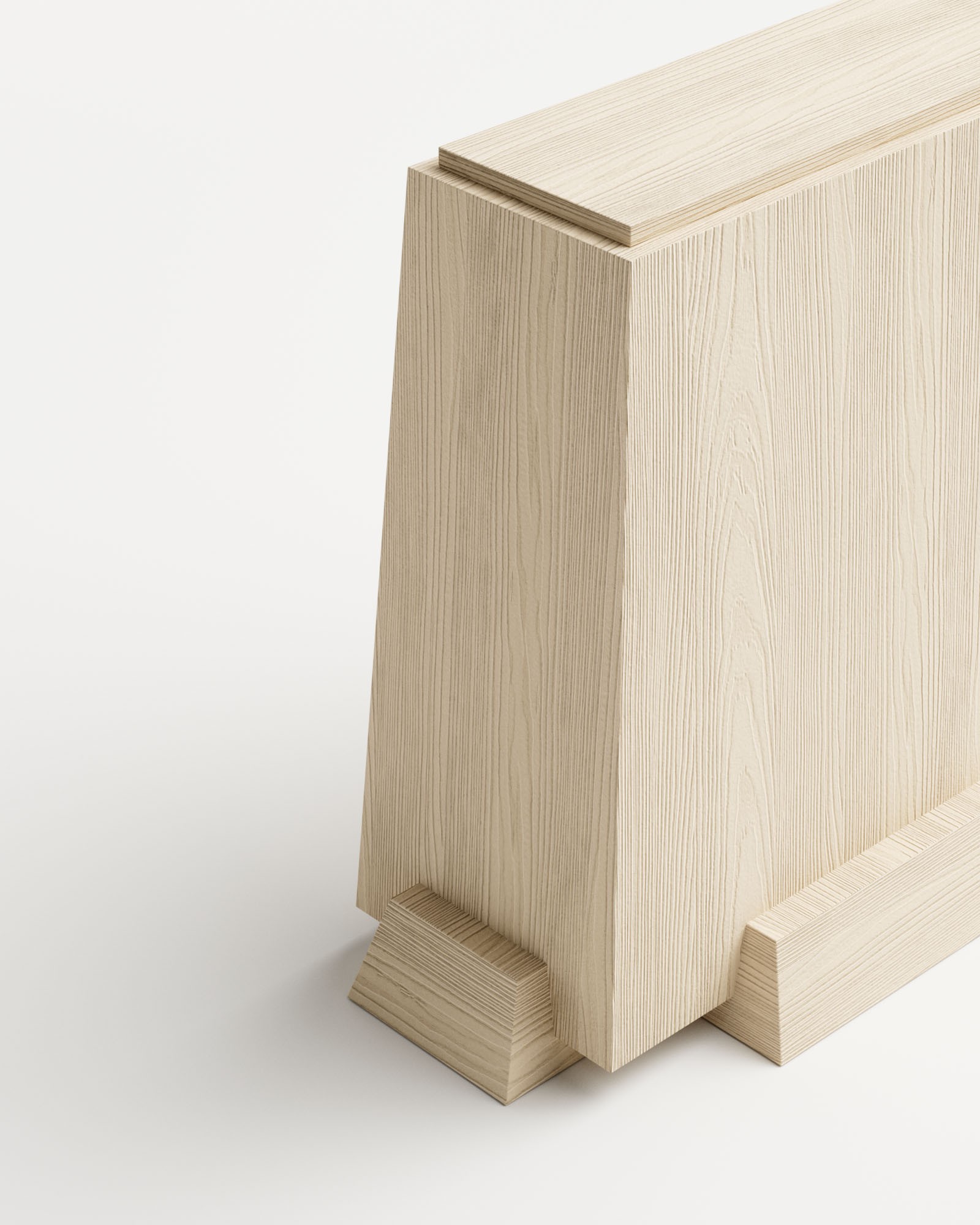
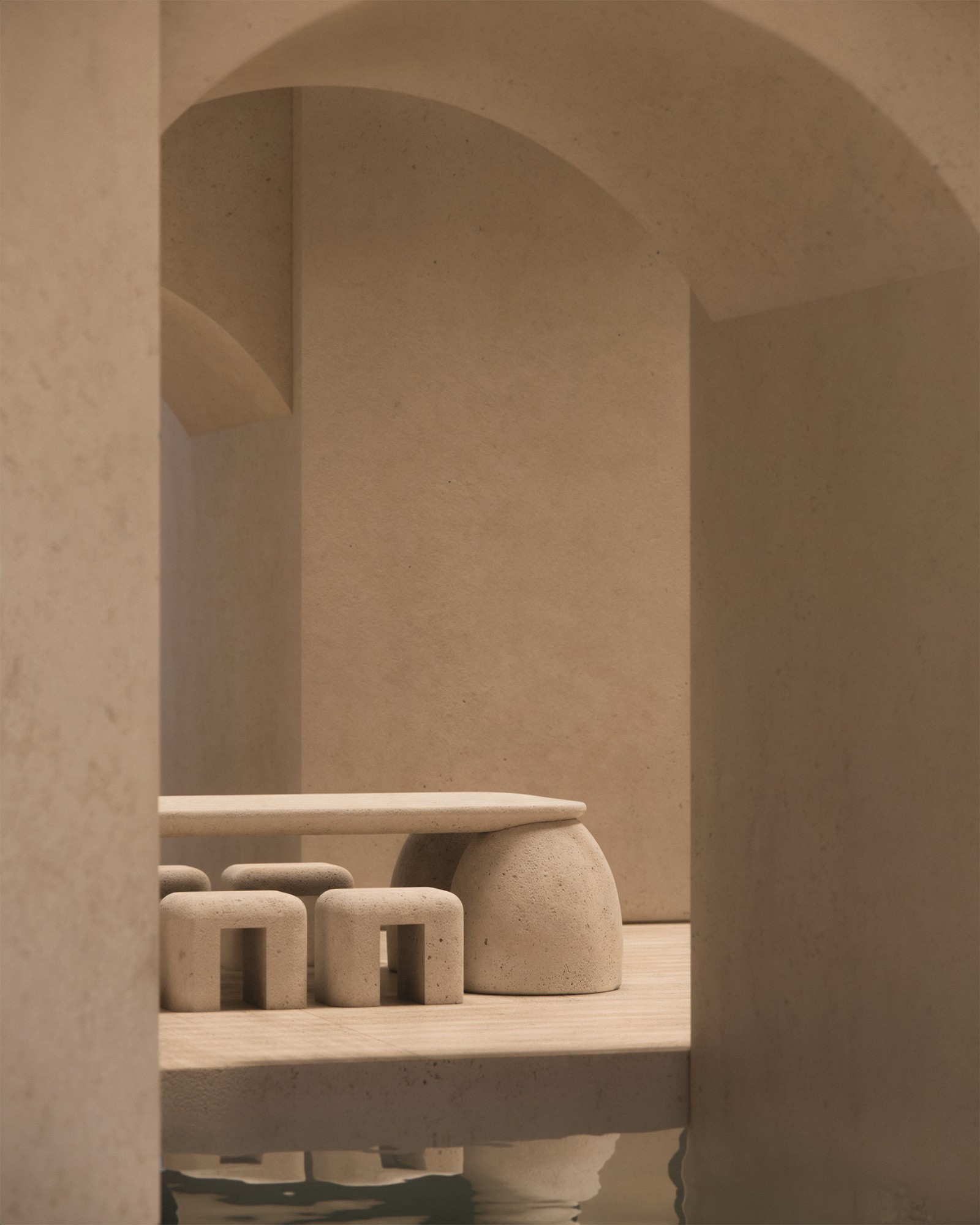
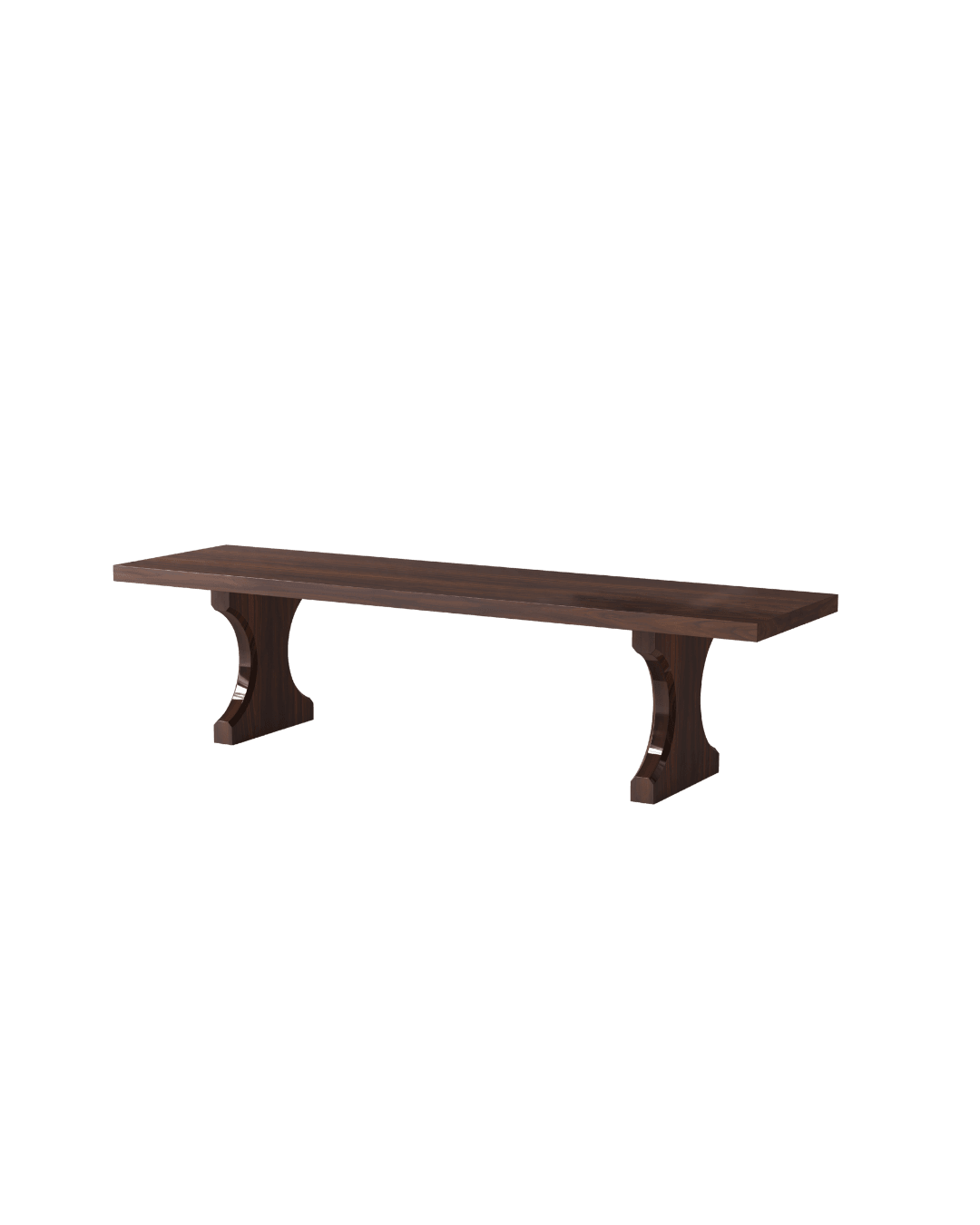
The tabletop spans a long horizontal plane with chamfered octagonal edges, the pale sandblasted pine showing consistent grain across the full surface. Below, two substantial rectangular trestle-style bases with angled feet carry the table's weight and connect through a central horizontal stretcher. That lower structure is built with the same material and finish as the top, keeping the visual logic unified from tabletop to floor.
The Kami 10 differs from its smaller counterpart, the Kami 09, in scale and base construction, not in material sensibility. Both trace back to the same drawing discipline practiced by Raphaelle Robert and Guillaume Fantin, who built Le Cann in 2021 from a shared background in Parisian architecture and interior design. In the Kami collection, size is a variable; the formal decision-making remains constant.
The table seats six to eight comfortably. It works in a dedicated dining room, an open-plan living space where the table anchors the dining zone, or a large kitchen where the piece is the room's primary design statement.
Part of the Kami collection by Le Cann, AD100 and FD100 studio.
W 270 x D 130 x H 75 cm
W 106.3 x D 51.18 x H 29.53 in
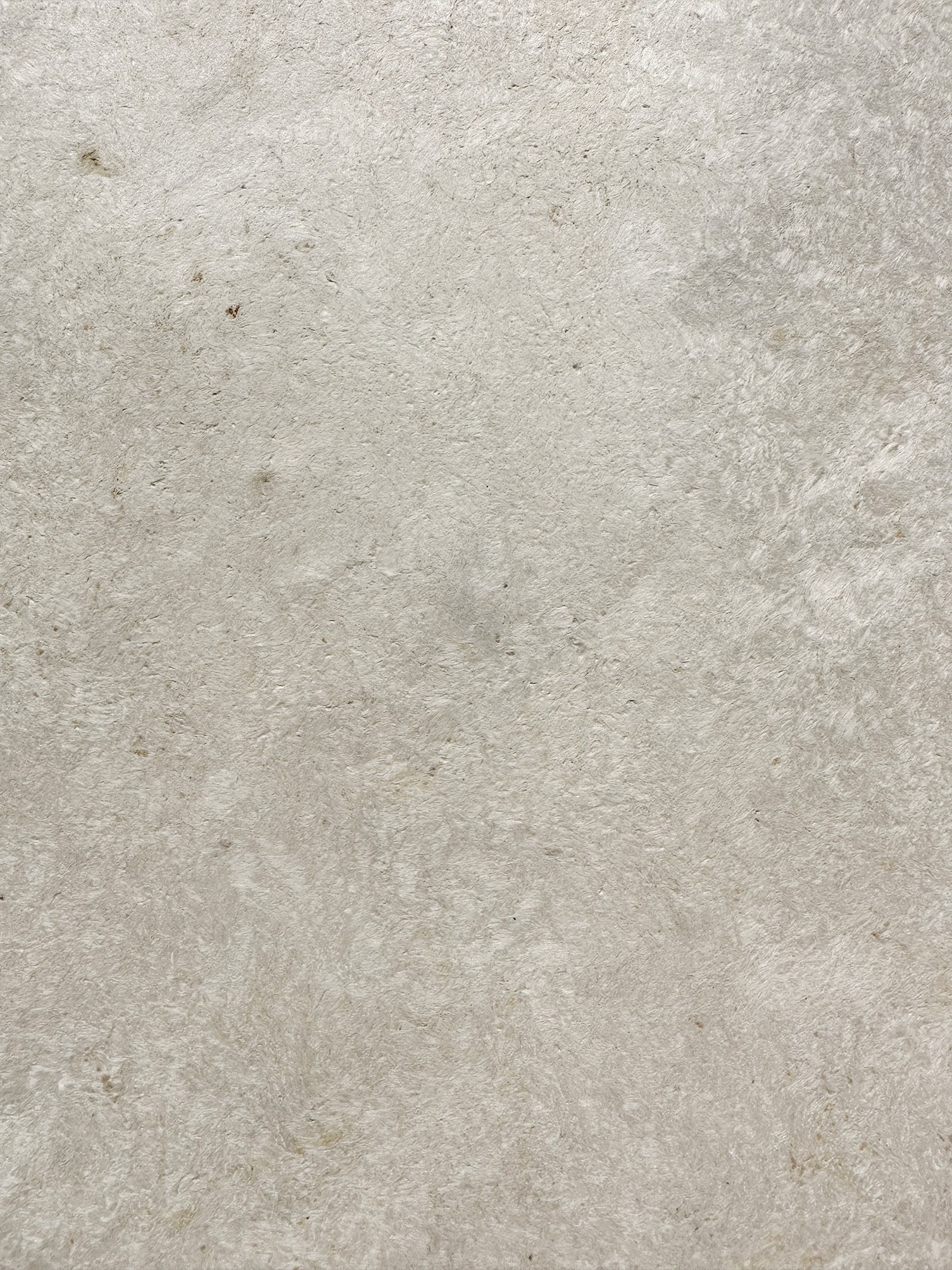
Materials: Tinted sandblasted pine
About
Le Cann
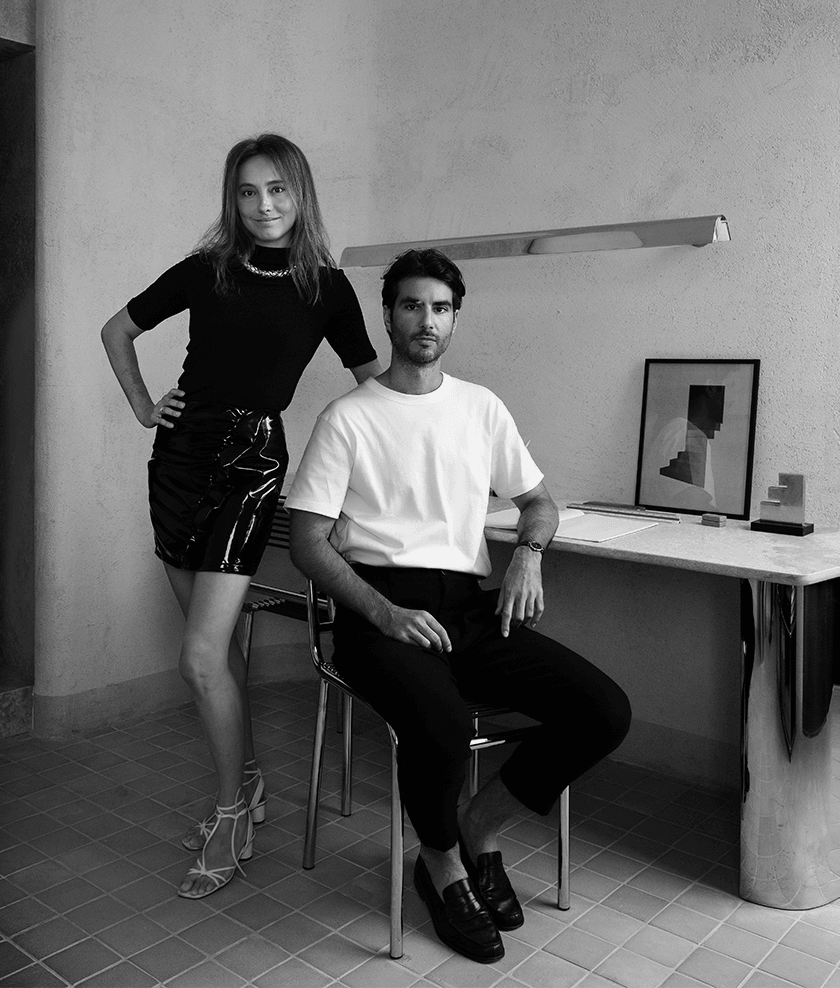
Founded in 2021 by Raphaëlle Robert and Guillaume Fantin, Le Cann studio brings a precise French minimalist voice to interior architecture. The two designers met at École Bleue before training at the most demanding Parisian firms: Raphaëlle at Marie Deroudilhe and Thierry Lemaire, Guillaume at Andrée Putman and Joseph Dirand. That formation shows in every project.
Their practice is rooted in drawing. Pages of traced lines, refined collaboratively, guide the spatial thinking that defines Le Cann's work. Volumes are shaped by light. Clean lines articulate space without announcing themselves. The 1930s design tradition, with its attention to ensemble and craft, runs through everything they produce, yet the studio resists a fixed aesthetic. Inspiration, Robert and Fantin have said, can arrive through travel, a film, or a material flaw that turns out beautifully, and each project is shaped by its own context.
The result holds opposing qualities in tension: rigorous and warm, minimal and referential, restrained and expressive. Sisal, travertine, and brocade recur across their commissions, chosen for tactile presence rather than trend. The guesthouse in Castillon-du-Gard, completed in 2022, stands among their most recognized projects, a 32 m² space where bold architectural gesture and disciplined detailing coexist.
Recognition has followed quickly. AD magazine named the studio among France's emerging decoration talents in 2023. The FD100 Prize and the AD & Range Rover Awards came in 2024. Le Cann is listed among the AD100, the annual selection of France's most influential interior architects. Their work is available on Monde Singulier.
Collection
Created for MS
Created for MS
Created for MS
Created for MS
Created for MS
-1782736697285.jpg&w=3840&q=90)
Created for MS
Created for MS
Created for MS
Created for MS
Created for MS
Created for MS
Created for MS
-copie-1773928773149.png&w=3840&q=90)