Kursi Chair - Painted
by Sizar Alexis
Material
Black
Are you a professional? Join our Trade Program now
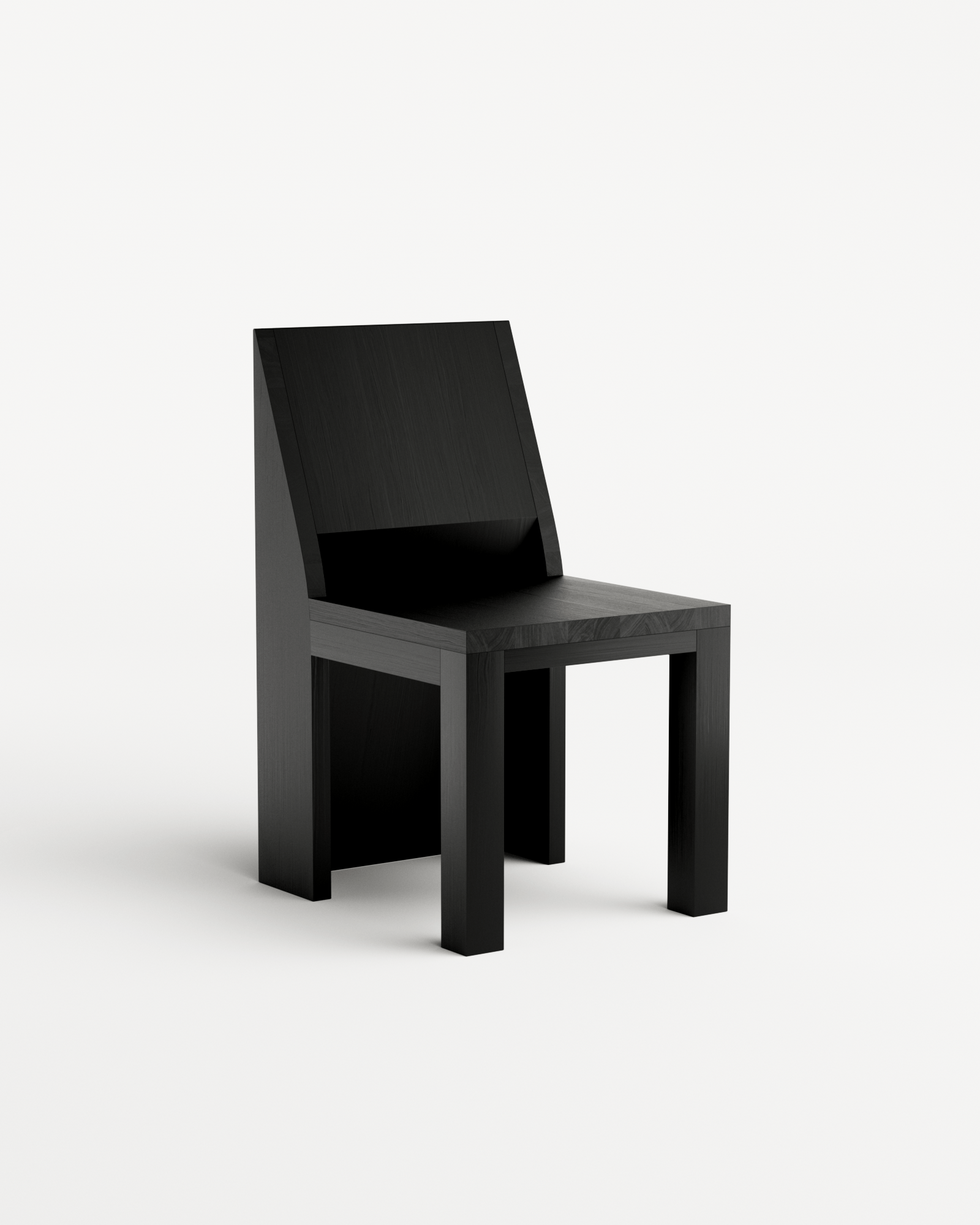
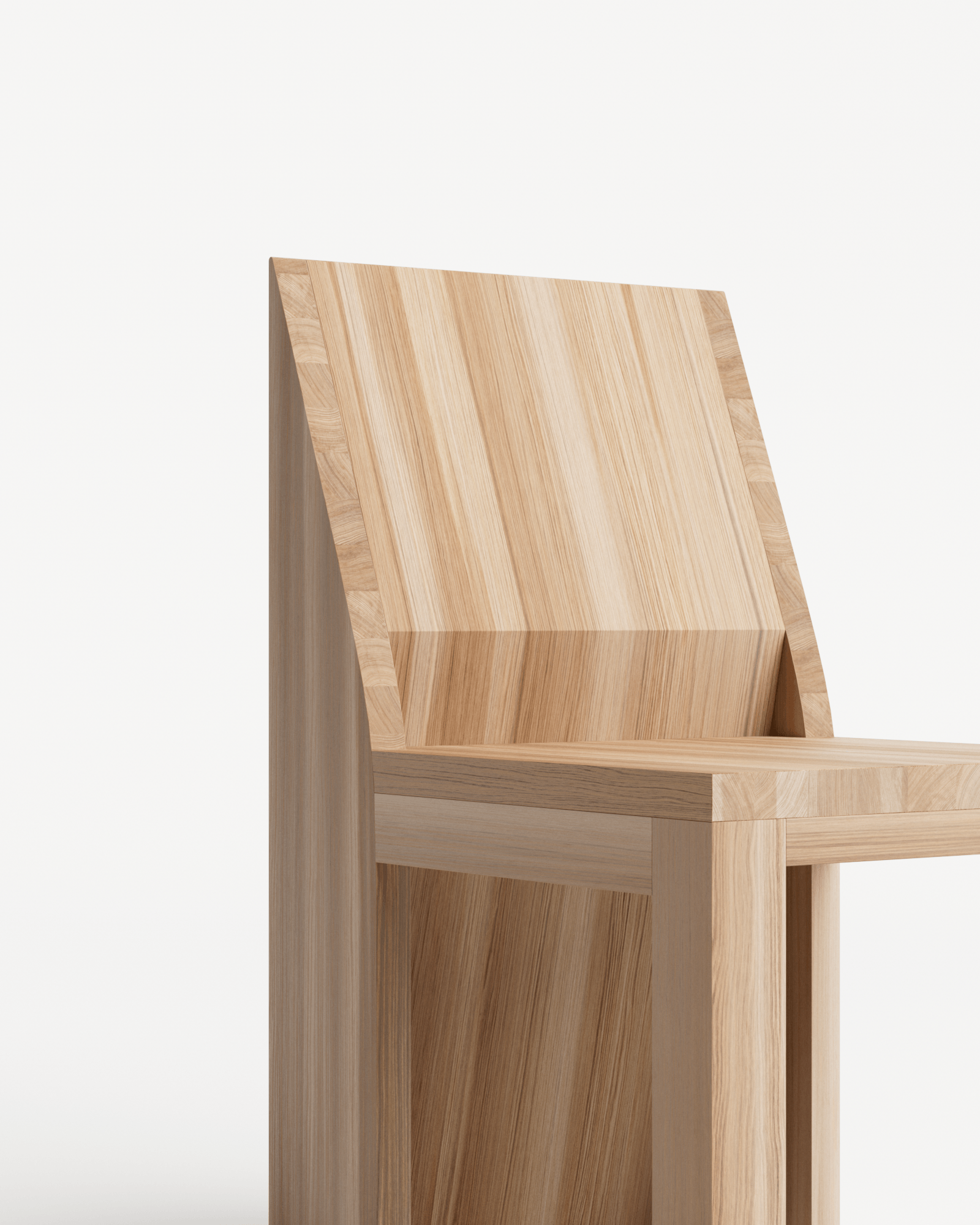
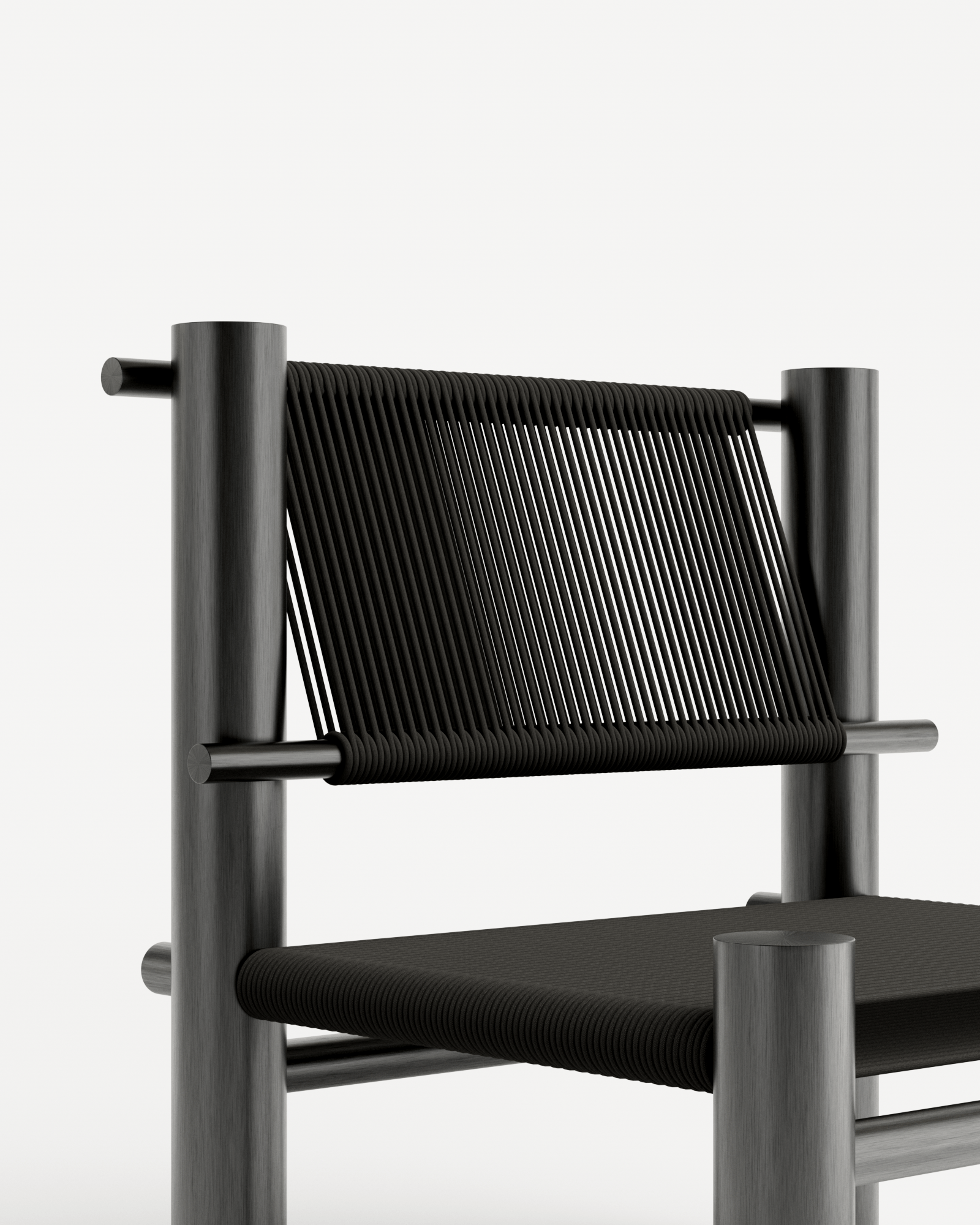
The Kursi Chair in Painted Black is a solid pine chair by Sizar Alexis, the dark-finished version of his standalone Kursi line.
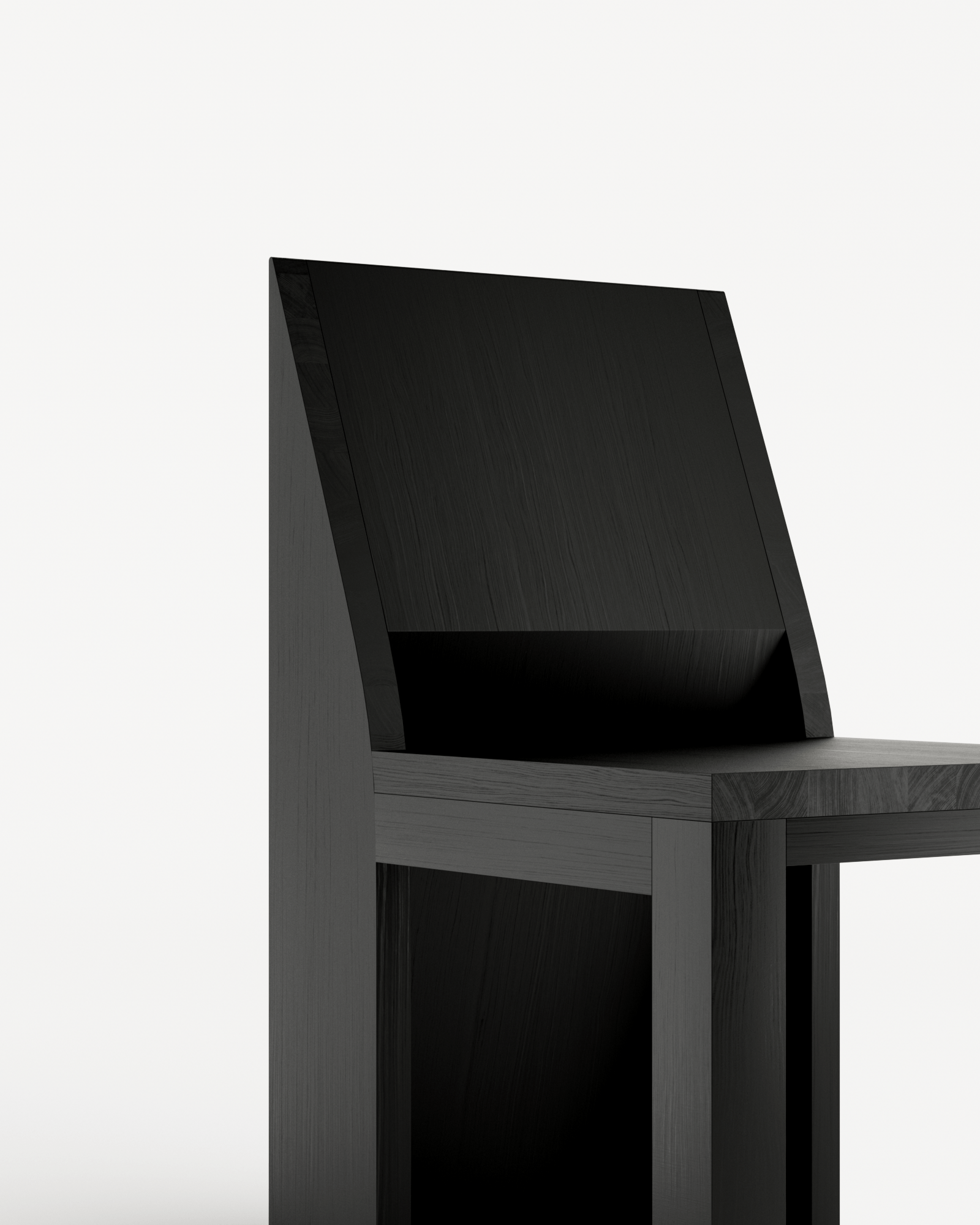
Its form is structured around thick, integrated rectangular elements: flat seat, block-like legs, and a slightly angled backrest with a clean horizontal cutout that interrupts the solid volume. No softened edges, no transitional details. Alexis developed Kursi as a search for simplicity and purity beyond the pull of trends: a chair whose geometry references architectural play rather than seating convention. The black painted finish heightens this refusal of ornament, leaving only structural logic visible.
The piece is constructed from pine, abundant in the Swedish landscape and chosen for its ability to accept dark stain evenly. The painted surface reads as uniform charcoal from a distance, but close contact reveals the wood grain beneath, confirming the material's natural origin.
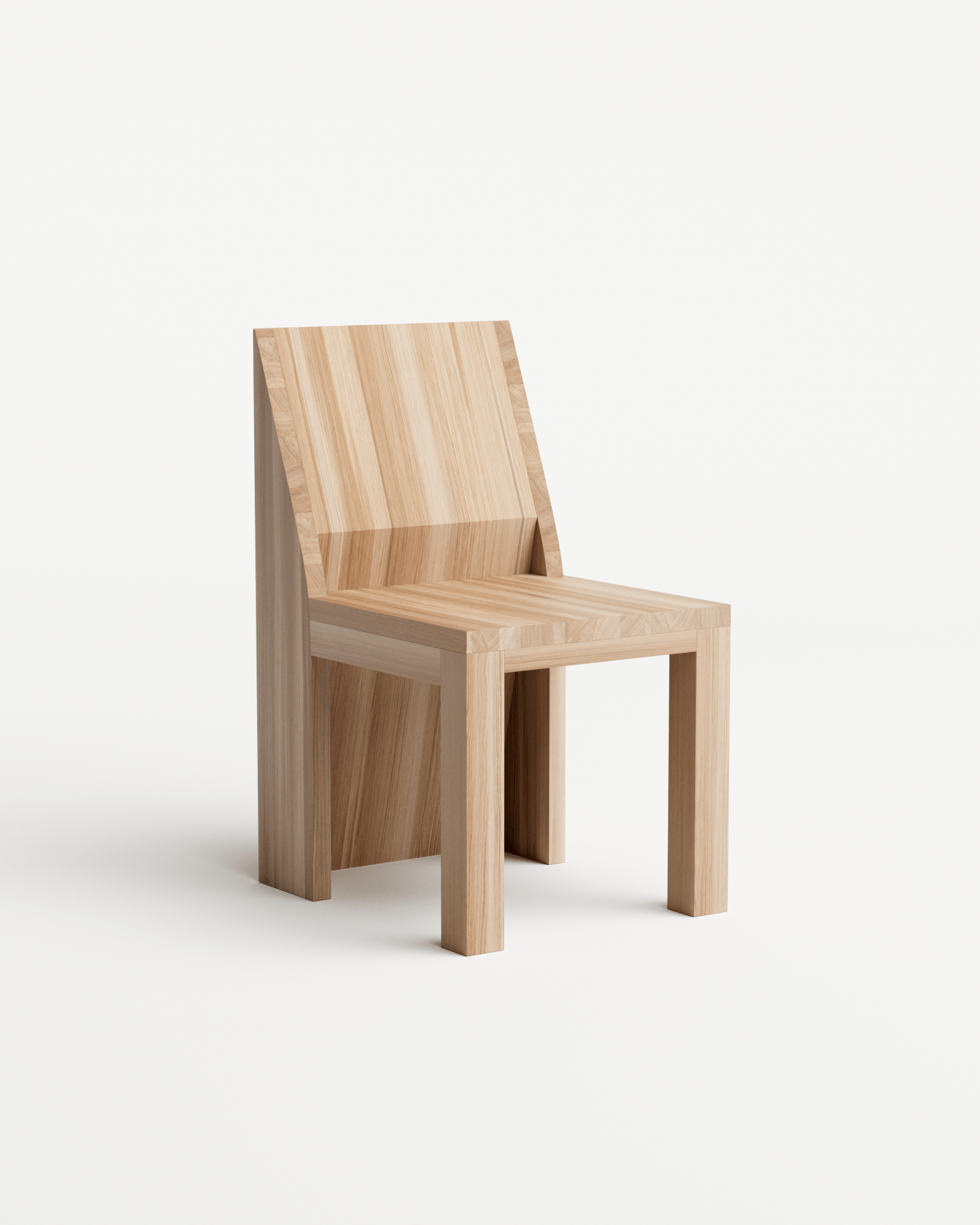
Where the natural version foregrounds the pine's warmth, the Kursi Chair in Painted Black shifts the register toward restraint and weight, two qualities Alexis consistently pursues across both the Kursi line and his broader body of work.
W 47 x D 38 x H 73 cm
W 18.5 x D 14.96 x H 28.74 in
Materials: Painted Pine Wood
About
Sizar Alexis
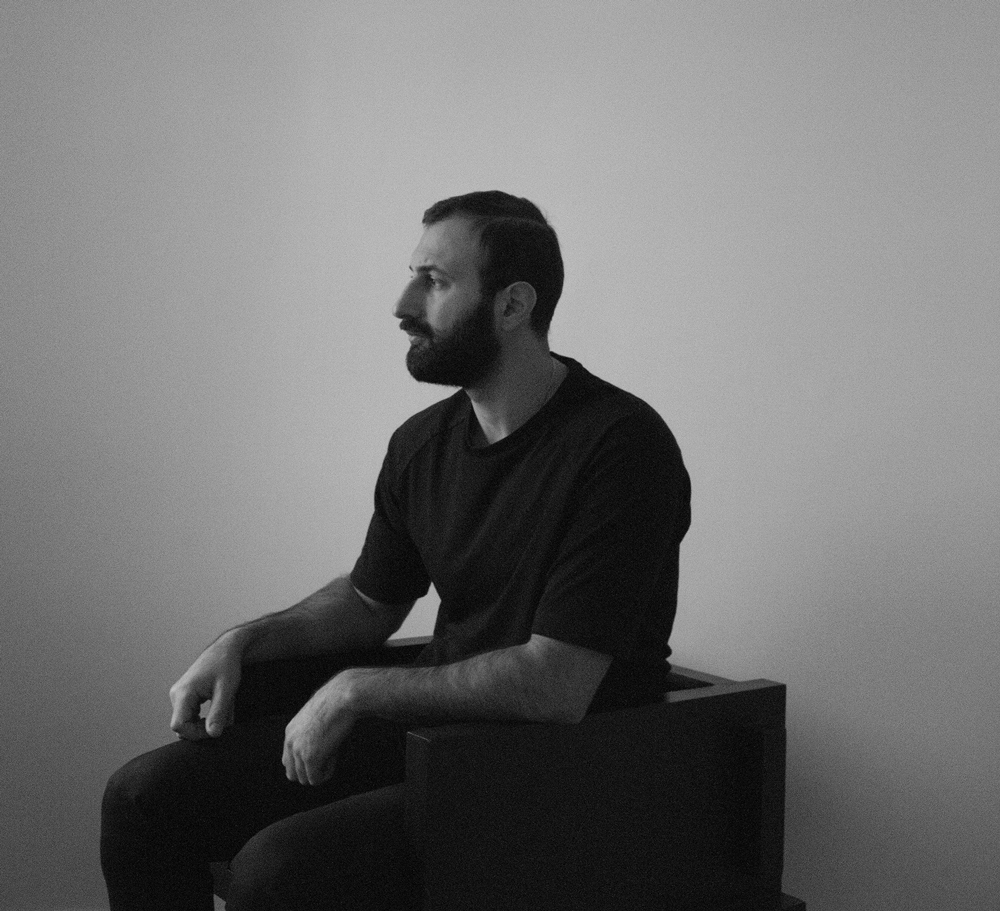
Sizar Alexis is a Swedish-Iraqi designer based in Eskilstuna, working at the intersection of Scandinavian brutalist design and ancient Mesopotamian heritage.
Before founding his studio in 2019, Alexis spent six years as a design engineer at Volvo, then studied fine arts at Beckmans College of Design. That formation, between industrial engineering and fine arts, shapes his practice throughout. He works with blackened steel, pine wood, and leather, materials both abundant in the Swedish landscape and tied to Eskilstuna's historic steel industry. Components for his pieces are produced in his father's metal tool factory, then hand-assembled in his own studio.
His work holds two forces in tension: the geometric weight of brutalist forms and the cultural memory of ancient Mesopotamia. "I want to convey a sense of chaos and harmony at the same time," he has said. As a descendant of the Chaldean diaspora with roots tracing to northern Iraq, Alexis channels that history into functional sculpture. Collections such as Lahmu and Ousia translate Mesopotamian symbolism into geometric furniture, pieces that read simultaneously as domestic objects and as cultural arguments. The Discovered exhibition at the Design Museum in London in 2021 brought his work to international attention; the Common/un/common duo show at Atelier Ecru Gallery in Ghent in 2022 confirmed its standing. He is an AD 100 designer.
On Monde Singulier, his pieces offer collectible design furniture that carries historical depth rarely found in Scandinavian production.
Collection
Created for MS
Created for MS
Discover more Chairs

Created for MS

Created for MS

Created for MS

Created for MS