Elsa Foulon Collection - Aphrodyte
by Elsa Foulon
Are you a professional? Join our Trade Program now
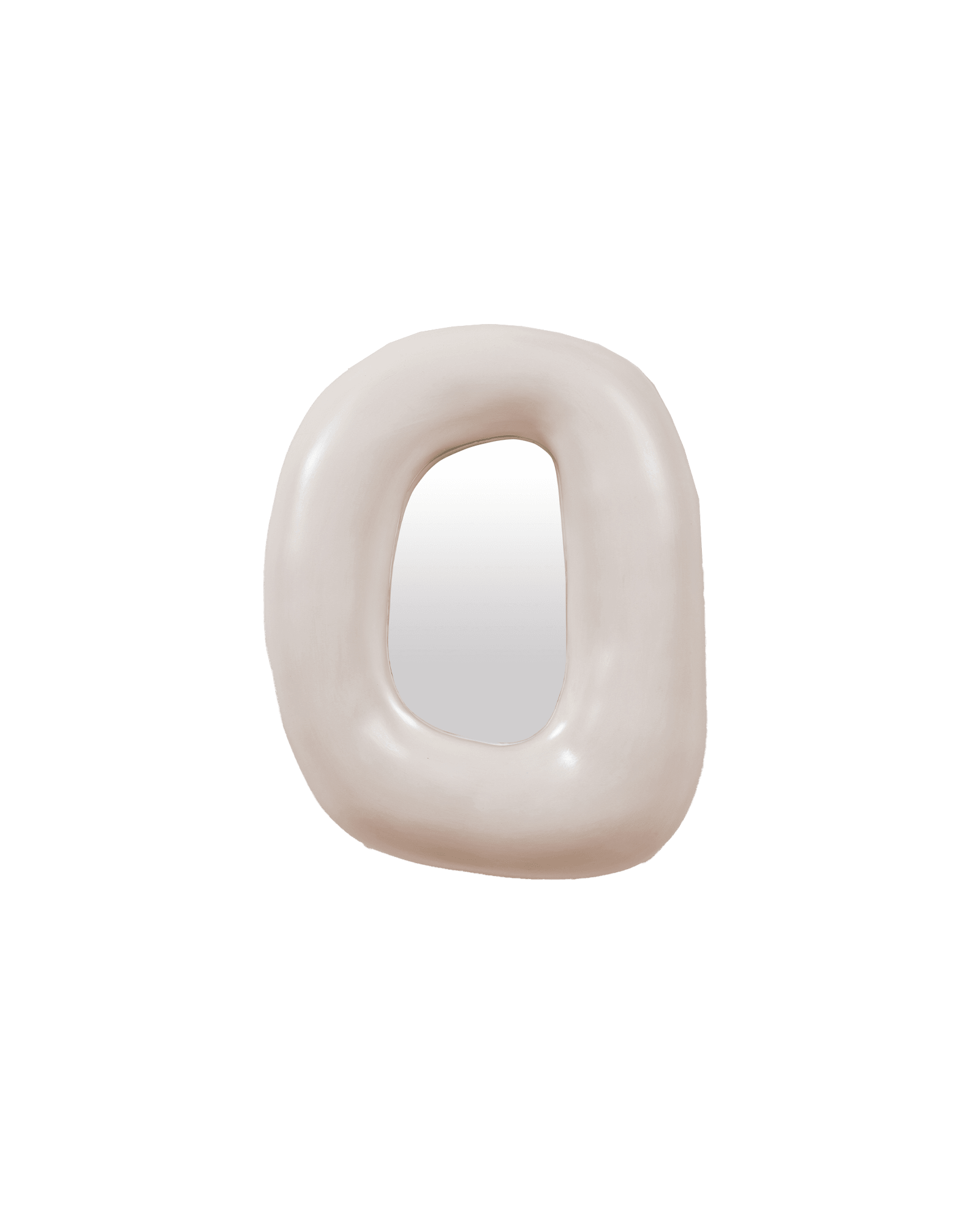
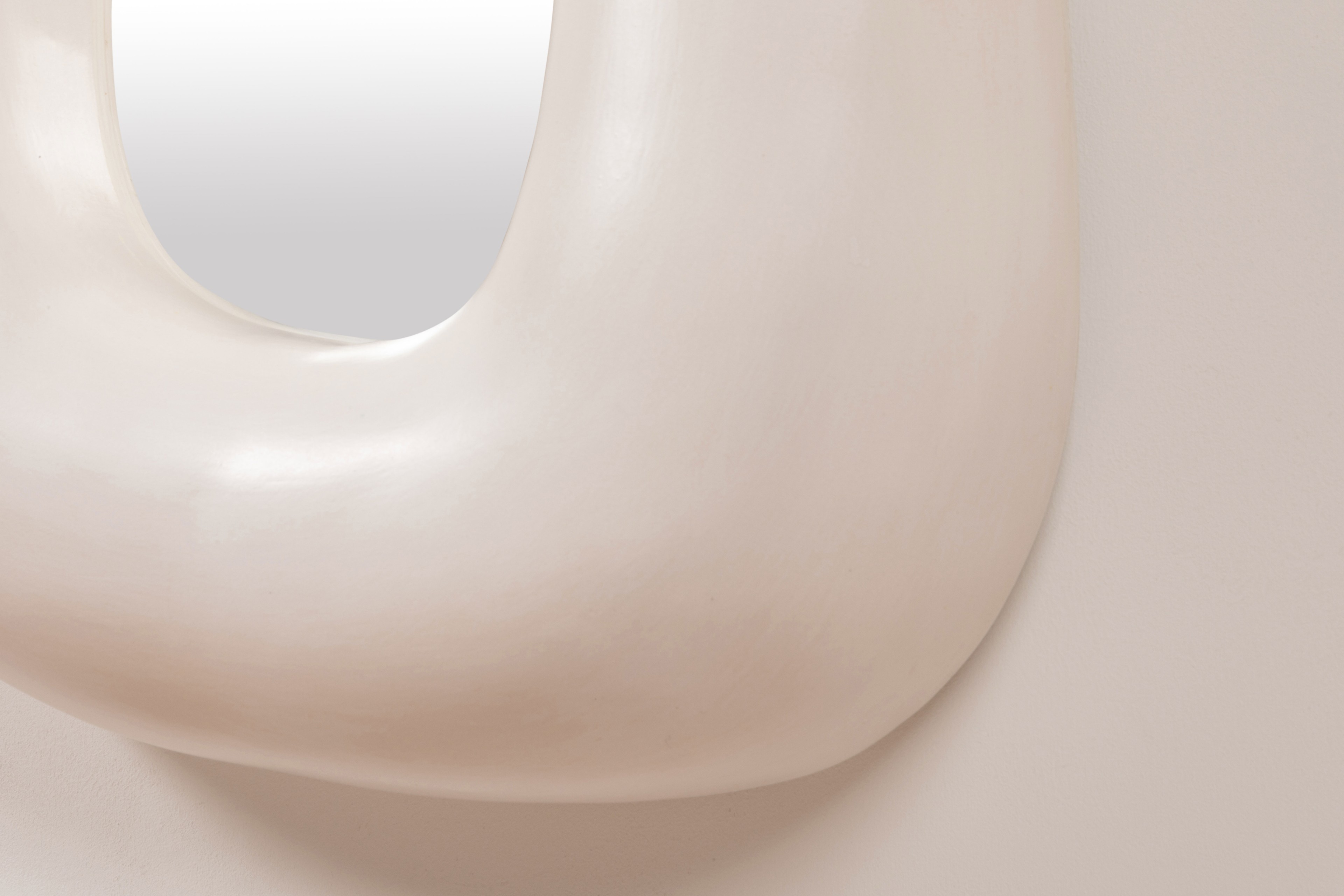
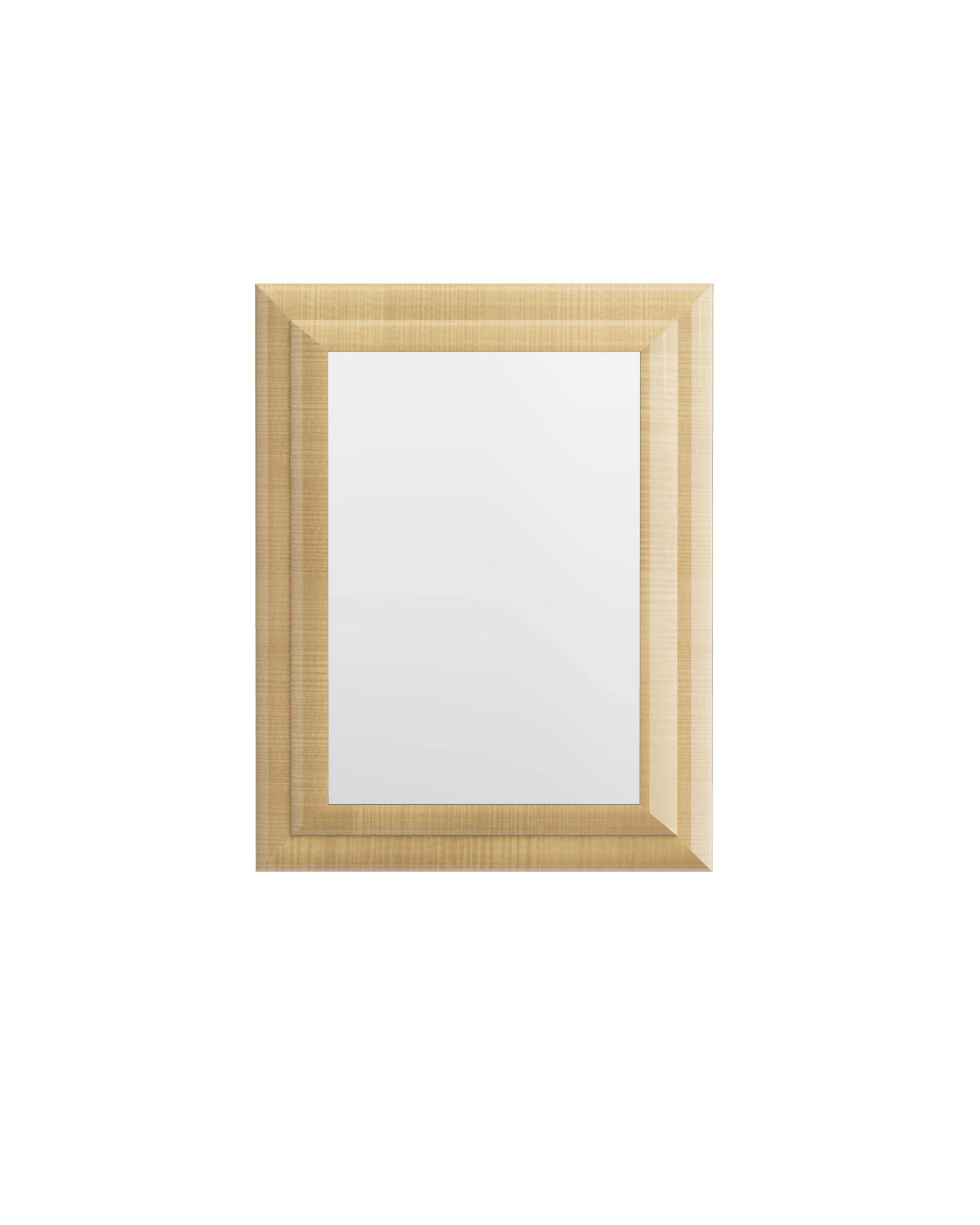
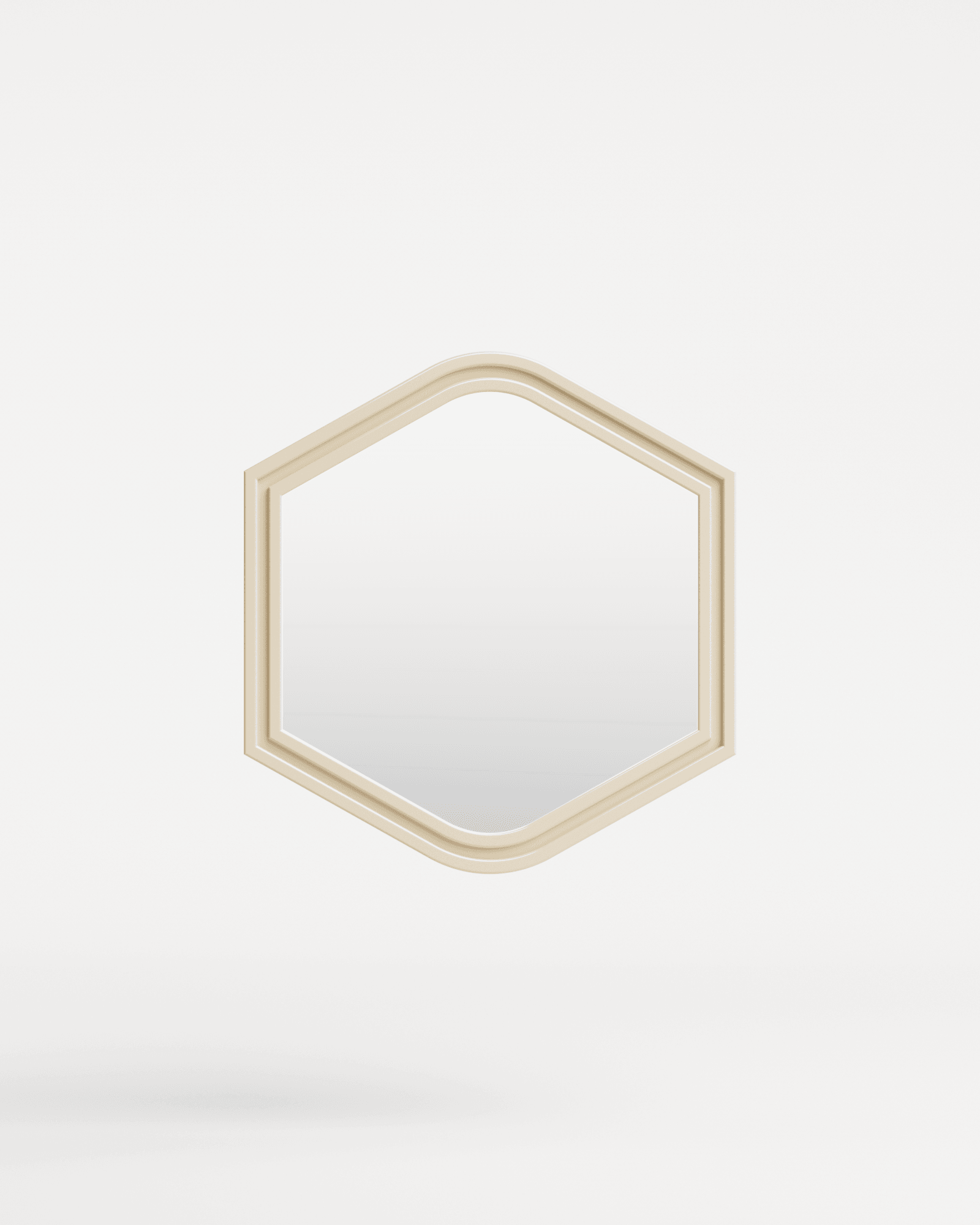
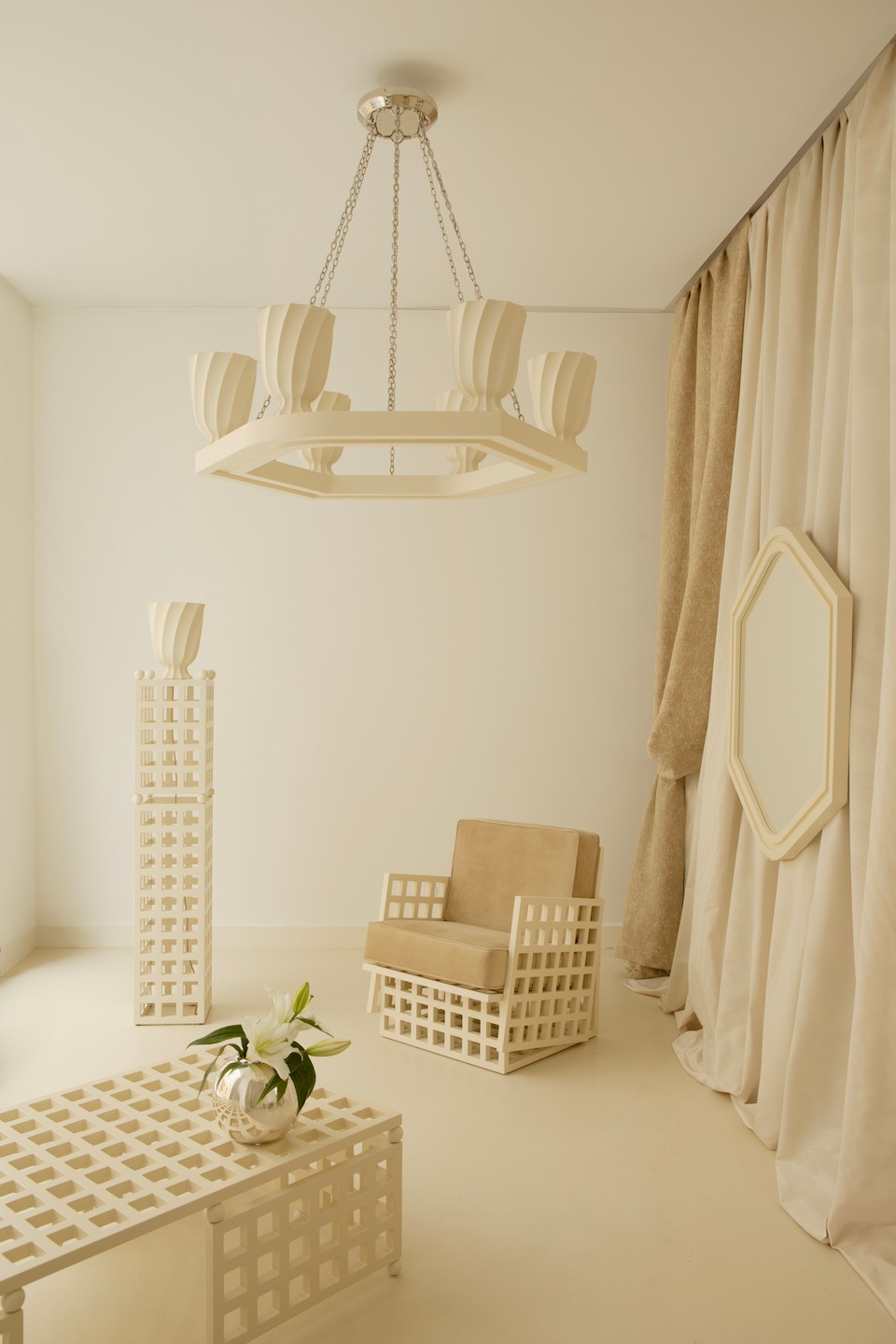
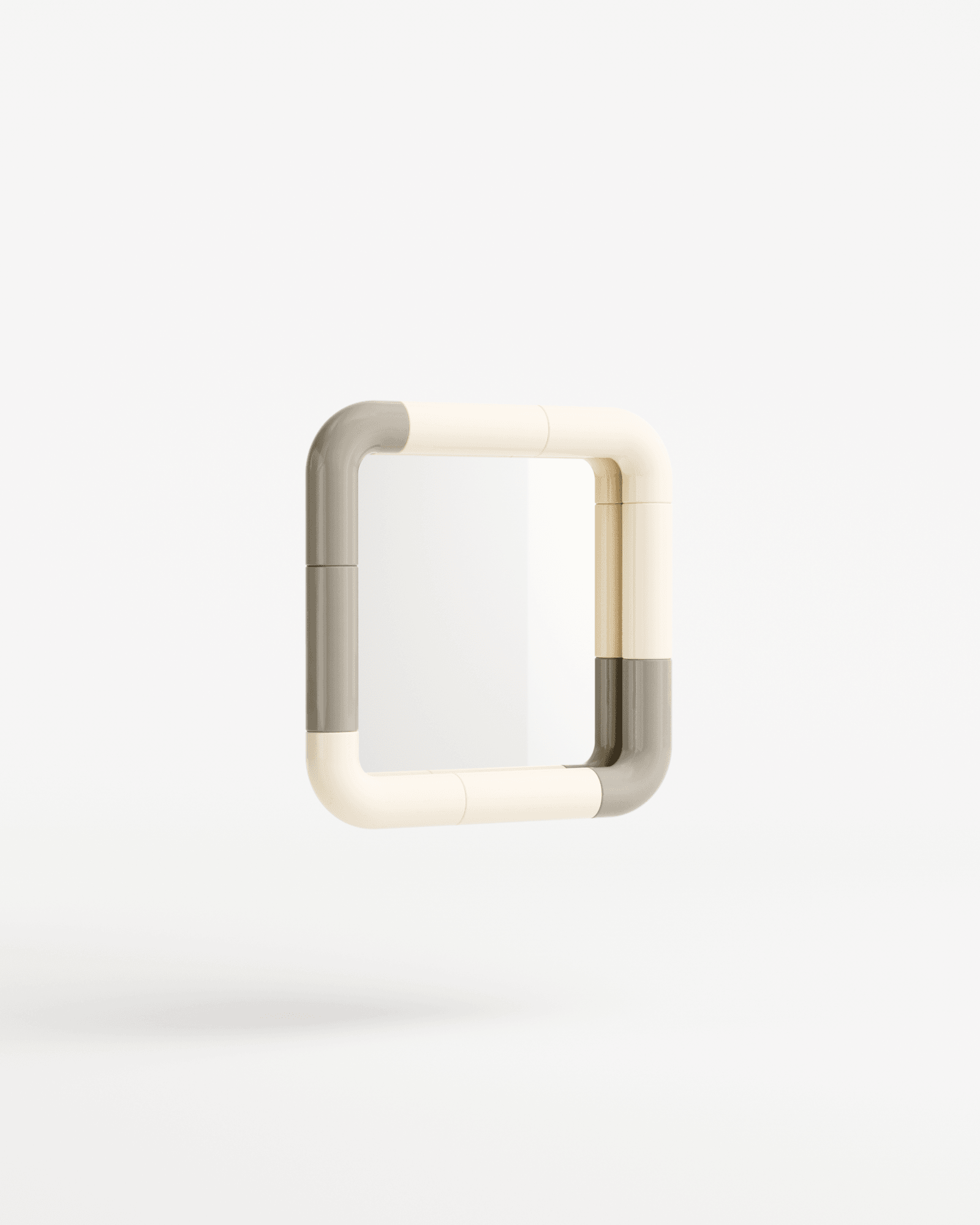
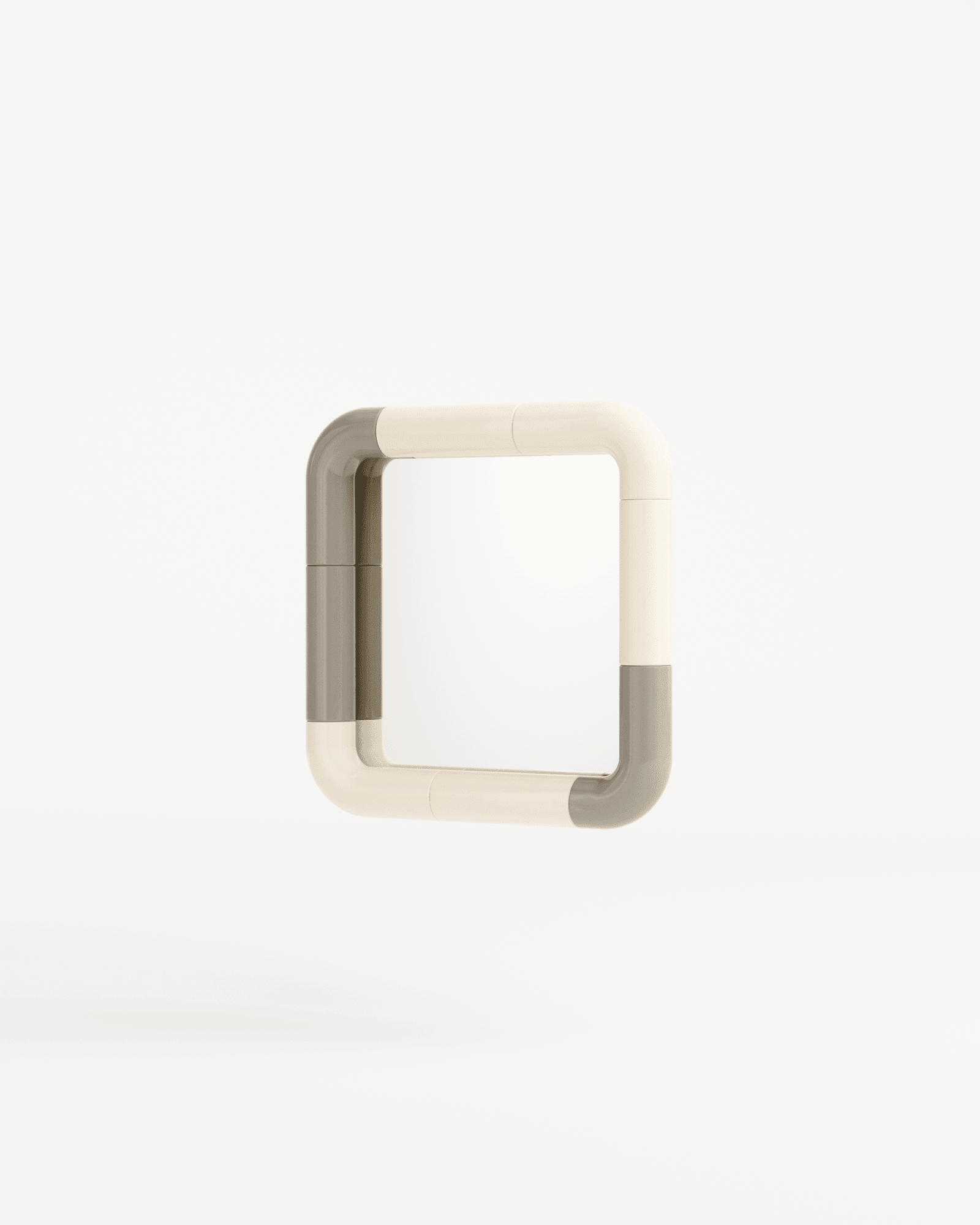
The Aphrodyte is a wall mirror by Elsa Foulon, part of the Elsa Foulon Collection, made in her Parisian ceramic studio.
Its frame takes the form of an irregular, abstract O in glazed ceramic, thick, rounded, and creamy beige in tone. The shape resists symmetry: the contours shift as the eye travels around the frame, giving the piece the quality of a ceramic sculpture as much as a functional object. A rectangular mirror surface sits within this organic enclosure, its clean geometry in deliberate contrast with the imprecision of the frame.
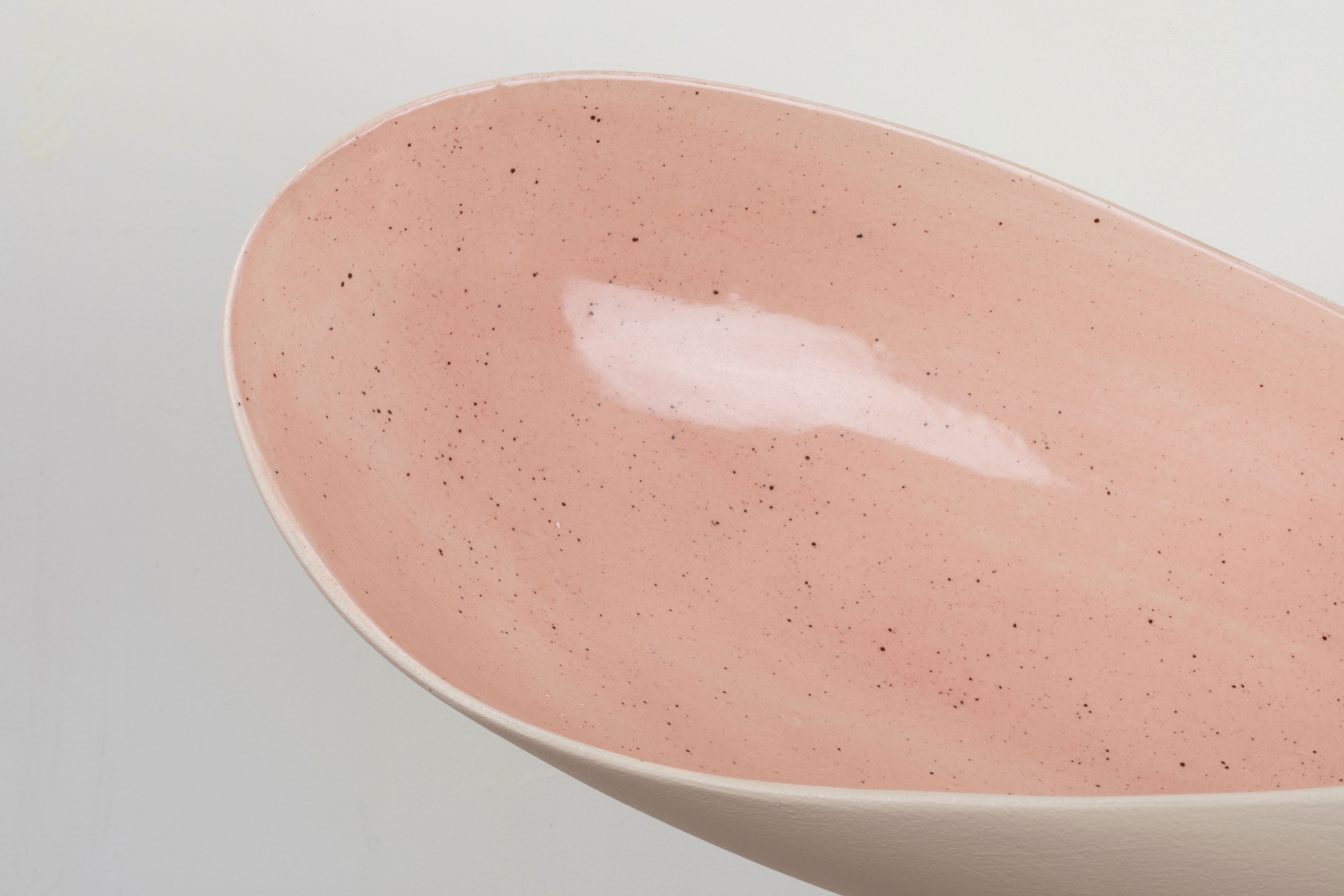
Foulon fires the frame by hand. The kiln's unpredictability produces subtle variation in the glaze surface from one piece to the next, so no two Aphrodyte mirrors are identical. The creamy beige glaze is smooth and lightly luminous at the surface, with raw clay visible at the edges.
In the Elsa Foulon Collection, Aphrodyte translates Foulon's ceramic sculpture language directly into a domestic object: form first, function as a secondary condition.
W 40 x D 25 x H 50 cm
W 15.75 x D 9.84 x H 19.69 in
Materials: Ceramic, glass and wood
About
Elsa Foulon
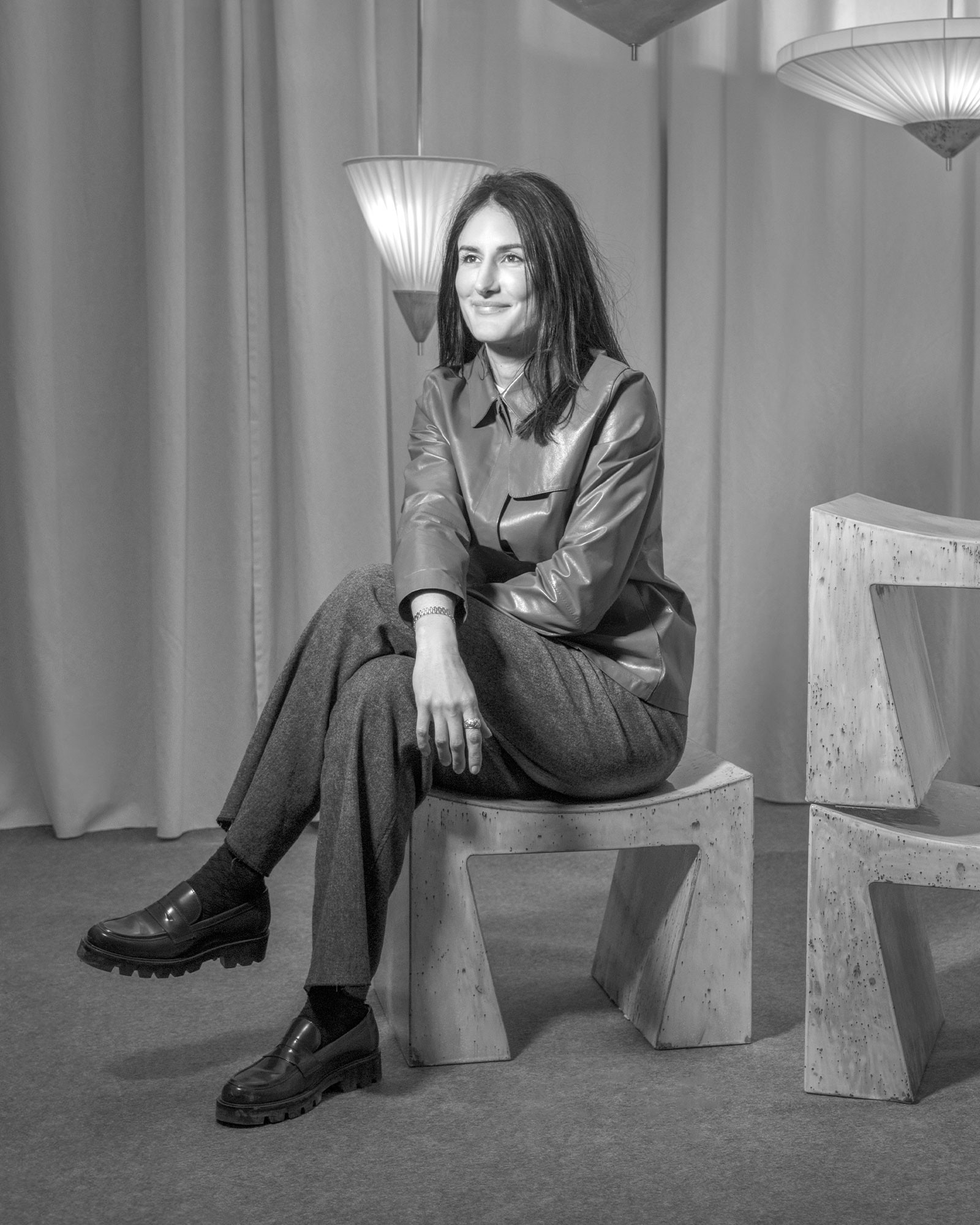
Elsa Foulon came to ceramics through a different door. The daughter of an antique dealer and later a dealer in 20th-century decorative arts herself, she spent years building a visual archive of objects made with conviction. That accumulation now shapes her approach: ceramic lighting fixtures conceived as sculpture, forms simultaneously free and precise, their sensibility drawn from both artistic instinct and hard-won technique.
The medium resisted the scale she wanted. Large-format ceramic work demands a kind of problem-solving that goes beyond craft, so she developed her own plate technique and proprietary materials, achieving generous volumes without sacrificing the structural lightness her organic forms require. The Antigone series, whose pendant and wall versions seem to float against any surface, is where this technical resolution becomes most visible.
In her Parisian studio, what drives the work is what she calls the beauty of the ancestral gesture: the interval between idea and object, long and never predictable. Fire shapes each piece in its own way. The clay carries the impression of her hands. Light installed inside the hollow of a sculpture reveals, rather than conceals, the roughness of the material.
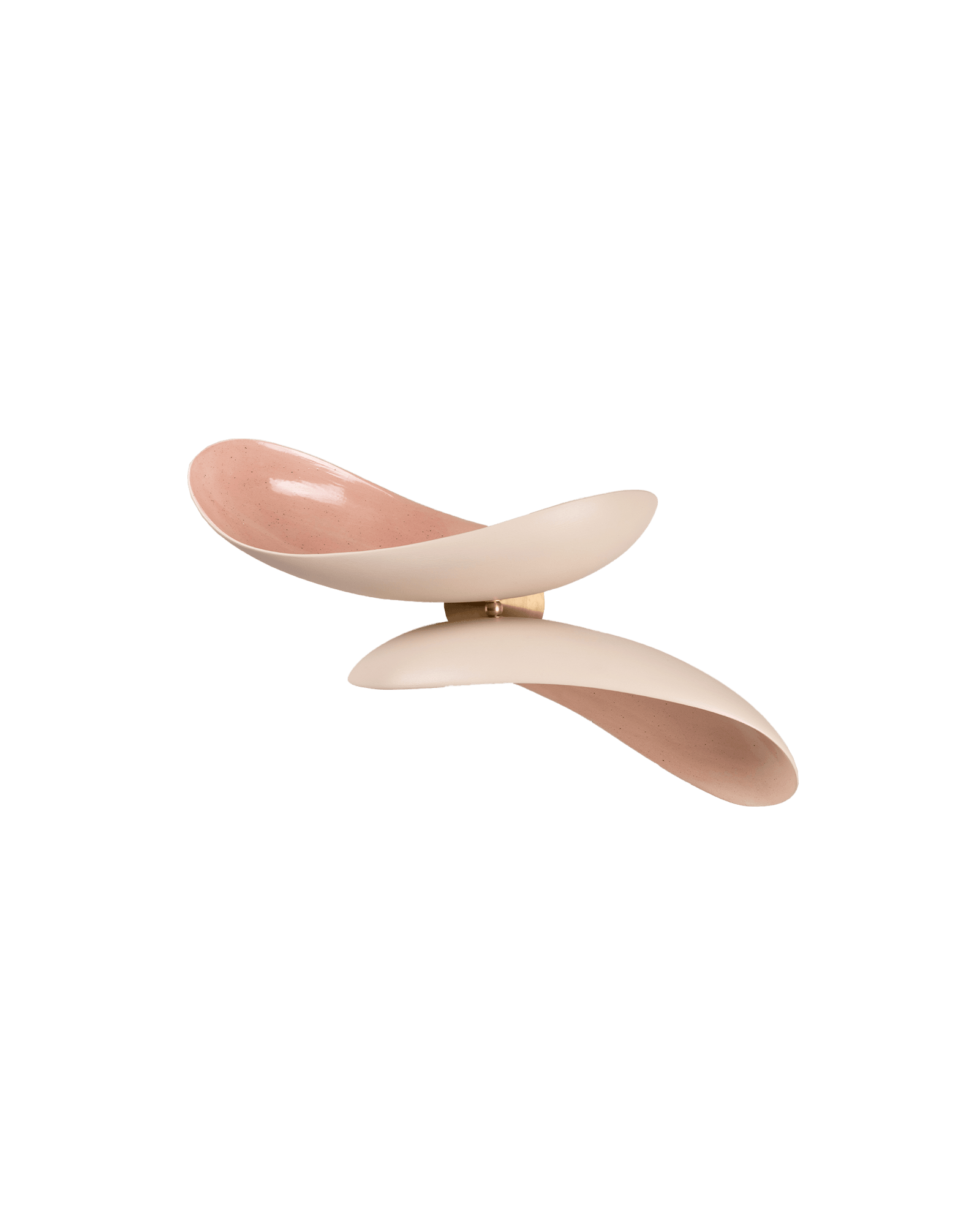
Her work is presented on Monde Singulier, where signature pieces from the Elsa Foulon Collection include the Venus wall sconce and the Selene pendant.
Collection


Discover more Mirrors

Created for MS
Created for MS
Created for MS
Created for MS
Created for MS
Created for MS