· 4 min read
Made to order furniture: why waiting for your piece is good news (Ruhlmann did it too)
By Alexis Grimaud
Every project has one: the client who falls for a sofa on Monday and asks whether it can arrive on Friday. With collectible design, the honest answer is often no. That is not a flaw in the service. It is the whole point.
Many of the pieces we show are not sitting in a warehouse waiting for you. They are made after you order, by the workshop behind them. Here is why that wait works in your favour, and how to make it painless.
What "made to order" actually means
Made to order means production starts when you commit, not before. The design exists and the workshop knows it by heart. What does not exist yet is your copy.
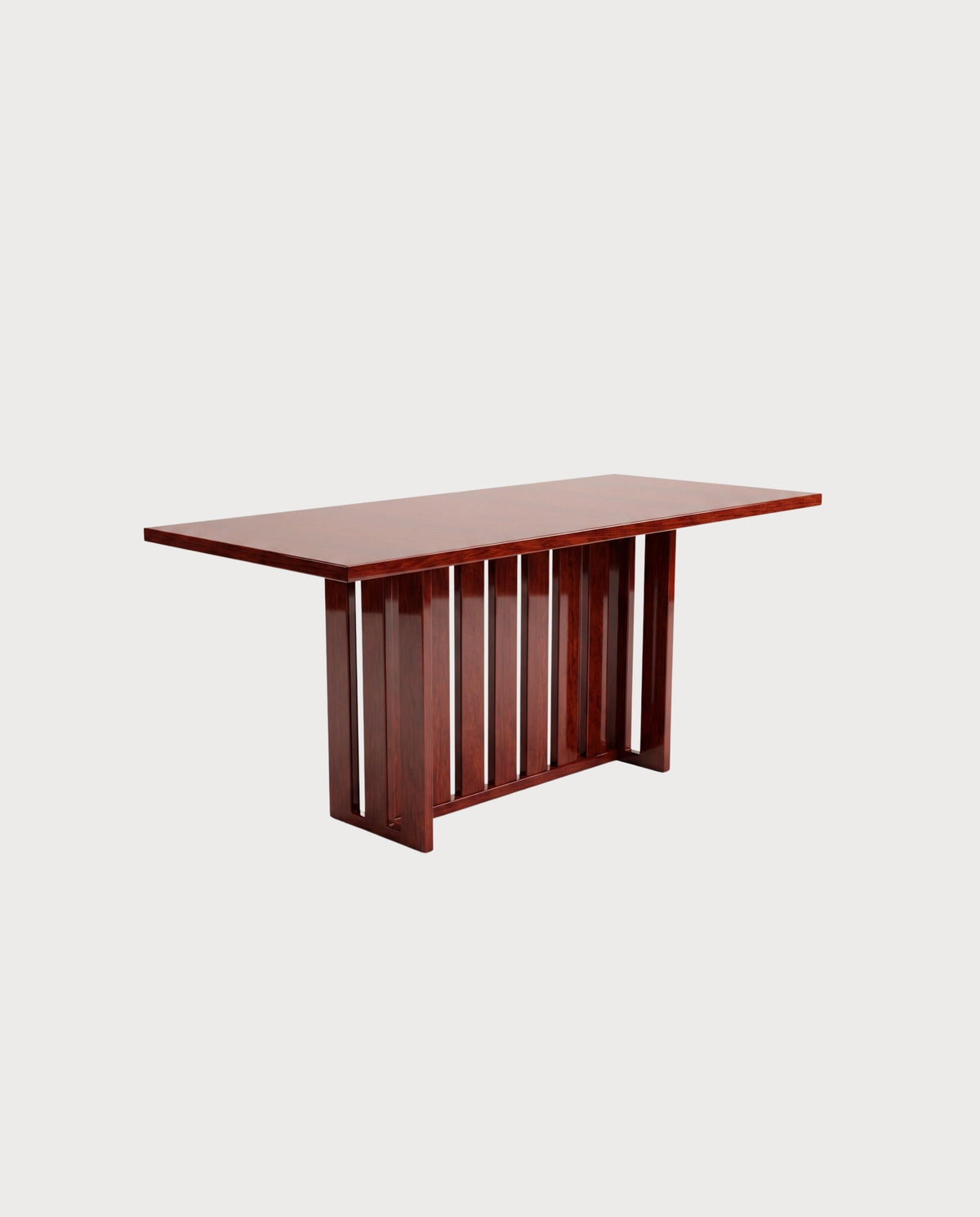
Take the Cardinal dining table from MS Editions: a long rectangular top on two lacquered slatted bases, in mahogany or black. It is made to order and finished by hand, for a single private dining room or for a whole hotel restaurant.
This is very different from "out of stock". Out of stock means someone guessed demand wrong. Made to order means nobody had to guess.
Why the wait is good news
Four reasons, in order of importance.
- The piece is adjusted to you. Finishes, upholstery and, within what the design allows, dimensions can be discussed with the designer before production starts. A dining table 10 cm too long for the room is not a style statement.
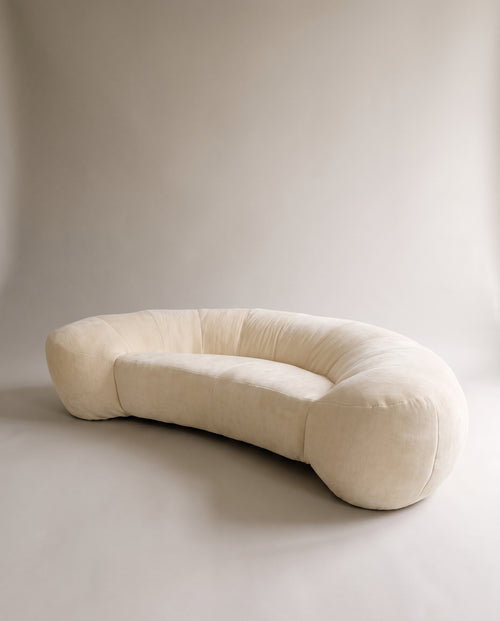
- Every version stays possible. The Romance sofa, with its continuous curved back, scalloped base and turned lacquered legs, comes in cotton canvas, several velvets including Faon by Nobilis, or hair-on-hide. No shop keeps every combination on the floor. A workshop can make any of them.
- Quantities stop being a treasure hunt. Twelve identical Cardinal dining chairs for a restaurant is a production question, not a search through three dealers and a storage unit.
- Nothing has been waiting under a dust sheet. The piece is finished by hand for your order, not pulled from a shelf where it has been since last season.
If this is your first purchase of this kind, our guide on how to buy collectible design covers the other questions worth asking.
Nothing new: Ruhlmann already worked this way
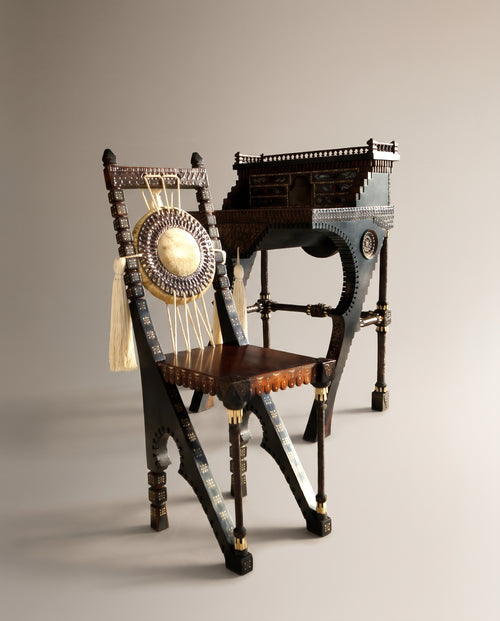
Making a great piece once someone asks for it is an old Parisian habit. In the 1920s, Émile-Jacques Ruhlmann, the great name of French Art Deco furniture, set up his own cabinetmaking workshop in Paris, on rue d'Ouessant.
According to the Metropolitan Museum of Art, he sometimes produced more than one example of a model, varying form and surface decoration to suit each commission. The Musée des Arts Décoratifs notes that his workshops made many examples of the same cabinet in different woods.
Same model, different wood, adjusted for the client: that is exactly what made to order means today. Nobody describes a Ruhlmann cabinet as a delivery delay.
What to ask before you sign
The wait is not the risk. The vague wait is. Before ordering, get clear answers to these five questions.
- The timeline, in writing. Production plus delivery, for your finish, not a generic range found on a forum.
- What can change. Finish, fabric, dimensions: what the designer accepts, and what each change does to the timeline and the price.
- The materials. A lacquer or a velvet seen on a screen is a hypothesis. Ask how you can see it for real.
- Delivery and installation. Who brings it up the stairs, who unpacks it, who takes the crate away.
- Who you call. One name, not a generic inbox.
For architects, designers and hotels, our Conciergerie answers the last three in one go: sourcing, production and project management with a dedicated contact, then insured delivery and white-glove installation.
Four pieces worth waiting for
Real pieces, real prices, all made to order and finished by hand by MS Editions, the line we publish ourselves.
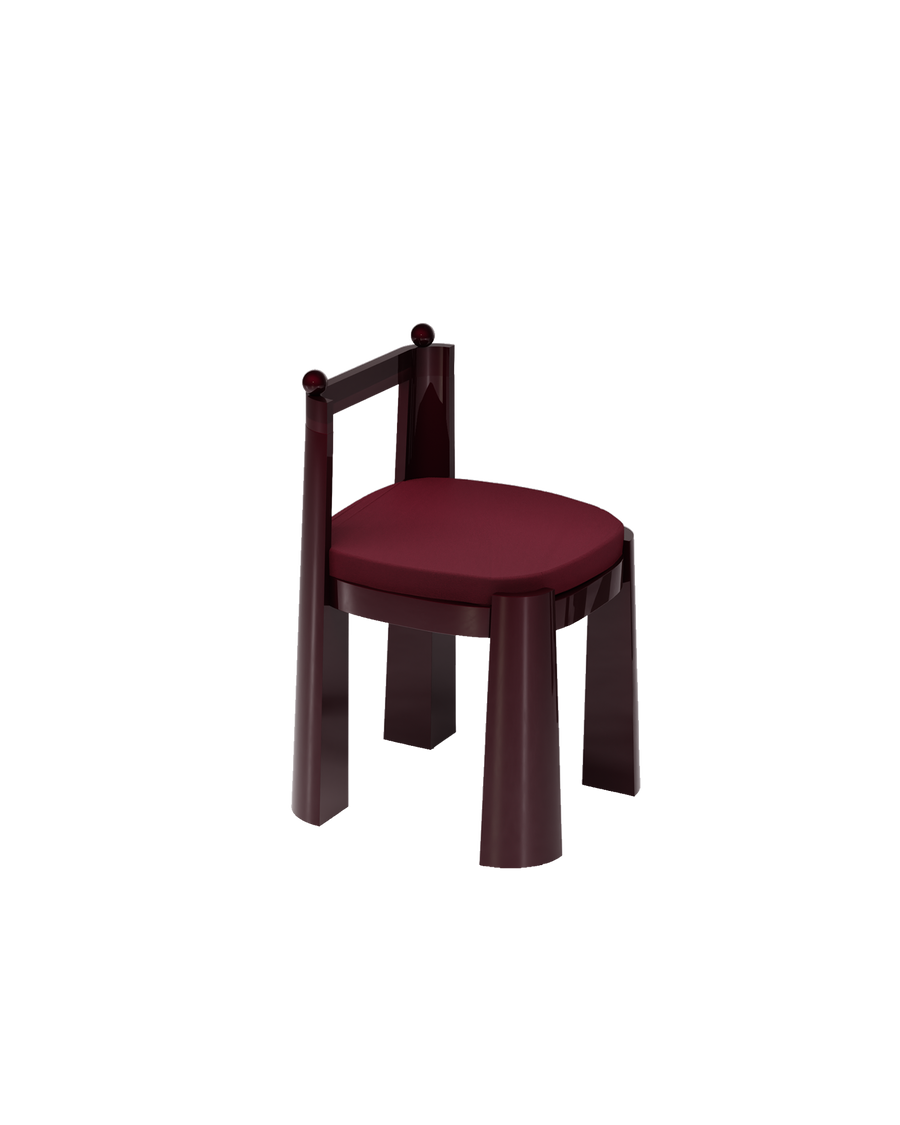
- Cardinal dining chair: high back, slatted lacquered base, upholstered seat. Around €1,100 in velvet.
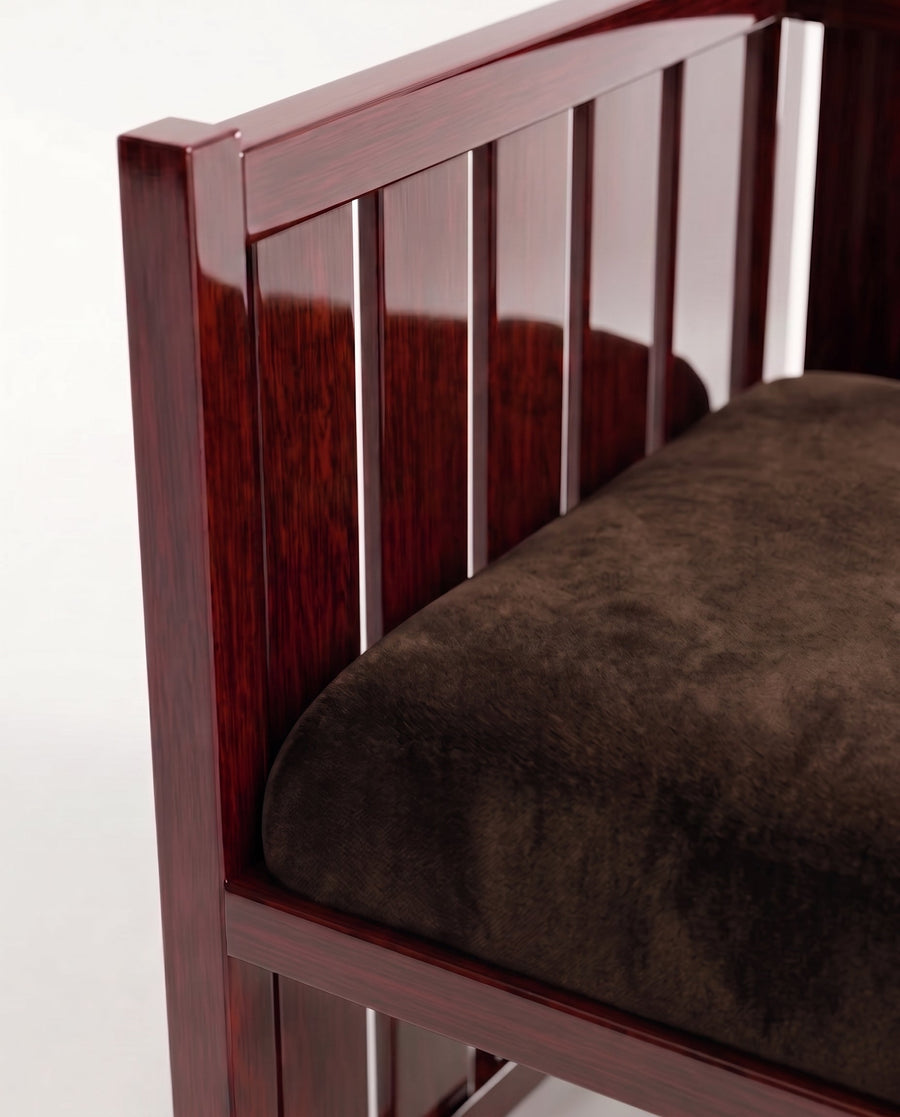
- Cardinal armchair: low and enveloping, three lacquered slatted sides around a deep seat. Around €1,700 in green or chocolate velvet.
- Cardinal dining table: seats six comfortably, in mahogany or black lacquer. Around €4,000.
- Romance sofa: the curved back that makes an entrance hall look intentional. Around €6,800 in ecru or aubergine velvet.
Prices shown on the site including VAT, November 2026.
We explain elsewhere why a gallery started making its own furniture. And if you wonder where those numbers come from, read what a collectible piece really costs.
Plan the wait instead of suffering it
The trick is simple: order the long pieces first. Sofas, dining tables and anything with a custom finish go into the schedule at the start of the project, not the week the painters leave.
Then use the time. Lighting, rugs and objects can be decided while the workshop works. Tell your adviser about the hard dates on day one: an opening, a move, a handover of keys.
And if your client truly cannot wait
Some pieces are already in Paris. The Madeleine convertible table by Necchi Architecture, a unique piece created for Monde Singulier, hides four velvet ottomans under a chessboard top and sits in our showroom. Around €27,500.
Price shown on the site including VAT, November 2026.
The showroom on rue de Rivoli, facing the Tuileries, welcomes you by appointment. Book a visit, see what is ready today, then browse the full catalogue for everything worth waiting for.
The pieces we mention


A piece on your mind?
Prices, lead times, finishes: an advisor answers you personally.