· 3 min read
Collectible design prices: what a piece really costs (and why the name comes last)
By Alexis Grimaud
Short version first: the price of a collectible piece is rarely a mystery. It is a sum of hours, material, scarcity and paperwork, plus what it takes to get the piece to you intact. Our opinion: the name on the label is the last line of that sum, not the first.
To keep this honest, every figure below comes from pieces currently on Monde Singulier. No hypothetical showroom, no "prices can reach".
The price ladder, in real pieces
Here is what the range looks like when you stop talking in generalities and look at actual tags.
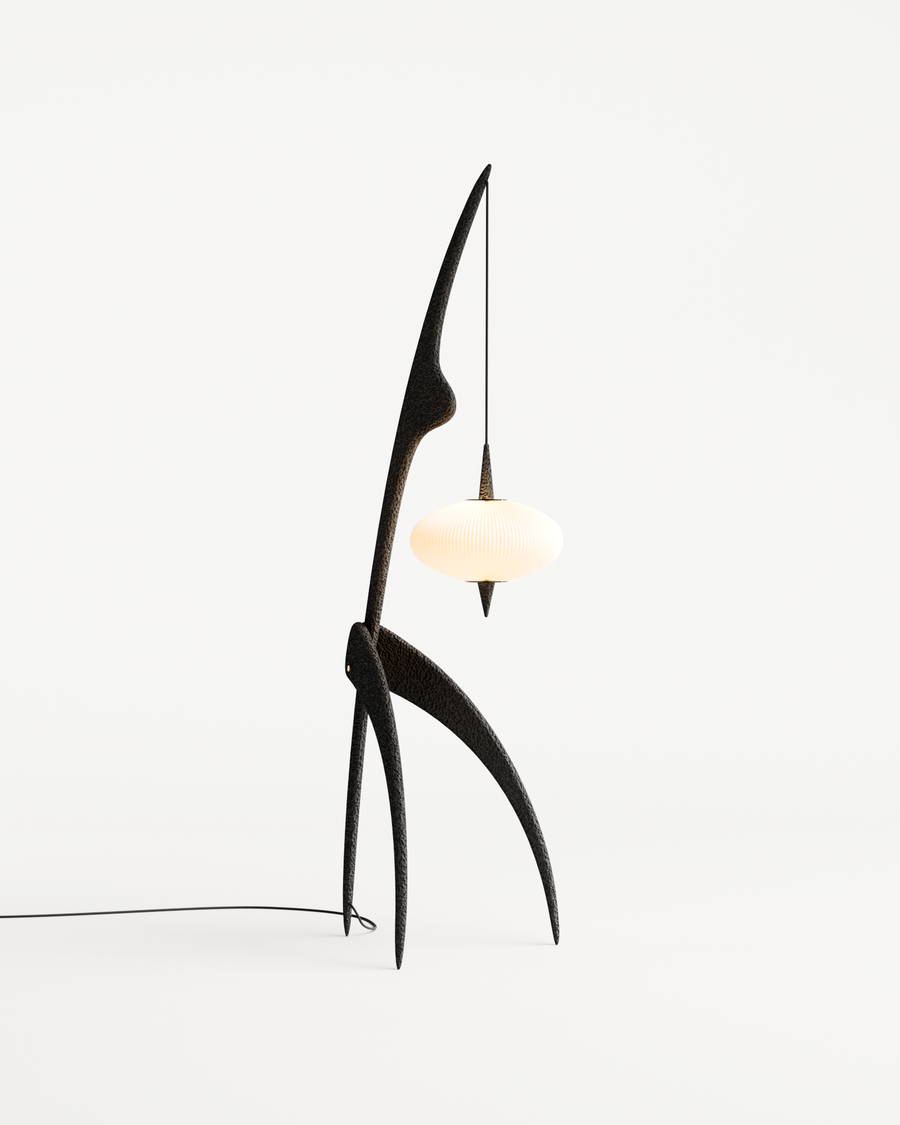
- Around €400: the Romance wall sconce from MS Editions, the line we edit ourselves.
- Around €1,100: the Cardinal dining chair, also MS Editions.
- Around €2,300: the Lina ottoman by Necchi Architecture, created for Monde Singulier.
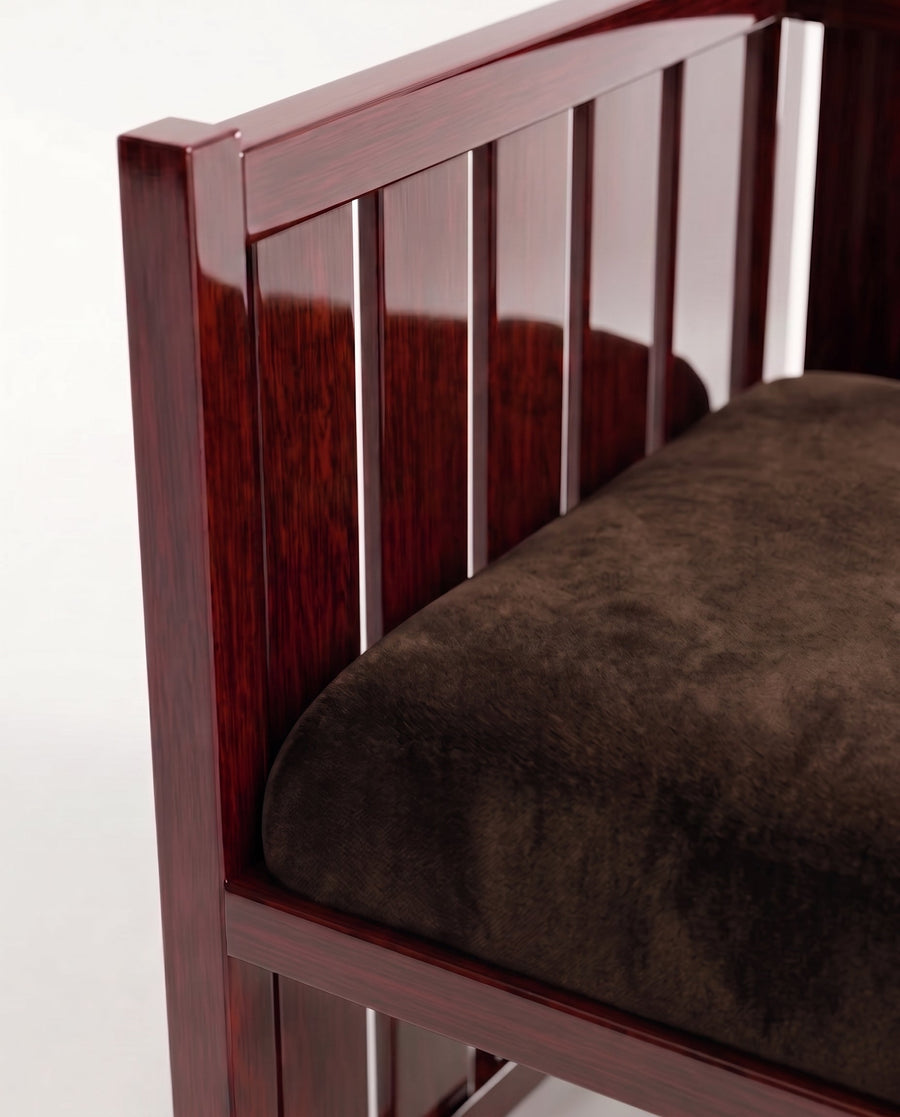
- Around €7,600: the Ert club armchair by Studioutte, in burl wood.
- Around €16,100: the same Ert club armchair, in pewter.
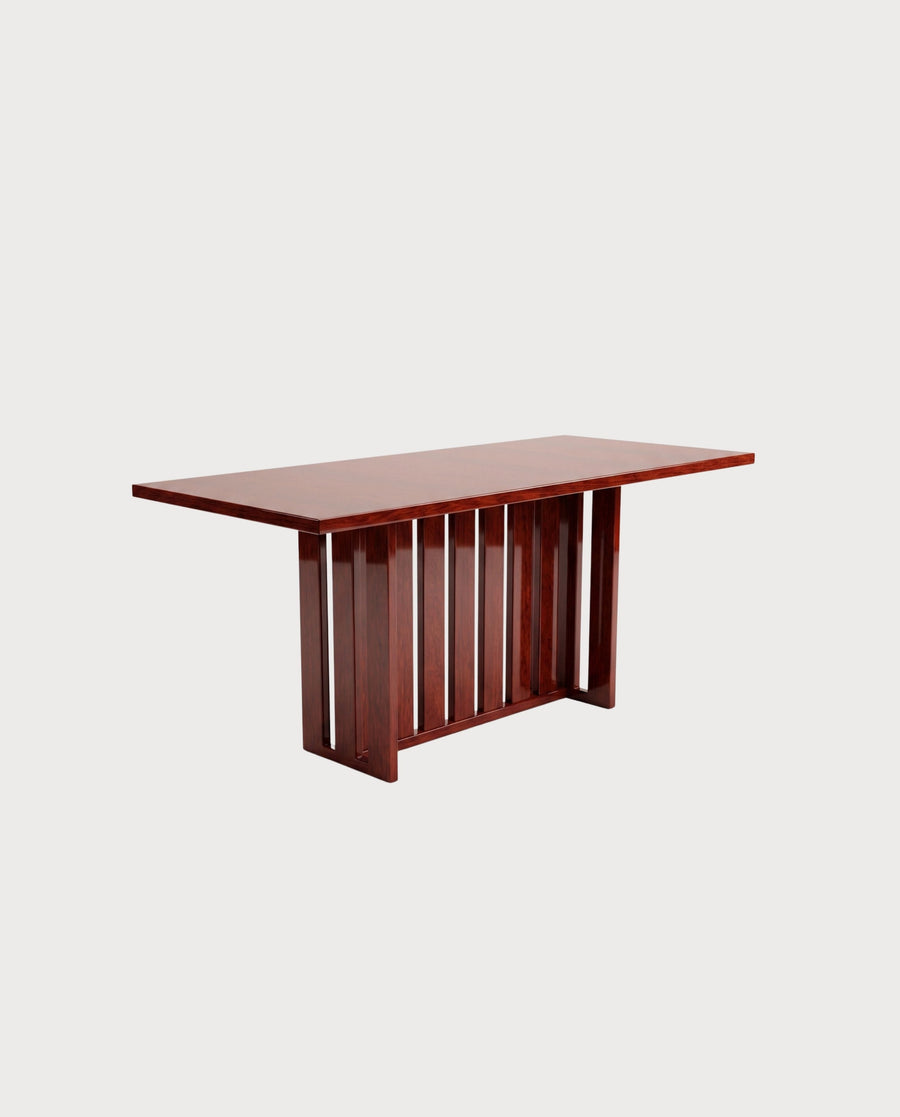
- Around €27,500: the Madeleine convertible table by Necchi Architecture, a unique piece.
Prices shown on the site including VAT, November 2026.
So yes, collectible design starts well below what most people imagine. The question is what makes one piece cost forty times another.
Hours: the part you never see
Most of what you pay for in a contemporary piece is time. A chair made in a workshop after you order it, then finished by hand, cannot be priced like a chair pulled from a warehouse holding ten thousand of them.
Many pieces on Monde Singulier are made to order. That is also why finishes and dimensions can often be adjusted with the designer: nothing has been made yet, so nothing has to be undone.
This explains the gap between the bottom and the middle of the ladder better than any brand story. An MS Editions sconce is designed to be produced in series. A table that changes shape and exists once is not.
Material: same drawing, more than double the price
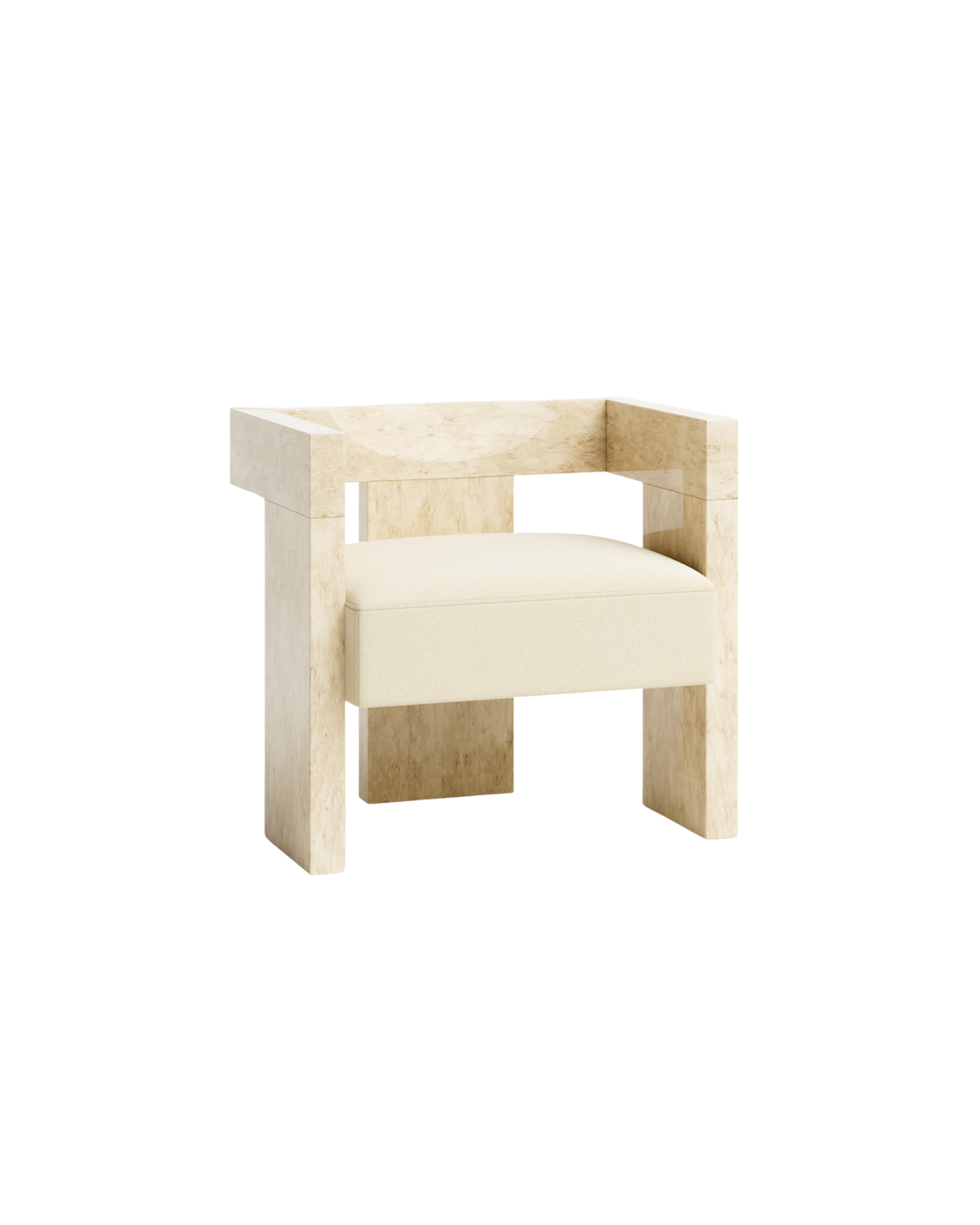
The cleanest example we have sits in the Soft Solid collection by Studioutte. The Ert club armchair is around €7,600 in burl wood and around €16,100 in pewter. Same designers, same silhouette, more than twice the price.
What changes is the material and everything it drags along with it: weight, the work needed to shape and finish it, the time before the piece leaves the workshop. When a quote looks absurd, ask which material it covers before asking who signed it.
Stone, metal, lacquer and rare veneers all behave the same way. The more difficult the material is to work, the more the hours pile up, and hours are the expensive part.
Scarcity: how many exist, on paper
An edition of eight, a unique piece and an open series are three different products, even when they look identical in a photo. The fewer there are, the higher the price, and the more the documents matter.
The Madeleine convertible table by Necchi Architecture is a unique piece, and it is in stock at our Paris showroom. Around €27,500 buys a table nobody else will own. If you want the vocabulary straight, our guide to limited editions, unique pieces and prototypes spells out what each term should guarantee.
Vintage: attribution, condition, history
With 20th-century pieces, the logic shifts. Nobody is paying for new hours of work. You pay for who designed it, whether that can be shown, and the state it has survived in.
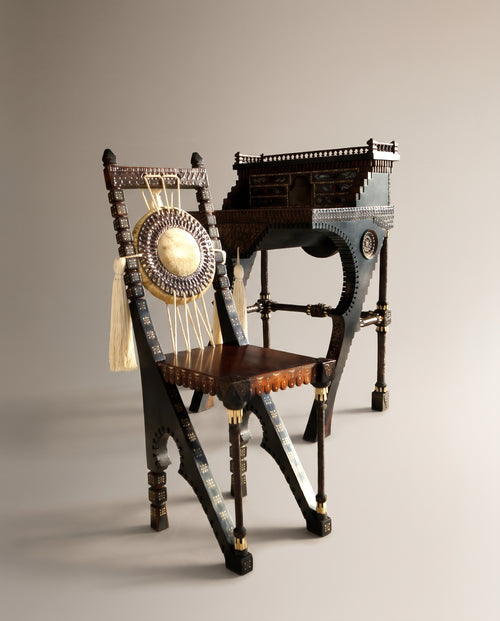
Take the Carlo Bugatti desk and chair from circa 1910, on The Vestige, at around €57,500. Bugatti, born in Milan in 1856, made some of the most extravagant furniture of the Art Nouveau years, and he was the father of Ettore Bugatti, the one with the cars. A piece like this is priced on attribution and condition far more than on its materials.
Every piece on The Vestige comes with a certificate of authenticity. To judge a vintage price yourself, read how to tell if a vintage furniture piece is actually worth the price.
What does not justify a price
- A famous name with no documents. An attribution you cannot check is a story, not a fact.
- Investment talk with no figures. Nobody can promise that a piece will gain value. We will not either.
- A beautiful photo and nothing else. No dimensions, no materials, no lead time: walk away.
- A price for the piece alone when it has to cross a continent. Ask for the delivered figure.
So, is it worth it?
A fair price is one you can break down. If a gallery can tell you what the piece is made of, how long it takes, how many exist and where it comes from, you are paying for something real. Our guide to buying your first piece of collectible design covers the rest of the checklist.
For professionals, our Conciergerie handles sourcing, production, insured delivery and white-glove installation, with one dedicated contact. Everyone else can start with the full catalogue.
Then do the one thing a photo cannot: book a visit to the rue de Rivoli showroom, facing the Tuileries. Hours and materials are much easier to price once you have run a hand over them.
The pieces we mention


A piece on your mind?
Prices, lead times, finishes: an advisor answers you personally.