Trends & Events
Furniture Design Trends 2026: What Collectors and Designers Need to Know
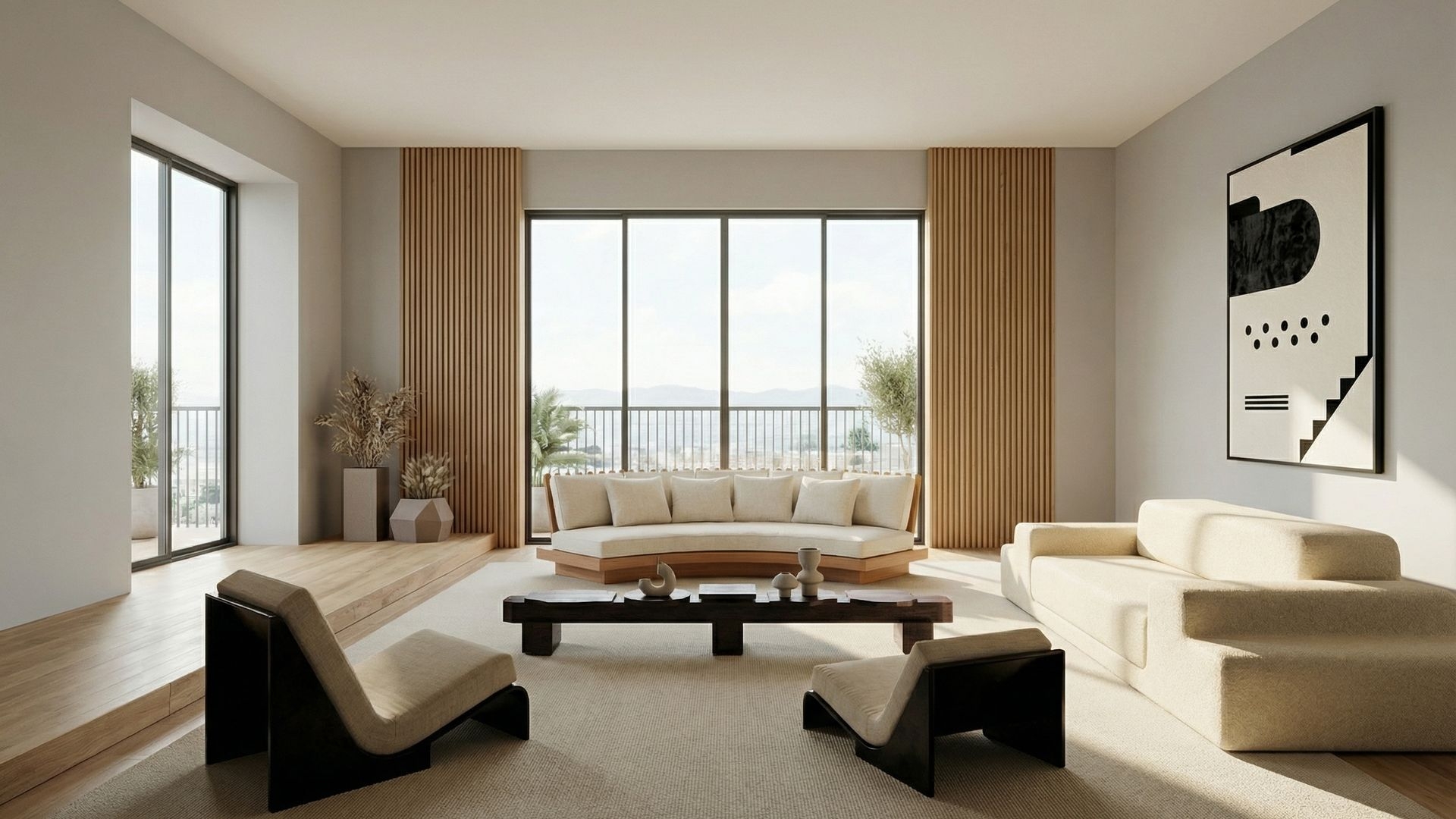
Every January, the design press publishes its trend forecasts. Curved sofas are in. Sharp angles are out. Olive green is the new navy. These reports describe the surface of the market, the layer where consumer brands respond to mood shifts with updated silhouettes and new colorways.
Beneath that surface, something different is happening. The furniture design trends that matter in 2026 are structural. They concern how furniture is made, why it exists, and what it means for the people who live with it.
Definition
Furniture design trends in 2026 refer to the structural shifts in how furniture is conceived, made, and collected. These go beyond cosmetic seasonal changes. The movements that matter involve materiality, craft, geographic provenance, and the dissolving boundary between functional design and fine art. Intentionality, authorship, and cultural specificity have replaced trend-following as the primary drivers of value.
TL;DR: 7 Structural Furniture Trends for 2026
- Mixed interiors replace matching sets. The coordinated showroom look is over. Collected spaces with pieces from different eras and makers are the standard.
- Material intensity over minimalism. Raw stone, patinated metals, and hand-textured ceramics displace pale wood and white walls.
- Handmade commands a premium. Visible craft traces (tool marks, asymmetries, hand-finished surfaces) are the new markers of value.
- Sculptural furniture crosses into fine art. Auction houses, galleries, and museums now treat furniture as cultural assets.
- Non-European design voices lead. Korean, Nigerian, Georgian, and Brazilian designers shape the international conversation.
- Sustainability means longevity, not labels. Short supply chains, durable materials, and limited editions over greenwashed branding.
- Design-literate clients demand curation. Informed buyers want editorial perspective, not catalogs.
What Is Replacing the Matching Furniture Set in 2026 Interiors?
The collected interior has replaced the coordinated set. Buyers and designers assemble rooms from different eras, makers, and geographies. The result reads as biographical rather than purchased whole. According to 1stDibs' 2025 Luxury Outlook Report, demand for mixed-provenance and vintage-contemporary hybrid interiors increased by 34% among verified high-net-worth buyers year-over-year.
The shift is practical as much as aesthetic. A vintage Perriand dining table next to contemporary collectible chairs. A hand-forged bronze side table beside a mid-century Italian floor lamp. Each piece carries its own history, and the conversation between them gives a room specificity that no single-brand showroom can deliver.
For collectors and designers, every room now needs pieces with individual presence. Objects strong enough to stand alone, articulate enough to dialogue with their neighbors. Collectible design operates in this territory: furniture with enough personality to anchor a mixed composition.
Why Are Interior Designers Moving From Minimalism to Material Intensity?
The decade-long dominance of Scandinavian-inflected minimalism is giving way to something richer. Interiors in 2026 are defined by raw stone surfaces, patinated metals, hand-textured ceramics, charred wood, and poured resin. According to Market Research Future (2024), the global travertine market reached $3.55 billion in 2024 and is projected to reach $5.16 billion by 2035, at a CAGR of 3.44%.
This is not maximalism. It is a deeper engagement with the physical properties of materials. Their weight. Their temperature. How they age. A travertine dining table is not chosen because travertine is trending but because the material's geological depth brings a permanence that engineered surfaces cannot replicate.
Collectible designers have worked in this territory for years. The mainstream is catching up, which means that pieces by material-forward designers (those who build their practice around stone, bronze, or solid hardwood) are finding receptive audiences far beyond the traditional collector base.
Is Handmade Furniture Worth the Premium in 2026?
The market data says yes. According to Deloitte's 2024 Global Powers of Luxury Goods report, 63% of high-net-worth consumers under 45 cite visible craft process and maker identity as primary purchase motivators for premium furniture and objects. The premium is not sentimental. It reflects a structural shift in what buyers consider valuable.
"The value of craft lies precisely in its resistance to optimization. A hand-finished surface carries time, and time is the one thing you cannot automate," said Glenn Adamson, design historian and former Director of the Museum of Arts and Design in New York, author of Fewer, Better Things: The Hidden Wisdom of Objects (Bloomsbury, 2018).
After years of industrial precision as the default aesthetic of luxury, buyers are gravitating toward objects that show the trace of human hands. Tool marks, slight asymmetries, variations in finish that prove a piece was made by a person. As our visual environment becomes increasingly generated and optimized, the physical evidence of human labor grows more precious. A hand-finished bronze surface or a hand-thrown ceramic base carries an authenticity that no algorithm can produce.
When Does Furniture Become Art? The Rise of Sculptural Design
The boundary between furniture and sculpture has dissolved. In 2026, chairs, tables, consoles, and lighting are exhibited in galleries, acquired by museums, and traded at auction alongside painting and sculpture. According to combined 2025 design auction results from Christie's, Sotheby's, and Phillips, furniture and design objects generated over $65 million at New York sales alone, a 64% increase year-over-year.
"Design is no longer a second category at auction. The best pieces are now competing with painting on cultural terms, not just decorative ones," said Patrick Seguin, founder of Galerie Patrick Seguin in Paris and a leading authority on mid-century and contemporary collectible design since 1989.
For collectors, this convergence means furniture can function as both a usable object and a cultural asset that appreciates. For architects and decorators, a single sculptural piece can anchor a space functionally and aesthetically, doing the work that an artwork and a piece of furniture would separately require. Galleries like Carpenters Workshop Gallery, Friedman Benda, Gallery FUMI, and Nilufar Gallery operate at the intersection of art and design markets, representing makers whose work demands attention and rewards close looking. These are functional objects whose value extends into cultural territory.
Which Global Design Traditions Are Shaping Interiors in 2026?
Georgian, Korean, Nigerian, Mexican, and Brazilian designers are no longer emerging names on the periphery. They are established voices shaping the international conversation. According to Design Miami's 2024 programming data, non-European and non-American designers represented 43% of featured exhibitors, up from 26% in 2019.
What distinguishes this moment is that the globalization is cultural, not industrial. These designers are not producing diluted versions of European modernism. They draw on their own material traditions and visual cultures to create work rooted in a specific place while speaking to a universal audience.
"The future of design is not about where you trained. It is about what you carry from your own material culture," said Ini Archibong, Swiss-Nigerian designer whose work has been exhibited at Design Miami, Salone del Mobile, and in major museum collections worldwide.
For collectors and professionals, this geographic diversity opens access to aesthetic vocabularies that a European or American lens alone would miss. The next defining piece for a project might come from Tbilisi or Seoul or Lagos. Refined taste demands it.
How Do You Evaluate Sustainability Claims in Luxury Furniture?
Three questions: Was the object made to last? By whom? With what materials and supply chain? In 2026, the sustainability conversation has moved past website badges and marketing copy. According to Bain and Company's Luxury Study 2024, sustainability credentials rank among the top three purchase drivers for affluent consumers globally, with particular weight among buyers under 40.
Collectible design is structurally aligned with sustainability in ways industrial furniture is not. Limited editions mean no overproduction. Studio-based making means short supply chains. Durable materials (stone, bronze, solid hardwood) mean pieces that last generations. And the investment dimension means collectible pieces are rarely discarded. They are resold, inherited, or donated.
This is not marketing sustainability. It is the inherent consequence of making fewer, better things. Greenwashed claims evaporate under scrutiny. Structural sustainability (fewer pieces, longer lives, shorter chains) holds up.
What Does Today's Design-Literate Client Actually Want From a Curator?
A point of view. According to McKinsey and Company's 2024 State of Fashion: Luxury report, 58% of luxury home category buyers conduct three or more months of independent research before purchase, compared to 29% in 2019. These clients do not want to be shown a catalog. They want discovery, narrative, and a coherent editorial perspective.
The design-literate client of 2026 researches designers independently, follows studios, attends fairs like Salone del Mobile and Design Miami, and arrives at meetings with mood boards referencing specific collectible pieces. They are informed and expect the same depth from anyone advising them.
For the design industry, the bar for curation has risen. Offering beautiful things is no longer sufficient. The value proposition must include discovery of work outside mainstream channels, narrative context that connects a piece to a broader creative practice, and a selection logic that reflects genuine editorial judgment.
Frequently Asked Questions
What are the top furniture design trends for 2026?
The seven structural trends are: the end of matching sets in favor of collected interiors, material intensity replacing minimalism, a premium on handmade craft, sculptural furniture crossing into fine art, non-European design voices gaining prominence, sustainability defined by longevity rather than marketing, and a new generation of design-literate clients demanding curation over catalog.
Is minimalist furniture still in style in 2026?
Minimalism as a dominant aesthetic is giving way to material intensity. Raw stone, patinated metals, hand-textured ceramics. The shift is not toward maximalism but toward a deeper engagement with the physical properties of materials. Pieces are chosen for geological depth and craft presence, not for fitting a neutral palette.
What materials are trending in furniture design in 2026?
Travertine, bronze, poured resin, charred wood, and hand-textured ceramics define the material direction. According to Market Research Future, the global travertine market reached $3.55 billion in 2024. The common thread is authenticity: materials that age, carry weight, and resist the uniformity of engineered surfaces.
Is handmade furniture more valuable than mass-produced?
In the collectible design market, handmade pieces command significant premiums. According to Deloitte's 2024 Global Powers of Luxury Goods report, 63% of high-net-worth consumers under 45 cite visible craft process and maker identity as primary purchase motivators. Limited production, signed authorship, and material evidence of human labor all support long-term value.
What is collectible furniture and is it a good investment?
Collectible furniture refers to limited-edition or one-of-a-kind pieces by named designers, valued for artistic merit alongside function. According to combined 2025 auction results from Christie's, Sotheby's, and Phillips, furniture and design objects generated over $65 million at New York sales alone, a 64% year-over-year increase.
How do I find independent furniture designers?
Curated platforms, design fairs, and specialist galleries are the primary channels. Events like Salone del Mobile (Milan), Design Miami, and PAD Paris present established and emerging makers. Monde Singulier brings together over 150 designers from more than 20 countries, selected for originality, craft, and material intelligence.