· 4 min read
French 20th-century furniture designers: the guide to telling them apart (without a seminar)
By Alexis Grimaud
Ask ten dealers to name the great French furniture designers of the 20th century and you will get ten lists, all correct, all different. The trick is not to memorise names. It is to know which generation a piece belongs to, because each one used different materials, worked for different clients and lives differently in a room.
Here is the map we use at The Vestige, decade by decade, with real pieces and real prices. One opinion up front: the most famous name is rarely the best buy. The best buy is the piece whose maker you can recognise from across the room.
Four generations in one paragraph
The 1920s and 1930s belong to the ensembliers, decorators who designed entire interiors down to the door handles. The 1940s and 1950s rebuild with leather, metal and a modernist conscience. The 1960s and 1970s discover chrome, stainless steel and solid elm, and the 1980s decide that good taste had become a little boring.
Our French masters selection gathers the first two generations. The designer pages linked below cover everyone else.
1920s and 1930s: the ensembliers
Jules Leleu (1883 to 1961) opened Maison Leleu in Paris in 1924 and won a grand prize at the 1925 Exposition internationale des arts décoratifs. His firm worked on the liners Île de France and Normandie, which tells you the scale. Look for lacquer, fine veneers and metal details that never raise their voice, like our mahogany and nickeled metal cabinet from 1930, around €28,000.
Jean-Michel Frank (1895 to 1941) went the other way: fewer lines, richer surfaces. With Adolphe Chanaux he used straw marquetry, shagreen, mica and parchment, and in 1932 the pair opened a shop at 140 rue du Faubourg Saint-Honoré. A Frank sofa looks almost plain, which is the whole point; our mid-1930s sofa, newly upholstered in Pierre Frey velvet, is around €32,000.
André Arbus (1903 to 1969), born in Toulouse, took a silver medal at the same 1925 exhibition and entered the Académie des beaux-arts in 1965. He is the classical voice of the period. Compare his pieces with Leleu's and you will see two very different ideas of French luxury.
1940s and 1950s: leather, metal and reconstruction
Jacques Adnet (1900 to 1984) ran the Compagnie des Arts Français from 1928 to 1960 and decorated the President's private apartments at the Élysée in the 1950s. His signature is saddle-stitched leather, the piqué sellier, with visible brass. Our red leather and brass coffee table from the early 1950s, original red leather included, is around €15,500; his designer page has more.
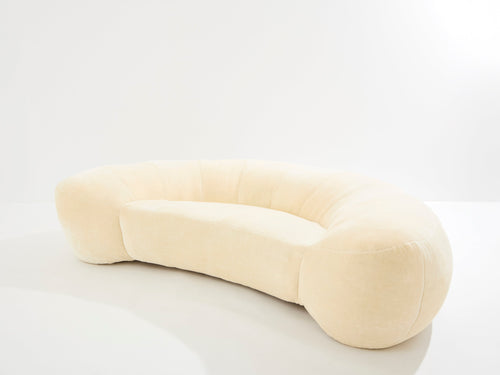
Jean Royère (1902 to 1981) left an import-export job around the age of 29 to design, and never designed anything solemn. His Ours Polaire sofa was shown in 1947, and his agencies in Cairo and Beirut led to commissions for King Hussein of Jordan and the Shah of Iran. Royère pieces are rare, so when one appears, do not wait for a second.
Mathieu Matégot (1910 to 2001), born near Budapest, learned sheet metal as a prisoner of war and turned perforated metal into furniture. In the early 1960s he gave up furniture for tapestry, which is why his production is a closed chapter.
Charlotte Perriand (1903 to 1999) joined Le Corbusier's studio in 1927, a month after being told "we don't embroider cushions here". She then went to Japan in 1940 and later shaped the ski resorts of Savoie, Méribel first, then Les Arcs. Her Méribel chair in ash is around €4,800, the most accessible piece in this guide; her full portrait is here.
1960s and 1970s: chrome, steel and solid elm
Pierre Paulin (1927 to 2009) worked with the Dutch manufacturer Artifort from 1958 and, in 1971, redecorated Georges Pompidou's private apartments at the Élysée. Our pair of CM236 armchairs, chrome base, reupholstered in Dedar wool satin, is around €12,500 for the two.
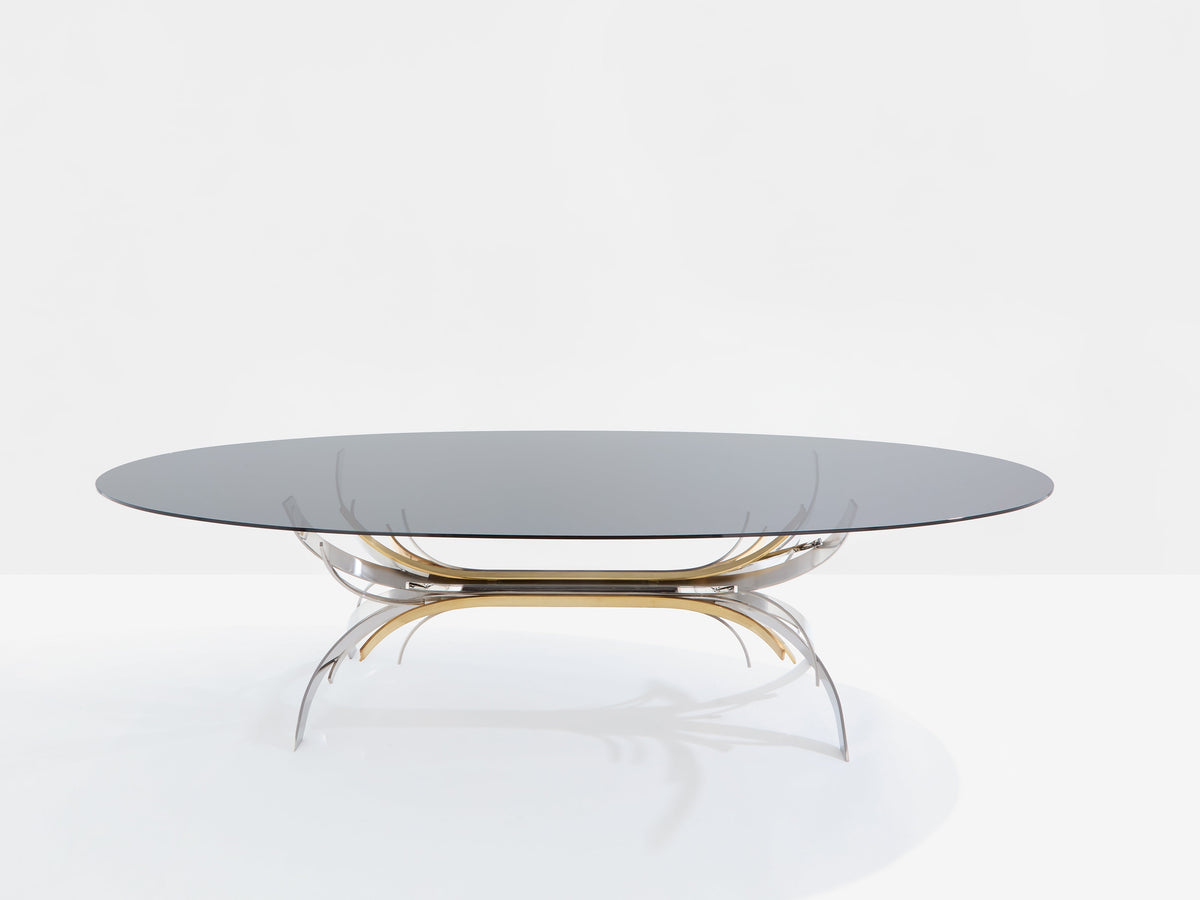
Maria Pergay (1930 to 2023) treated stainless steel as a precious material. Her steel furniture was shown in Paris in 1968, and her Vague stool of the same year belongs to the Metropolitan Museum of Art. The Gerbe dining table of 1970, blades of polished steel and brass under smoked glass, is around €100,000; see her page.
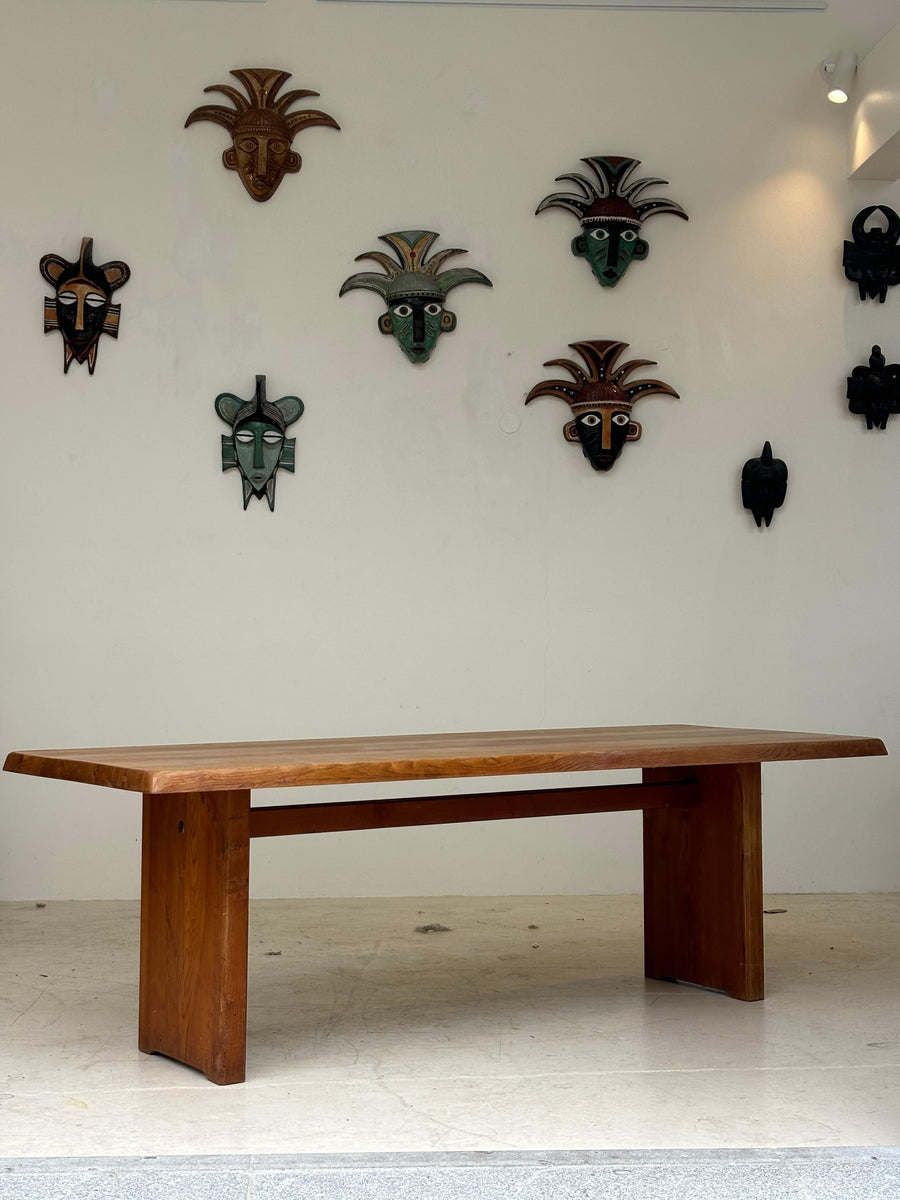
Pierre Chapo (1927 to 1987) took the opposite road: solid wood, elm above all, and a workshop in Gordes from 1967. Browse our Chapo pieces and his story. Meanwhile Maison Jansen, founded in Paris in 1880 by Jean-Henri Jansen and best known for its work at the White House under John F. Kennedy, supplied the brass and lacquer chic of the period until it closed in 1989: Jansen pieces.
1980s: Garouste & Bonetti break the rules
Elizabeth Garouste and Mattia Bonetti set up their practice in Paris in 1980, and in 1987 they designed the couture salons of Christian Lacroix. Bronze, wrought iron, raw oak, coloured resin: they treated the decorative arts as a playground while minimalism took itself very seriously. Their pieces at The Vestige are the best argument that the century did not end in beige.
How to use this map when you buy
- Date first, name second. Each generation has its materials. A "1930s" piece with a chrome base and foam cushions deserves a second look.
- Read the restoration line. New upholstery on a 90-year-old sofa is normal. Original leather, as on the Adnet table, is a bonus worth paying for.
- Ask for references. A serious listing cites a monograph or a comparable sale. Our Frank sofa, for instance, refers to Léopold Diego Sanchez's 1997 book on the designer.
- Expect paperwork. Every piece from The Vestige comes with a certificate of authenticity and ships worldwide.
Prices shown on the site, November 2026.
See them before you decide
Photographs flatter lacquer and flatten leather. Saddle stitching, the weight of a Leleu door or the cold shine of Pergay's steel are things you check with your hands.
So our advice is simple: shortlist two or three pieces from this guide, then book a visit to our showroom on rue de Rivoli, facing the Tuileries, by appointment.
The pieces we mention


A piece on your mind?
Prices, lead times, finishes: an advisor answers you personally.